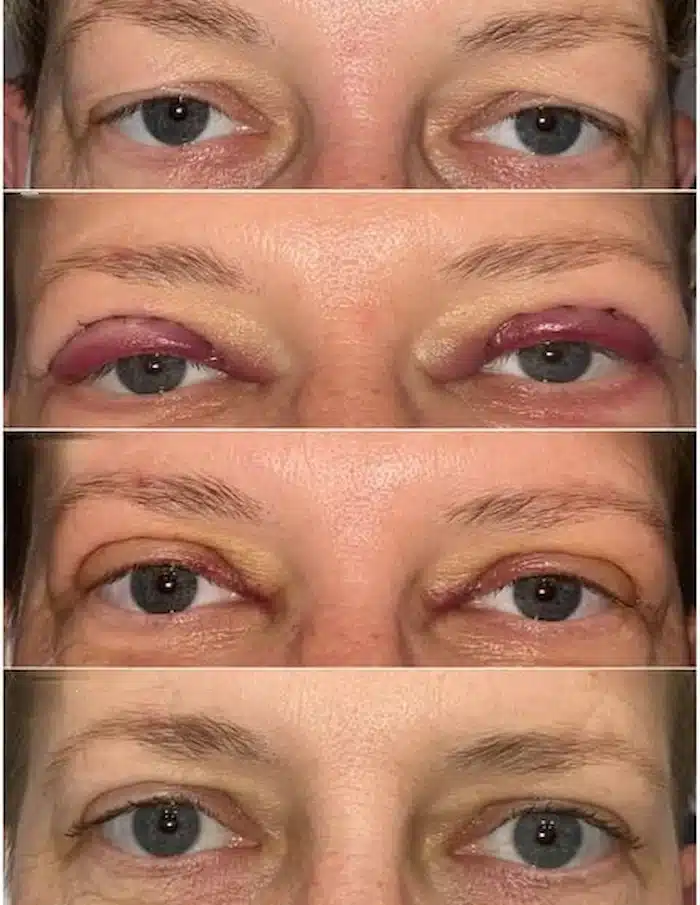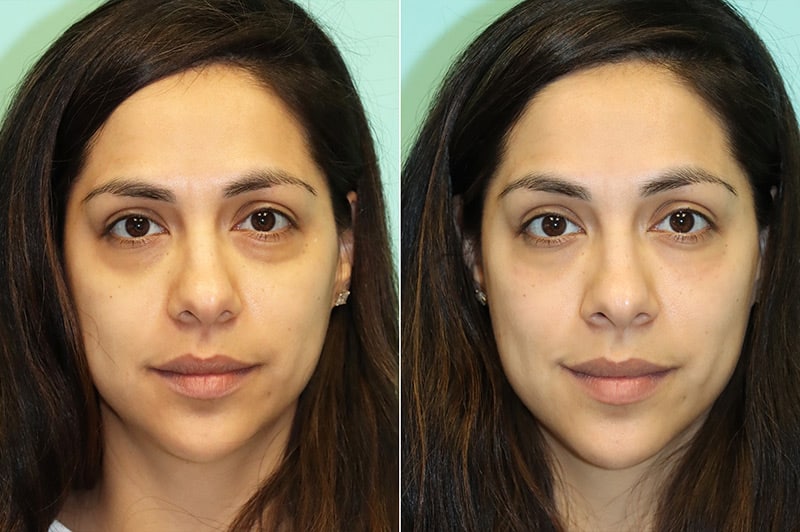
Full face CO2 (carbon dioxide) laser resurfacing is an advanced ablative procedure that removes damaged outer skin layers and deeply stimulates collagen production to rejuvenate the entire face. It corrects deep wrinkles and fine lines around the mouth, eyes, and forehead; minimizes the appearance of acne scars, surgical scars, and chickenpox marks; erases age spots, brown pigmentation, and leathery skin texture caused by ultraviolet exposure; refines rough skin tone, blotchiness, and large pores; and treats certain superficial skin growths and sun-damaged cells. The procedure takes about 1.5 to 2 hours for a full-face treatment, uses local numbing, sedation, or general anesthesia depending on depth, and requires roughly 1 to 3 weeks of initial downtime for the skin to re-epithelialize. Residual pinkness or redness fades over 2 to 6 months, and collagen remodeling continues to improve skin firmness and appearance for 3 to 6 months after treatment, lasting for years with proper sun protection.
This guide explains exactly how CO2 laser resurfacing works, what each skin concern it treats looks like before and after, what recovery looks like day by day, and how it compares to microneedling, chemical peels, and other resurfacing options.
What Is Full Face CO2 Laser Resurfacing?
Full face CO2 laser resurfacing is a skin rejuvenation procedure that uses a carbon dioxide laser emitting a 10,600-nanometer wavelength to precisely remove the outer layers of damaged skin while stimulating deep collagen production in the dermis beneath. The 10,600nm wavelength is strongly absorbed by water, which is the primary component of living skin tissue, allowing the laser to vaporize damaged cells layer by layer with exceptional precision. This controlled removal triggers the body’s wound healing response: old collagen fibers are replaced, new elastin is formed, and fresh epidermal cells rise to the surface.
CO2 lasers can be delivered in two ways. A fractional pattern treats only a grid of tiny micro-columns across the skin, leaving the surrounding tissue intact to serve as a healing bridge. This fractional approach shortens recovery to approximately 5 to 7 days of visible peeling and reduces the risk of complications. A full-field (non-fractional) pass removes the entire surface layer for deeper, more dramatic rejuvenation at the cost of a longer recovery window. The American Society of Plastic Surgeons reported that 3,703,305 laser skin resurfacing procedures were performed in the United States in 2024, making it one of the most widely performed aesthetic procedures in the country.
The procedure itself follows a straightforward sequence. The treatment area is cleansed and numbed with topical anesthetic, local injection, or sedation. Protective eye shields are placed. The laser handpiece moves methodically across the face, producing a warm sensation and a soft snapping sound. A full-face pass typically takes 20 to 30 minutes of active laser time, though the entire appointment including numbing and preparation runs 1.5 to 2 hours according to Cleveland Clinic. Immediately after treatment, soothing ointment is applied and detailed aftercare instructions are provided.
What Can CO2 Laser Resurfacing Correct?
CO2 laser resurfacing can correct a wide range of skin concerns that affect the surface, texture, tone, and structural integrity of the face. The conditions it treats most effectively fall into five categories:
- Wrinkles and fine lines: Deep creases around the mouth (perioral lines), crow’s feet around the eyes, forehead lines, and static wrinkles that remain visible even when the face is at rest. A study of 907 patients published in the Aesthetic Surgery Journal found that 92.4% achieved very good to excellent results, defined as greater than 75% removal of wrinkles.
- Scars: Acne scars (rolling, boxcar, and some atrophic scars), surgical scars, chickenpox marks, and traumatic scars. CO2 laser stimulates collagen remodeling within the scar tissue, gradually smoothing the surface and improving the texture over several months.
- Sun damage: Age spots, brown pigmentation, leathery texture, and rough skin caused by years of ultraviolet exposure. The laser removes the damaged outer layer where this discoloration lives and reveals fresher, more evenly pigmented skin beneath.
- Uneven tone and texture: Rough skin, blotchiness, enlarged pores, dull complexion, and skin that has lost its smoothness over time. Collagen remodeling tightens pore appearance and smooths the overall surface.
- Precancerous lesions: Actinic keratoses and certain superficial skin growths that develop from chronic sun exposure. CO2 laser can remove these lesions precisely while simultaneously rejuvenating the surrounding skin.
Johns Hopkins University research documented that CO2 laser resurfacing increases Type I procollagen mRNA to 7.5 times baseline and Type III procollagen mRNA to 8.9 times baseline at 21 days post-treatment. This collagen response is the biological engine behind the treatment’s ability to correct so many different conditions simultaneously. Histological studies confirm collagen density increases of 20 to 40% compared to baseline, according to clinical data compiled by the London Medical and Aesthetic Clinic.
How Does CO2 Laser Treat Deep Wrinkles and Fine Lines?
CO2 laser treats deep wrinkles and fine lines by removing the outer skin layers where the wrinkle creases live and then triggering a collagen remodeling response in the dermis that tightens and firms the skin over the following months. Clinical data shows wrinkle reduction ranging between 40 and 70% after a single CO2 laser treatment, with visible texture smoothing in 70 to 90% of patients.
Static wrinkles, the lines that remain visible even when the face is completely relaxed, respond particularly well to CO2 laser because they are primarily caused by collagen degradation and skin thinning rather than muscle movement. Lines around the mouth (smoker’s lines, lip lines), crow’s feet around the eyes, and etched forehead creases are among the most common targets. These areas accumulate damage from both sun exposure and repetitive facial movement over decades, and the CO2 laser addresses both the surface damage and the underlying collagen loss simultaneously.
The collagen rebuilding process continues for 3 to 6 months after the procedure, which means the final result is significantly better than what the patient sees at the 2-week mark when peeling has just completed. A study published in the Journal of the American Academy of Dermatology followed 104 patients for an average of 24 months after CO2 laser resurfacing and found significant persistence of wrinkle score improvement along with continuing, progressive improvement in solar elastosis deep in the dermis. Patients concerned specifically about aging and wrinkles often find that CO2 laser delivers the most dramatic single-treatment improvement available without surgery.
Can CO2 Laser Treat Acne Scars and Surgical Scars?
Yes, CO2 laser can treat acne scars and surgical scars by stimulating collagen remodeling within the scar tissue, gradually smoothing the surface and improving the texture over several months. Fractional CO2 laser is the preferred approach for acne scars because it creates thousands of microscopic treatment zones that trigger healing while leaving surrounding tissue intact to support faster recovery.
The study of 907 patients in the Aesthetic Surgery Journal found that 75.4% of patients with acne scars obtained very good to excellent results from CO2 laser resurfacing. Rolling scars and boxcar scars respond best because the laser can remodel the depressed tissue and stimulate new collagen to fill the indentation from below. Ice pick scars, the deepest and narrowest type, may require combination therapy. A 2018 review suggested that pairing subcision (a technique that releases the scar’s tethered base) with laser resurfacing or TCA cross produces better outcomes for ice pick scars than laser alone.
Surgical scars and traumatic scars also benefit from CO2 laser treatment, though multiple sessions spaced 6 to 12 months apart may be needed to achieve optimal smoothing. Each session triggers a new round of collagen remodeling that progressively softens and flattens the scar. The key is working with a provider who can assess the scar type, depth, and skin tone to determine the right laser settings and treatment plan.
How Does CO2 Laser Address Sun Damage and Hyperpigmentation?
CO2 laser addresses sun damage and hyperpigmentation by removing the outer skin layers where accumulated UV damage, age spots, brown patches, and leathery texture reside. The laser vaporizes the damaged epidermal cells and reveals the fresher, more evenly pigmented tissue beneath. The collagen remodeling response that follows further improves skin quality by replacing the disorganized, sun-damaged dermal structure with new, healthy collagen fibers.
Sun damage manifests as age spots (solar lentigines), mottled pigmentation, rough texture, visible broken capillaries, and a generalized leathery quality that develops after years of UV exposure. CO2 laser resurfacing is one of the most effective treatments for comprehensive sun damage because it addresses all of these concerns in a single session. The ablative removal of the damaged surface layer produces an immediate improvement in tone, and the collagen remodeling that continues for months afterward produces a longer-term improvement in texture and firmness.
Strict sun protection is absolutely essential after CO2 laser resurfacing. The newly healed skin is highly sensitive to UV radiation for several months, and sun exposure during this period can trigger post-inflammatory hyperpigmentation (PIH), which creates new dark patches that are difficult to treat. Broad-spectrum mineral SPF 30 or higher, applied every morning and reapplied throughout the day, is non-negotiable during the recovery period and beyond. Patients with deeper skin tones (Fitzpatrick types 4-6) carry a higher risk of PIH and may be better suited to fractional CO2 settings or alternative resurfacing approaches.
What Does Recovery Look Like Day by Day After CO2 Laser?
Recovery after full face CO2 laser resurfacing follows a predictable pattern that progresses from immediate rawness through peeling and re-epithelialization to gradual collagen remodeling over months. The surface healing phase takes approximately 7 to 14 days depending on the laser settings and treatment depth, with residual pinkness fading over the following 2 to 6 months.
- Day 1 (treatment day): The treated skin feels warm, similar to a sunburn, and appears red and swollen. Mild oozing or pinpoint bleeding is normal depending on treatment depth. Cool compresses with saline every few hours help draw out heat and ease discomfort. The skin is coated with petroleum-based or silicone-based healing ointment.
- Days 2-3 (crusting and peeling begin): The treated skin dries, crusts, and begins to scab. Healthy skin regeneration is active underneath. Keeping the skin moist and hydrated with ointment eases and accelerates the healing process. Discomfort diminishes as healing progresses.
- Days 4-5 (exfoliation intensifies): The outer layer of treated skin begins to exfoliate and slough off. Pinkish, fresh skin emerges underneath. Dilute vinegar and water compresses can help the exfoliation process. Avoid rubbing or picking at the skin to prevent premature sloughing and potential scarring.
- Days 6-7 (new skin emerges): Nearly all peeling subsides, revealing smoother, younger-looking skin. The new skin still appears pink or slightly red. Many patients feel comfortable resuming video calls by day 5 and can return to in-office work with makeup by the end of week one, according to the American Board of Cosmetic Surgery.
- Weeks 2-3 (residual pinkness fades): Most redness and sensitivity fade. Mineral-based makeup can camouflage remaining color. Gentle skincare products can be reintroduced, but active serums like retinol and exfoliating acids should still be avoided until the provider confirms it is safe.
- Months 1-6 (collagen remodeling continues): The real transformation happens during this phase. Collagen remodeling continues to improve skin firmness, texture, and pore appearance for 3 to 6 months after the procedure. Final results become visible as the new collagen matures and organizes. Sun protection remains essential throughout this period.
A PubMed study of 100 CO2 laser patients found that 72% reported continuing improvement after the initial 6 to 8 week healing period. The delayed improvement happens because collagen remodeling is a biological process that unfolds over months, not days. Judging the result too early almost always underestimates what the treatment is still producing beneath the surface.
The table below compares full face CO2 laser resurfacing to other common resurfacing approaches so you can see how depth, downtime, and results differ across treatment types.
| Treatment | How It Works | Downtime | Results Timeline | Best For |
|---|---|---|---|---|
| Full Ablative CO2 Laser | Removes entire outer skin layer; deep collagen stimulation | 7-14 days surface healing; redness 2-6 months | 3-6 months for full collagen remodeling; results last years | Deep wrinkles, severe sun damage, acne scars, comprehensive rejuvenation |
| Fractional CO2 Laser | Treats micro-columns of skin; surrounding tissue serves as healing bridge | 5-7 days surface healing; pinkness 2-4 weeks | 2-3 months; multiple sessions may be needed | Moderate wrinkles, mild-moderate scars, texture improvement with less downtime |
| Microneedling | Creates controlled micro-injuries with fine needles; stimulates collagen | 1-3 days redness | 4-6 weeks per session; 3+ sessions typical | Mild-moderate texture, fine lines, early scarring, maintenance |
| Chemical Peels (medium-deep) | Chemical solution dissolves outer skin layers | 5-14 days depending on depth | 2-4 weeks; multiple sessions for deeper concerns | Pigmentation, mild wrinkles, dull tone, sun damage |
Is Full Face CO2 Laser Worth It?
Full face CO2 laser is worth it for patients who have moderate to severe skin concerns that surface-level treatments cannot adequately address and who can commit to the recovery period. Long-term satisfaction rates for CO2 laser resurfacing range between 80 and 90% across clinical studies, and 84% of patients in a PubMed study of 100 cases said they would recommend the procedure to others. Seventy-eight percent said they would have the procedure again if needed.
The patients who report the highest satisfaction are typically those whose primary concerns are etched wrinkles, textural roughness, acne scarring, or diffuse sun damage, and who understand that recovery is a real commitment, not a weekend inconvenience. CO2 laser resurfacing is not a subtle treatment. It produces the most dramatic single-session improvement in skin quality available without surgery, but it requires planning around social and professional commitments. Patients who expect to look normal within 2 to 3 days will be disappointed. Patients who plan for 7 to 14 days of visible healing and understand that the best results appear months later consistently report the highest satisfaction.
A 2025 expert consensus paper published in Lasers in Surgery and Medicine found that 94% of panelists expect and promise moderate improvement following fractional ablative CO2 laser treatment. The key word is “moderate,” meaning significant visible improvement, not perfection. Deep structural aging, facial volume loss, and skin laxity require different treatments (fillers, skin tightening devices, or surgery). CO2 laser addresses surface quality, and it does so exceptionally well.
Is Microneedling Better Than CO2 Laser?
Microneedling is not better or worse than CO2 laser; they operate at different depths and serve different levels of skin concern. Microneedling creates controlled micro-injuries using fine needles at depths of 0.5 to 2.5 millimeters to stimulate collagen production with minimal downtime (1 to 3 days of redness). CO2 laser ablates the outer skin layer entirely and penetrates deeper into the dermis, producing more dramatic collagen remodeling at the cost of 7 to 14 days of visible recovery.
Microneedling works best for mild to moderate texture concerns, fine lines, early scarring, and ongoing skin maintenance. It requires 3 or more sessions spaced 4 to 6 weeks apart to build cumulative results. CO2 laser delivers a more powerful single-session correction for patients with deeper wrinkles, more pronounced scarring, or extensive sun damage who want the most dramatic improvement possible. Many patients start with microneedling for maintenance and graduate to CO2 laser when they want a more intensive reset.
The choice depends on the severity of the concern, the amount of downtime the patient can accept, and the provider’s assessment of skin type and condition. Patients who want to explore both approaches can discuss a comprehensive plan during a consultation. Some patients benefit from combining RF microneedling with PRP for ongoing collagen stimulation between CO2 laser sessions.
Can Laser Fix Sagging Jowls?
CO2 laser can tighten skin along the lower cheeks and jawline, but it does not physically lift sagging tissue or replace lost volume the way fillers or a surgical facelift would. The collagen contraction that occurs during CO2 laser treatment produces a measurable tightening effect that is most noticeable in the lower face, jawline, and neck area. Patients with mild to moderate skin laxity along the jawline often report a visibly firmer, more defined contour after CO2 laser resurfacing.
For significant jowling caused by descended fat pads and substantial skin laxity, CO2 laser alone is not sufficient. A layered approach that combines skin tightening (CO2 laser or radiofrequency treatments), volume replacement (dermal fillers along the mandibular border), and possibly threadlifts for mechanical tissue repositioning produces a more complete result. CO2 laser addresses the surface quality; fillers address the structural volume; and threads or tightening devices address the tissue descent. Each tool solves a different part of the problem.
Is the CO2 Laser Outdated?
No, the CO2 laser is not outdated. It remains the gold standard for ablative skin resurfacing and has been continuously refined with fractional delivery systems, scanner technology, and adjustable depth settings that make it safer and more precise than ever. The 3.7 million laser resurfacing procedures performed in the U.S. in 2024 reflect sustained clinical confidence in this technology. Newer devices like UltraClear use cold fiber technology to minimize unwanted thermal damage while maximizing results, expanding the treatment’s suitability to a broader range of skin types.
The perception that CO2 laser is outdated comes from confusion between older continuous-wave CO2 lasers (which carried higher complication rates and longer recovery) and modern fractional and pulsed CO2 systems (which deliver dramatically better outcomes with shorter healing times). The fundamental science, a 10,600nm wavelength absorbed by water in tissue to trigger precise, controlled collagen remodeling, is as effective now as it has ever been. What has changed is the technology that delivers it.
Who Is a Good Candidate for Full Face CO2 Laser Resurfacing?
A good candidate for full face CO2 laser resurfacing is someone with moderate to severe surface skin concerns who can commit to the recovery period and maintain strict sun protection afterward. The strongest candidates have one or more of the following concerns: deep wrinkles or etched lines around the mouth, eyes, or forehead; noticeable acne scarring; significant sun damage with age spots, brown patches, or leathery texture; rough, uneven tone or enlarged pores; or precancerous actinic keratoses.
Fitzpatrick skin types 1 through 3 (lighter skin tones) are the safest candidates for full-field CO2 laser because the risk of post-inflammatory hyperpigmentation is lower. Patients with skin types 4 through 6 (darker skin tones) are not excluded, but fractional settings with lower density are typically recommended to reduce the risk of unwanted pigmentation changes. Patients with active acne, active herpes outbreaks, a history of poor wound healing, certain autoimmune or connective tissue disorders, or recent isotretinoin (Accutane) use within the past 6 to 12 months may need to wait or consider alternative treatments.
At our practice in Bingham Farms, Michigan, we evaluate each patient’s skin type, damage level, medical history, and goals before recommending CO2 laser or an alternative laser treatment approach. The assessment determines the right laser settings, depth, and recovery plan for each individual.
What Should You Consider Before Getting CO2 Laser Resurfacing?
Before getting CO2 laser resurfacing, patients should consider the recovery commitment, sun protection requirements, pre-treatment preparation, and the realistic scope of what the procedure can achieve. CO2 laser produces the most dramatic single-session improvement in skin quality available without surgery, but it requires genuine downtime. Planning the procedure around professional and social commitments is essential.
Pre-treatment preparation typically begins 2 to 4 weeks before the procedure. Patients are advised to avoid tanning or heavy sun exposure, stop using retinoids and exfoliating acids, and begin antiviral medication if they have a history of cold sores (herpes simplex). Smoking should be stopped at least 2 weeks before and after treatment because nicotine impairs wound healing. Some providers also recommend a skin lightening regimen before and after treatment to reduce the risk of hyperpigmentation, particularly for patients with darker skin tones.
Post-treatment sun protection is non-negotiable. The newly resurfaced skin is highly susceptible to UV damage for several months. Broad-spectrum mineral sunscreen (SPF 30+), wide-brimmed hats, and sun avoidance during peak hours protect the investment and prevent complications. Patients who cannot commit to consistent sun protection should consider less intensive alternatives like chemical peels or fractional non-ablative lasers that carry less post-procedure photosensitivity risk.
Frequently Asked Questions
How Long Do CO2 Laser Results Last?
CO2 laser results last for years when paired with proper skincare and consistent sun protection. The collagen remodeling produced by the treatment creates structural changes in the dermis that are durable. A study in the Journal of the American Academy of Dermatology documented significant persistence of wrinkle improvement and continuing progressive improvement in solar elastosis over an average 24-month follow-up. Natural aging continues, but the baseline skin quality is reset to a significantly better level that holds over time.
What Is the Worst Day After CO2 Laser?
Days 2 to 3 are typically the most uncomfortable after CO2 laser resurfacing. Swelling peaks, the skin feels tight and raw, crusting and oozing are at their highest, and the treated area looks its most visibly affected. By day 4 to 5, peeling intensifies but discomfort decreases as new skin begins to emerge underneath. Most patients describe the sensation as a moderate sunburn rather than acute pain.
Is There Anything Better Than a CO2 Laser?
For deep wrinkles, severe sun damage, and comprehensive skin resurfacing, CO2 laser remains the gold standard ablative treatment. No single non-surgical procedure produces as dramatic a result in one session. Erbium (Er:YAG) lasers offer a gentler alternative with less downtime but less dramatic correction. Combination protocols that layer CO2 laser with microneedling, PRP, or plasma treatments at different timepoints often produce the most complete long-term results.
Which Is Better, PRP Microneedling or CO2 Laser?
PRP microneedling and CO2 laser serve different levels of concern. PRP microneedling is better for mild to moderate texture improvement, fine lines, and ongoing skin maintenance with minimal downtime (1 to 3 days). CO2 laser is better for deep wrinkles, significant scarring, and extensive sun damage that requires a more aggressive single-session correction with longer recovery. Many patients alternate between PRP microneedling for maintenance and CO2 laser for periodic intensive renewal.
Can You Wear Makeup After CO2 Laser?
Most patients can begin wearing oil-free, mineral-based makeup after the skin has fully re-epithelialized, typically around day 7 to 10. Green-based makeup is particularly effective for camouflaging the pink-to-red color that remains after peeling is complete. Avoid heavy, pore-clogging cosmetics during the first 2 weeks. Your provider will confirm when it is safe to resume your normal makeup routine based on how your skin is healing.
How Many CO2 Laser Sessions Are Needed?
Most patients achieve significant improvement with a single full face CO2 laser session. Some patients with deep acne scarring or very advanced sun damage may benefit from a second session performed 6 to 12 months after the first, once the collagen remodeling from the initial treatment has fully matured. Fractional CO2 treatments, which use less aggressive settings, may be performed in a series of 2 to 3 sessions spaced several months apart for a more gradual approach with less downtime per session.
The Takeaway
Full face CO2 laser resurfacing is the most powerful non-surgical skin rejuvenation procedure available for correcting deep wrinkles, acne scars, sun damage, uneven texture, and precancerous lesions in a single treatment session. The clinical data is strong: wrinkle reduction of 40 to 70%, satisfaction rates of 80 to 90%, collagen density increases of 20 to 40%, and results that persist for years. The trade-off is real downtime, 1 to 2 weeks of visible healing followed by months of gradual collagen remodeling, and a genuine commitment to sun protection that cannot be skipped.
The best outcomes come from patients who understand what CO2 laser can and cannot do, who plan for recovery realistically, and who work with a provider experienced in calibrating laser settings to each individual’s skin type and goals. If you are considering CO2 laser resurfacing or want to explore whether a different laser approach better fits your needs, we encourage you to schedule a consultation. Our team at FACE Skincare ~ Medical ~ Wellness evaluates every patient individually to determine the right treatment, the right settings, and the right recovery plan.