Collagen-stimulating procedures are in-office treatments that signal your own fibroblasts to manufacture new collagen, rather than adding collagen from an outside source. Research published in the American Journal of Pathology found that collagen secretion from skin fibroblasts drops 38 percent between age 25 and age 80, which is the deficit these procedures are built to reverse. Below we cover what these procedures are, why collagen declines in the first place, whether swallowing collagen reaches your skin, the biomarker evidence that stimulation works, the two families of procedures available, how injectable biostimulators differ from fillers, how energy-based treatments trigger the same process, what firms sagging skin, how long new collagen takes to build, the nutrients your body needs to build it, and when to start.
What Are Collagen-Stimulating Procedures?
Collagen-stimulating procedures are medical treatments that prompt the skin’s own fibroblasts to produce new collagen, using either an injectable material that provokes a building response or an energy device that creates controlled injury. Nothing in these treatments supplies collagen directly. Every fiber that results is manufactured by your body.
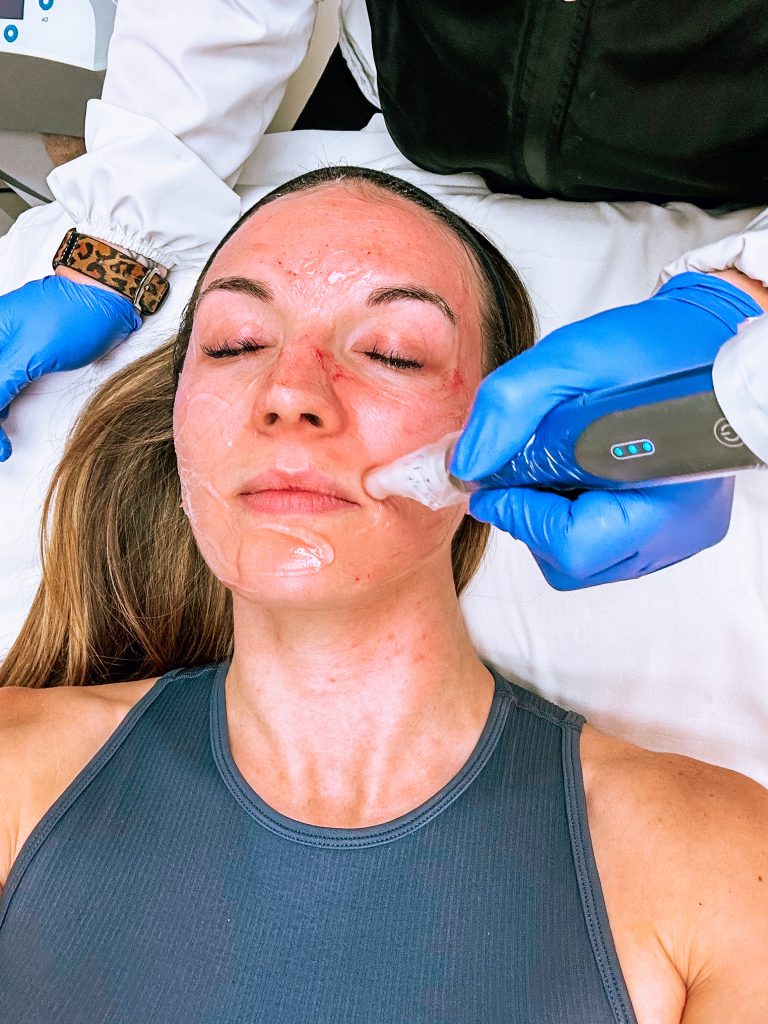
Fibroblasts are the cells responsible. These specialized cells live in the dermis and synthesize collagen, elastin, and hyaluronic acid, and they respond to specific signals by increasing output. A collagen-stimulating procedure is any intervention engineered to deliver one of those signals reliably and at the right depth. The signal can be chemical, as with an injected biostimulatory material, or thermal, as with radiofrequency and laser energy, or mechanical, as with microneedling.
Volume shows how mainstream this category has become. American Society of Plastic Surgeons data records 3,703,305 skin resurfacing procedures in 2024, a 6 percent increase over the prior year, alongside 932,861 non-hyaluronic acid filler treatments, the category that includes biostimulatory injectables. Both figures represent treatments whose primary output is new collagen rather than an immediately visible cosmetic change.
What Causes Collagen Loss in Skin?
Collagen loss in skin happens because fibroblast activity slows with age while matrix metalloproteinases, the enzymes that break collagen down, stay active or increase, producing a net deficit that compounds year over year. Two processes moving in opposite directions create the gap, and the gap widens with time.
Fibroblasts manufacture the collagen that holds skin firm. Fibroblast output begins declining in the mid-to-late twenties at roughly 1 percent per year, according to research published in the American Journal of Pathology. That annual 1 percent compounds quietly, and collagen secretion falls 38 percent between age 25 and age 80. Collagen makes up roughly 75 to 80 percent of the skin’s dry weight, so a decline of that magnitude changes the physical structure of the tissue rather than just its appearance.
External factors accelerate the baseline rate. Ultraviolet radiation damages fibroblast DNA directly and activates matrix metalloproteinases, making cumulative sun exposure the leading extrinsic driver of collagen degradation. Smoking reduces type I and type III collagen synthesis by 18 to 22 percent while doubling MMP-8 levels compared with non-smokers. High-glycemic diets promote advanced glycation end products that cross-link collagen fibers, stiffening them and further stimulating MMP activity. Dermal thickness falls roughly 6 percent per decade in both sexes as these processes accumulate.
At What Age Does Collagen Start Declining?
Collagen starts declining in the mid-to-late twenties, at approximately 1 percent per year, though the loss stays invisible for the first decade. Nobody notices the change at 26 because the structural reserve is still large enough to absorb it.
Visibility lags the biology by years. The cumulative effect of that annual 1 percent typically becomes apparent during the thirties and forties, when expression lines begin lingering after the expression ends and skin stops rebounding as quickly when pressed. By the time the change is obvious in the mirror, the underlying decline has been running for fifteen years or more.
Why Does Collagen Loss Speed Up During Menopause?
Collagen loss speeds up during menopause because estrogen directly stimulates collagen synthesis in the dermis, and when estrogen falls sharply, fibroblast activity falls with it. Research cited in the British Journal of Dermatology found that skin collagen content decreases by approximately 30 percent in the first five years following menopause.
That figure represents the steepest collagen decline of any life stage. Thirty percent in five years is roughly what the ordinary 1 percent annual rate would take three decades to accomplish, compressed into a fraction of the time. This is why many women describe the change as sudden even though the gradual decline had been building for years underneath it. The mechanism matters clinically, because collagen-stimulating procedures during and after this window are working against a much steeper gradient and are typically planned as a series rather than a single treatment.
Can Collagen Rebuild Skin Elasticity?
Collagen contributes to skin firmness rather than to elasticity directly, because elasticity is primarily a property of elastin, and the two proteins work together as a system. Collagen supplies tensile strength and structural scaffolding while elastin supplies the ability to stretch and rebound.
Both decline together, which is why the distinction is often blurred. Treatments that trigger collagen production generally trigger elastin production through the same wound-healing cascade, so the practical effect is improvement in both. Skin that feels firmer and also snaps back better after a course of treatment is showing the combined result rather than collagen alone.
Does Taking Collagen Supplements Actually Reach Your Skin?
Taking collagen supplements does not deliver intact collagen to your skin, because ingested collagen is broken down by digestion into amino acids and short peptides before absorption, and those fragments enter a general pool the body allocates wherever it chooses. Swallowed collagen cannot travel to the dermis and install itself as a fiber.
Digestion is not selective in the way marketing implies. Collagen consumed orally is treated as dietary protein, cleaved into its constituent amino acids and peptide fragments, and absorbed through the small intestine. From there the body distributes those building blocks according to its own priorities, which may include skin but also include muscle, gut lining, immune function, and every other tissue with protein demand. Nothing directs the fragments toward facial collagen specifically.
The honest framing is that oral collagen can contribute raw material without providing a signal. Fibroblasts build collagen when something tells them to, and a supply of amino acids is not that instruction. This is the substantive difference between supplementation and stimulation: one addresses supply, the other addresses demand. Supply matters, as the nutrient section below covers, but supply alone does not raise output in skin that has stopped receiving the signal.
Which Is Better for Sagging Skin, Retinol or Collagen?
Retinol is more effective for sagging skin than oral collagen, because retinoids signal fibroblasts directly through receptors in the skin, while ingested collagen only supplies amino acids. Retinol reaches the tissue where the work happens; a supplement does not.
Retinol has real limits of its own. Topical retinoids produce measurable dermal remodeling over months of consistent use, and they are the strongest at-home option available for this purpose. What they cannot do is reach the depth that laxity originates from, since a topical product acts primarily on the epidermis and papillary dermis. Sagging that originates in the deep dermis or in the fibrous support layer beneath it is outside the reach of anything applied to the surface, which is where in-office procedures become the practical answer.
Do Collagen Stimulators Actually Work?
Yes, collagen stimulators work, and the evidence includes direct biomarker measurement rather than patient impressions alone. A prospective multicenter study measured serum P1CP, a procollagen marker that reflects active collagen synthesis, and found levels rose from 134.6 ng/mL at baseline to a peak of 233.2 ng/mL at month two, remaining significantly elevated through month six.
Tissue-level evidence supports the blood work. Histologic studies identified increased levels of type I collagen in skin treated with poly-L-lactic acid. A two-year clinical study in patients with facial lipoatrophy documented a three-fold increase in skin thickness that was sustained across the full two years. On the energy side, Meshkinpour and colleagues found increased collagen production in biopsies taken twelve months after radiofrequency treatment, and Zelickson documented elevated type I collagen messenger RNA in radiofrequency-treated skin. Our approach to regenerative aesthetics is built on this class of evidence rather than on before-and-after impressions.
What Is Neocollagenesis?
Neocollagenesis is the formation of new collagen by fibroblasts in response to a stimulus, and it proceeds in a specific sequence rather than producing finished collagen immediately. The word describes a process with a timeline, not an event.
Type III collagen forms first. Early in the healing cascade fibroblasts produce type III collagen, a thinner and more flexible fiber that functions as provisional scaffolding. Over the following months that provisional matrix is progressively remodeled and replaced with type I collagen, the thicker and stronger fiber that gives mature skin its firmness. Meshkinpour’s biopsy findings at twelve months showed exactly this pattern, with type III still outweighing type I well after treatment. This conversion explains something patients frequently observe: results that continue improving months after the last appointment. Combining stimulation with growth factor preparations such as PRFM supports the same cascade from a different direction.
What Is the Best Procedure for Stimulating Collagen Production?
The best procedure for stimulating collagen production is an injectable biostimulator when volume loss accompanies the collagen decline, and an energy-based treatment when the concern is skin quality, texture, or dermal thinning without significant volume loss. Two families exist and they answer different versions of the same problem.
Holding both families on site at our Bingham Farms office is what makes the comparison practical rather than academic, since the recommendation follows the assessment instead of the equipment.
Patients who need both, which is common past the mid-forties, receive both. Our facial biostimulation work and our device-based treatments are planned together for exactly that reason.
| Approach | Stimulus Mechanism | Onset of New Collagen | Duration | Best Suited For |
|---|---|---|---|---|
| Poly-L-lactic acid | Foreign-body response driving fibroblast activity | By 1 month, rising for 9 to 12 months | 18 to 24 months or longer | Diffuse volume loss with thinning skin |
| Calcium hydroxylapatite | Microspheres activating fibroblasts by direct contact | Weeks, with immediate volume | Approximately 9 to 12 months | Contour plus collagen in one treatment |
| RF microneedling | Thermal injury at a set needle depth | 3 to 4 months of active remodeling | 1 to 2 years with maintenance | Dermal thinning, pores, scarring |
| Fractional laser | Microscopic treatment columns triggering repair | 3 to 4 months of active remodeling | 1 to 2 years non-ablative, longer ablative | Texture, photoaging, surface quality |
| Hyaluronic acid filler | Space filling with modest stimulation | Immediate volume, limited new collagen | 3 to 12 months | Targeted volume where speed matters |
Sources: Plastic and Reconstructive Surgery Global Open, 2025, on poly-L-lactic acid duration; Journal of Cosmetic Dermatology, 2023, on calcium hydroxylapatite fibroblast activation; Werschler et al. histologic studies on PLLA collagen onset; Journal of Cutaneous and Aesthetic Surgery on thermal collagen thresholds; American Society of Plastic Surgeons 2024 Procedural Statistics Report.
What Are Collagen Biostimulators?
Collagen biostimulators are injectable materials that provoke your body to build collagen around them, rather than occupying space themselves. The material is a signal and a scaffold. The collagen is yours.
Two materials dominate the category. Poly-L-lactic acid, a synthetic biodegradable polymer, and calcium hydroxylapatite, a mineral compound suspended in gel, both trigger collagen production but through different biological routes. Both are used in biostimulators protocols across the face and increasingly on the body.
How Is a Biostimulator Different From a Filler?
A biostimulator is different from a filler because a filler adds volume by physically occupying space, while a biostimulator prompts your tissue to generate its own volume through new collagen. One is an addition, the other is a construction project.
The timelines follow directly from that difference. Hyaluronic acid fillers produce results the moment they are placed, since the gel itself is the volume, and those results last roughly 3 to 12 months depending on the product and the placement. Biostimulators produce almost nothing on the day of treatment and build gradually over months as fibroblasts respond. Poly-L-lactic acid particles begin degrading around six months and are cleared from the body by nine months, yet the outcome persists well past that point because what remains is the collagen the particles prompted, not the particles themselves.
What Is the Difference Between Sculptra and Radiesse?
Sculptra uses poly-L-lactic acid to trigger a foreign-body inflammatory cascade that raises fibroblast activity over months, while Radiesse uses calcium hydroxylapatite microspheres that activate fibroblasts through direct physical contact and also add immediate volume. Different mechanisms produce different treatment experiences.
Sculptra works slowly by design. The inflammatory response it provokes is characterized by increased macrophages, mast cells, and lymphocytes, which drives fibroblast activity and gradual collagen deposition across a long window. New collagen appears by one month and continues increasing for nine to twelve months. Our page on Sculptra covers what that treatment course looks like in practice.
Radiesse does two things at once. Research published in the Journal of Cosmetic Dermatology in 2023 found that calcium hydroxylapatite microspheres activate fibroblasts through direct contact, and because the carrier gel provides structure on the day of injection, patients see contour change immediately while collagen builds underneath. Duration runs approximately 9 to 12 months, shorter than poly-L-lactic acid, which delivers 18 to 24 months or longer according to a 2025 review published in Plastic and Reconstructive Surgery Global Open.
How Many Months Does a Collagen Injection Last?
A collagen injection lasts 18 to 24 months or longer for poly-L-lactic acid, approximately 9 to 12 months for calcium hydroxylapatite, and 3 to 12 months for hyaluronic acid fillers. Duration tracks how much of the result is your own collagen rather than injected material.
Biostimulator longevity outperforms passive fillers for a structural reason. A 2025 randomized controlled trial found 90.57 percent midfacial improvement at twelve months with poly-L-lactic acid, outperforming hyaluronic acid filler over the same period. Collagen your body built is integrated tissue, and it degrades on the same slow timeline as the rest of your collagen rather than being metabolized as a foreign gel.
Is Collagen Injection Better Than Botox?
A collagen injection is not better than Botox, because the two treat different problems: biostimulators rebuild structural support in thinning tissue, while Botox reduces the muscle contraction that creates dynamic lines. Comparing them is comparing tools for separate jobs.
The distinction is between line types. Dynamic lines appear when you make an expression and disappear when your face relaxes, and those respond to neuromodulators because muscle activity causes them. Static lines and hollowing persist at rest and reflect lost structure, which is what biostimulators address. Most faces past the mid-forties carry both, which is why the two are frequently planned alongside each other rather than chosen between.
How Energy-Based Treatments Build Collagen
Energy-based treatments build collagen by heating the dermis to a temperature that denatures existing collagen fibers, which triggers the wound-healing cascade that produces new ones. A review published in the Journal of Cutaneous and Aesthetic Surgery places the collagen denaturation threshold at approximately 60 to 65 degrees Celsius, with temperatures below 60 degrees producing minimal effect.
Hitting that threshold safely is the engineering problem every device solves differently. Reaching 65 degrees in the dermis while the epidermis stays between 38 and 42 degrees requires either contact cooling, fractional delivery that leaves untreated tissue between treatment zones, or insulated needles that bypass the surface entirely. A treatment that fails to reach the threshold produces warmth and temporary flushing rather than structural change.
Does Microneedling Really Build Collagen?
Yes, microneedling really builds collagen, and adding a growth factor preparation increases the effect substantially. A meta-analysis of 14 controlled studies covering 472 patients found that combining microneedling with platelet-rich plasma nearly tripled the odds of greater than 50 percent improvement in acne scarring compared with microneedling alone, at an odds ratio of 2.97.
Histology confirms what the clinical scores suggest. Split-face studies examining punch biopsies after combined treatment found more organized collagen bundles and increased epidermal thickness relative to microneedling by itself. Adding radiofrequency energy to the needles extends the effect deeper still, which is why RF microneedling has become the workhorse of dermal collagen rebuilding.
Does Radiofrequency Build Collagen?
Yes, radiofrequency builds collagen, with biopsy evidence showing increased collagen production twelve months after treatment. Radiofrequency passes an alternating current through tissue, and the tissue’s own resistance generates heat within the collagen framework, since current travels most efficiently through hydrophilic structures like dermal collagen and fibrous septae.
Two mechanisms operate in sequence. Immediate contraction occurs as collagen fibers denature and tighten, and the larger long-term effect comes from the wound-healing response that follows, driving neocollagenesis over the subsequent three to four months. Meshkinpour and colleagues documented increased collagen production, weighted toward type III over type I, in biopsies taken a full year after treatment. Our radiofrequency platforms are selected for their ability to hold the required temperature gradient across a full treatment area.
Laser energy produces the same outcome through a different route. Electron microscopy analysis found that ablative fractional laser treatment reduced collagen fibril diameter by an average of 14.8 percent, compared with 4.6 percent for non-ablative treatment, a measure of how forcefully each remodels the existing matrix. Choosing between an ablative and a non-ablative fractional laser is largely a decision about how much remodeling is needed against how much recovery time is acceptable.
How Can I Tighten My Saggy Skin on My Face?
You can tighten saggy skin on your face by matching the treatment to where the laxity originates: dermal thinning responds to RF microneedling and fractional laser, structural descent responds to microfocused ultrasound, and volume-driven sagging responds to biostimulators. Laxity is a symptom with three different underlying causes.
Identifying the cause comes before selecting the treatment. Skin that looks crepey, shows visible pores, and lacks snap when pinched has thinned in the dermis, and dermal collagen rebuilding addresses it. Skin that has descended, softening the jawline border and creating jowls, has lost support in the fibrous layer beneath, which needs energy reaching that depth. Skin that appears to sag because the structure underneath deflated is a volume problem wearing a laxity costume, and treating it with heat alone leaves the actual cause untouched. Our approach to skin tightening begins by separating these three patterns.
Can Old Saggy Skin Be Firmed Up?
Yes, older skin with significant laxity can be firmed up through collagen-stimulating procedures, though the plan involves more sessions and a longer horizon than the same treatment in younger skin. Fibroblasts remain responsive to stimulation throughout life, and that responsiveness is what makes treatment possible at any age.
The variable is starting position rather than capability. Skin with substantial collagen depletion has less existing matrix to remodel and slower baseline synthesis, so each session contributes a smaller increment and more sessions are needed to reach a given result. Layering biostimulators with energy treatment tends to outperform either approach alone in this situation, because one rebuilds structural volume while the other rebuilds dermal density.
Can Wrinkles Be Reversed With Collagen?
Static wrinkles improve substantially with collagen stimulation, while dynamic wrinkles caused by muscle movement respond only partially, because collagen addresses structure rather than muscle activity. The type of wrinkle predicts the result.
Static wrinkles are creases visible when the face is completely at rest, and they reflect thinned dermis and lost structural support beneath the line. Rebuilding collagen underneath a static wrinkle raises the floor of the crease and softens it measurably. Dynamic wrinkles form from repeated folding of the skin by underlying muscle, and while stronger dermal collagen makes the skin more resistant to that folding, the muscle continues contracting. Deep dynamic lines generally need both approaches working together.
How Long Does It Take to Build New Collagen?
New collagen appears within about one month of treatment and continues increasing for nine to twelve months, with the most active remodeling occurring across the first three to four months. Visible change and biological activity run on different clocks, and the biological clock runs far longer than most patients expect.
The sequence follows a documented pattern:
- Days 1 to 7. Inflammatory phase. Fibroblasts are recruited to the treatment site. Nothing visible has improved and some swelling or redness is normal.
- Weeks 2 to 4. Type III collagen production begins. Serum procollagen markers start climbing, with measured P1CP levels rising from 134.6 ng/mL at baseline toward their peak.
- Month 2. Procollagen markers reach maximum, measured at 233.2 ng/mL in the prospective study cited above. Early textural improvement becomes noticeable.
- Months 3 to 4. Peak remodeling. Type III collagen begins converting to type I. This is the window in which most visible firmness change occurs.
- Months 6 to 9. With poly-L-lactic acid, the particles themselves degrade and clear while the collagen built around them remains. Procollagen markers stay elevated through month six.
- Months 9 to 12. Collagen levels continue rising toward their maximum. Biopsy evidence shows elevated collagen production still present at the twelve-month mark.
Assessing results at six weeks therefore measures roughly a third of what the treatment will eventually produce. Building a review point at three to four months into any course of collagen stimulation gives a far more accurate picture.
Patients often want the sequence mapped against one specific treatment rather than the category. The Sculptra timeline follows this same pattern week by week.
How Many Sessions Does It Take to See Collagen Results?
Most collagen-stimulating protocols require three to four sessions spaced four to six weeks apart, with deeper collagen depletion often requiring five or six. Session count tracks the size of the deficit rather than the patient’s preference.
Spacing exists for a biological reason. Each session initiates a remodeling cycle that runs for months, and treating again before that cycle has matured stacks injury without stacking output. Four to six weeks allows one wave of collagen production to establish before the next signal arrives.
Do Collagen Treatments Last Permanently?
Collagen treatments do not last permanently, because newly built collagen ages on the same timeline as the collagen it replaced. The 1 percent annual decline resumes on the new matrix exactly as it operated on the old one.
What treatment changes is the starting point rather than the trajectory. Rebuilding collagen resets the baseline higher, and maintenance sessions at annual or semi-annual intervals hold that higher baseline instead of allowing it to erode back. Patients who maintain generally need lighter individual sessions than the original course required.
What Nutrients Does Your Body Need to Make Collagen?
Your body needs vitamin C, adequate protein, zinc, and copper to synthesize collagen, and vitamin C in particular functions as a required enzymatic cofactor without which collagen cannot be properly cross-linked. Stimulation raises demand, and demand without supply produces less than it should.
The core requirements are specific:
- Vitamin C. An essential cofactor for the enzymes that hydroxylate proline and lysine. Without it the collagen molecules a fibroblast produces cannot stabilize into strong triple helices.
- Protein and amino acids. Glycine, proline, and hydroxyproline are the literal raw material of the collagen molecule. Inadequate total protein intake caps output regardless of the signal.
- Zinc and copper. Cofactors for collagen synthesis and for the cross-linking enzymes that give mature fibers their strength.
- Low inflammatory load. Chronic systemic inflammation keeps tissue in a state that competes with the controlled inflammation a treatment deliberately creates.
- Peptide signaling support. Certain signal peptides act on fibroblast pathways directly, which is why peptide therapy is sometimes paired with procedural work.
This is where the picture extends past the treatment room. Dr. Doug Cutler, our naturopathic physician, works with patients on the root-cause factors that govern healing capacity, including inflammation, gut health, nutrient status, and environmental toxin exposure. Two patients receiving an identical protocol at our Bingham Farms office can produce different collagen output for reasons that have nothing to do with the procedure and everything to do with what their fibroblasts have available to build with.
When Should You Start Collagen Treatments?
You should start collagen treatments in your early thirties for prevention, because building collagen while the existing matrix is still dense produces a better long-term trajectory than rebuilding it after significant depletion. Starting earlier means working with a stronger foundation.
Priorities shift by decade in a predictable way. The twenties call for prevention through sun protection and light stimulation rather than aggressive intervention. The thirties suit non-ablative resurfacing and lighter RF as the 1 percent annual decline begins accumulating. The forties favor RF microneedling and fractional resurfacing alongside biostimulator placement as dermal thinning and volume loss appear together. The fifties and beyond typically need a layered series rather than isolated treatments, particularly given the post-menopausal drop. Our post on the regenerative approach covers where this field is heading.
What Is the Best Collagen Treatment for Your 50s?
The best collagen treatment in your 50s is a combination of an injectable biostimulator with energy-based dermal rebuilding, because both structural volume and dermal density have typically declined by this decade. Treating one without the other addresses half the change.
Post-menopausal skin presents a specific profile. With up to 30 percent of skin collagen lost in the five years following menopause, the deficit is both deeper and more diffuse than what a single modality resolves. Poly-L-lactic acid works well here because it stimulates broadly across a treated area rather than at discrete points, and pairing it with RF microneedling adds dermal density that injectables alone do not deliver.
Frequently Asked Questions
Can You Stimulate Collagen at Home?
You can stimulate collagen at home to a limited degree using topical retinoids and vitamin C, though neither reaches the depth that in-office procedures target. Retinoids signal fibroblasts through skin receptors and produce measurable dermal remodeling over months of consistent use. Vitamin C serves as a required cofactor for collagen cross-linking. Both act mainly on the epidermis and upper dermis.
Does Drinking Water Help Collagen?
Drinking water supports overall skin function but does not increase collagen production, because hydration and collagen synthesis are separate processes. Adequate hydration helps skin look plumper and supports cellular function generally. Collagen output depends on fibroblast signaling and on nutrient availability rather than on fluid intake.
Is Collagen Loss Reversible?
Collagen loss is partially reversible, since fibroblasts remain capable of producing new collagen throughout life when properly stimulated. Biopsy studies confirm measurable new collagen formation after both injectable and energy-based treatment. What treatment cannot do is stop the ongoing 1 percent annual decline, which resumes on the newly built matrix.
Do Collagen Treatments Hurt?
Collagen treatments involve varying degrees of discomfort depending on the modality, and topical numbing is standard for most of them. Injectable biostimulators feel comparable to other injections and many products include an anesthetic. Microneedling and RF microneedling use topical numbing applied 30 to 45 minutes beforehand. Most patients describe the sensation as pressure and heat rather than sharp pain.
Can Men Have Collagen-Stimulating Treatments?
Men can have collagen-stimulating treatments, and the same biology applies with adjustments for anatomy. Male skin is roughly 20 to 25 percent thicker on average and carries higher baseline collagen density, which affects the depth settings and energy levels used. Male facial fat distribution also changes where biostimulators are placed for a natural contour.
What Is the Downtime After a Biostimulator Injection?
Downtime after a biostimulator injection is typically one to three days of mild swelling, redness, or bruising at the injection sites. Most patients return to normal activity the same day. Massage of the treated area is commonly recommended for several days afterward to distribute the material evenly, and your provider will give specific instructions.
The Takeaway
Collagen-stimulating procedures work because they solve a signaling problem rather than a supply problem. Fibroblasts do not stop being able to build collagen as you age. They stop being told to, and output falls roughly 1 percent a year from the mid-twenties, then 30 percent in five years around menopause. Every treatment in this category is a way of delivering that instruction again, whether chemically through a biostimulator or thermally through an energy device.
What separates a good result from a disappointing one is usually patience and assessment rather than the technology involved. New collagen takes nine to twelve months to fully arrive, the stimulus has to match where the loss actually occurred, and fibroblasts need the raw material to build with. We look at all three when we plan a course of treatment in Bingham Farms.
If you would like to know which approach fits what your skin is showing you, the team at FACE Skincare Medical Wellness is always glad to sit down with you.
You can also reach us directly at (248) 663-0161.