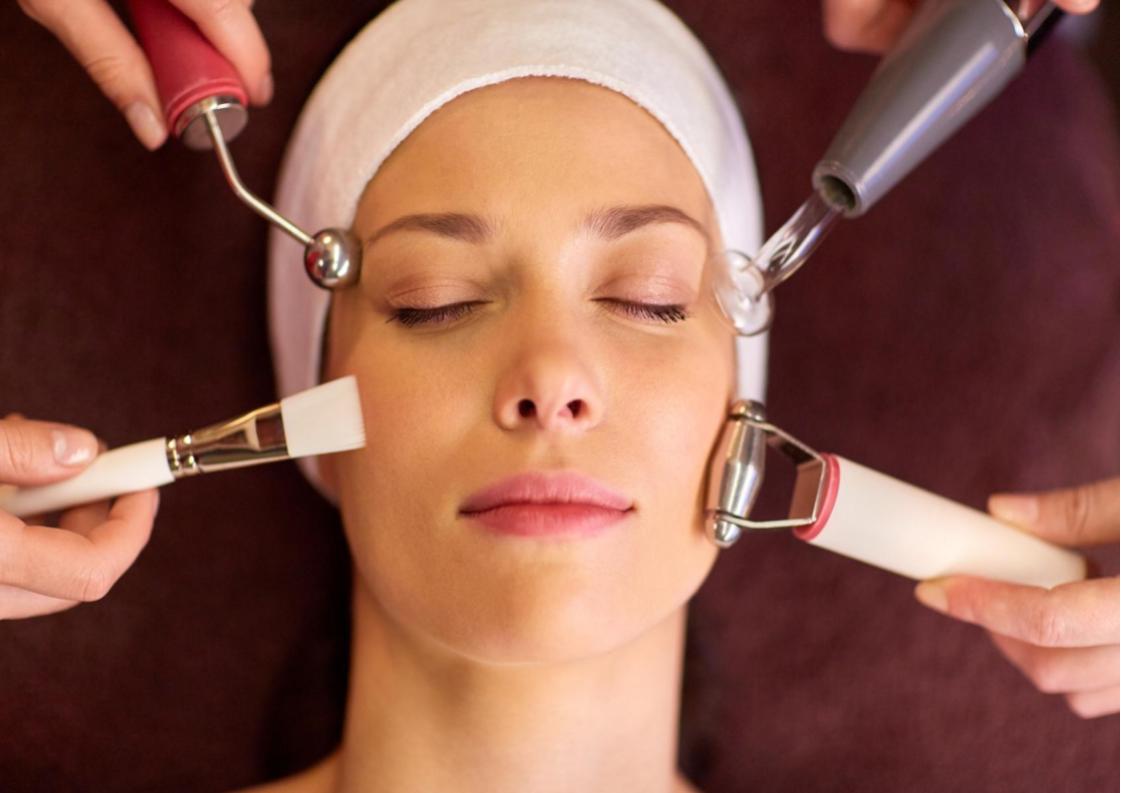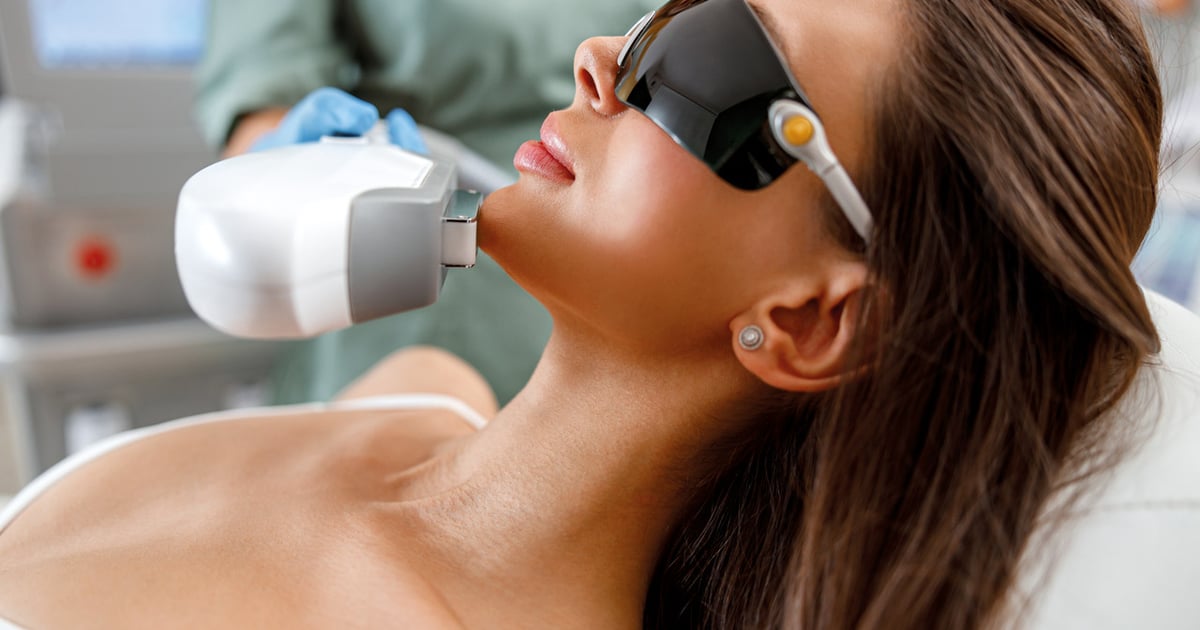
Combination treatments in aesthetic medicine pair two or more different procedures in a coordinated plan, either during one visit or across a staged sequence, so that each layer of facial aging is treated by the modality that actually reaches it. The evidence behind this approach is measurable rather than promotional: a meta-analysis of 14 controlled studies found that combining microneedling with platelet-rich plasma nearly tripled the odds of significant improvement in acne scarring compared with microneedling alone. Below we cover what combination therapy is, why layering outperforms single treatments, which pairings are most common, which ones can share a single appointment, the order treatments should follow, which pairings need spacing, how safety is assessed, what a full plan looks like, the best combinations for specific concerns, and how internal health shapes every result.
What Is Combination Therapy in Aesthetic Medicine?
Combination therapy in aesthetic medicine is the coordinated use of two or more treatment modalities, such as neuromodulators, dermal fillers, and energy-based devices, to achieve better outcomes than any single treatment produces on its own. The American Society for Laser Medicine and Surgery defines it in essentially these terms and notes that combination approaches address multiple facets of facial aging including wrinkles, volume loss, skin texture, and pigmentation.
Coordination is the word that carries the meaning. Receiving three procedures from three different providers over eighteen months is not combination therapy. Combination therapy means one clinician assessed the face as a whole, decided which layers needed work, selected a modality for each layer, and set an order and a timeline. Practitioners sometimes call it stacking or layering, and both terms describe the same discipline of planning treatments as a system rather than as separate purchases.
The distinction from monotherapy matters clinically. Monotherapy treats one concern with one tool and produces a partial correction that can look uneven next to the untreated areas around it. A relaxed forehead above a hollow midface reads as incongruent rather than refreshed. Planning the whole face at once is what a skin wellness consultation is built to do, and it is the step that turns a list of procedures into a plan.
Why Do Combination Treatments Work Better Than One Treatment?
Combination treatments work better than one treatment because facial aging occurs simultaneously across six tissue layers, and each aesthetic modality reaches only one or two of those layers. Treating one layer thoroughly leaves the other five unchanged. That is the whole argument, and it holds up in the data.
Aging is not a single process running at a single depth. Muscle activity creates dynamic lines at one level, fat compartments deflate and descend at another, the fibrous support layer relaxes at a third, dermal collagen thins at a fourth, and surface pigment and texture change at a fifth. These changes accumulate in parallel rather than in sequence, which is why a patient at 45 typically presents with four or five of them at once. Comprehensive facial rejuvenation requires reaching each depth with something built for it.
What Are the Different Layers of Facial Aging?
The different layers of facial aging are the muscle layer, the deep fat compartments, the superficial musculoaponeurotic system, the deep dermis, the papillary dermis, and the epidermis. Each layer changes differently and each responds to a different class of intervention.
Muscle sits deepest in functional terms and drives dynamic wrinkling through repeated contraction, which neuromodulators address by reducing that contraction. Deep fat compartments lose volume and shift downward, and injectable fillers and biostimulators restore that structure. The superficial musculoaponeurotic system, abbreviated SMAS, is the fibrous sheet that carries the mechanical load of the lower face, and microfocused ultrasound is the non-surgical tool that reaches it. Deep dermis loses collagen density, which radiofrequency microneedling and fractional laser rebuild. Papillary dermis and epidermis carry pigment, texture, and pore appearance, which light-based treatment and resurfacing correct. Six layers, five distinct modality classes, and no single device that covers more than two of them.
Do Combination Treatments Last Longer?
Yes, combination treatments last longer than single treatments, and the difference has been quantified in controlled studies. A case-control study of 76 participants aged 25 to 60 found that 70 percent of patients receiving botulinum toxin type A combined with hyaluronic acid filler maintained improvement at 12 weeks, compared with 45 percent of those receiving toxin alone.
Effect size follows the same pattern as duration. A randomized study of 94 patients published in the International Journal of Clinical and Experimental Medicine reported an effective rate of 59.57 percent for the combination of botulinum toxin type A with hyaluronic acid filler, against 29.79 percent for toxin monotherapy. Longer-horizon data points the same direction: an 18-month randomized study found that adding non-ablative 1540 nm fractional laser to injection lipolysis and filler produced no measurable advantage at six months but a statistically significant advantage at 13 and 18 months. Combination plans compound over time rather than fading faster.
What Are the Most Common Aesthetic Treatments Combined Together?
The most common aesthetic treatments combined together are neuromodulators with dermal fillers, laser resurfacing with medical-grade skincare, microneedling with platelet-rich plasma or growth factors, and injectables paired with skin tightening devices. Each pairing exists because the two components cover layers the other cannot reach.
Our practice in Bingham Farms holds every modality class involved in these pairings on site, which changes what is possible at the planning stage. A plan does not have to bend around whichever category of device happens to be available, and a patient does not have to coordinate three providers to receive one coherent sequence.
| Pairing | Layers Addressed | Primary Concerns | Same Session |
|---|---|---|---|
| Neuromodulator + dermal filler | Muscle and deep fat compartments | Dynamic lines, static folds, volume loss | Yes |
| Microneedling + platelet-rich plasma | Deep and papillary dermis | Acne scarring, texture, pore size | Yes |
| Fractional laser + medical skincare | Papillary dermis and epidermis | Sun damage, pigment, tone | Yes, skincare follows |
| Injectables + skin tightening device | Deep fat, SMAS, deep dermis | Early jowling, neck laxity | Staged |
| Ablative resurfacing + injectables | Full depth, surface to muscle | Advanced photoaging with volume loss | Staged |
Sources: American Society for Laser Medicine and Surgery combination therapy guidance; American Society of Plastic Surgeons 2024 Procedural Statistics Report; Global Aesthetics Consensus published in Plastic and Reconstructive Surgery; meta-analysis of microneedling with platelet-rich plasma published in Frontiers in Medicine.
What Are Two Services Commonly Offered at Medical Aesthetics Practices?
The two services most commonly offered at medical aesthetics practices are neuromodulator injections and hyaluronic acid dermal fillers, which are also the two highest-volume procedures in the country. American Society of Plastic Surgeons data records 9,883,711 neuromodulator treatments and 5,331,426 hyaluronic acid filler treatments in 2024, out of 28.2 million minimally invasive procedures total.
Volume of that scale is why the two appear together so often. Neurotoxins soften the lines that muscle movement creates, and fillers restore the structure that deflation removed, so the two address adjacent problems without overlapping. Skin resurfacing sits third at 3,703,305 procedures in 2024, up 6 percent year over year, which makes the three-part pairing of toxin, filler, and resurfacing the most frequently assembled combination in aesthetic medicine.
What Is a Liquid Facelift?
A liquid facelift is a combination of injectable treatments, typically dermal fillers with a neuromodulator and often a biostimulator, used to restore facial structure and contour without surgery. The name describes a coordinated injectable plan rather than a single product or a specific technique.
Structure is what the approach rebuilds. Filler placed at deep supportive points restores projection at the cheek and jawline, biostimulators prompt the skin to generate its own collagen over subsequent months, and a neuromodulator prevents muscle activity from working against the new contour. Evidence supports the layered version over the simple one: a study of non-surgical nasal reshaping found that the triple combination of barbed threads with hyaluronic acid filler and botulinum toxin produced the highest and most sustained satisfaction scores at one year, outperforming either two-part combination.
Can You Get Botox and Filler at the Same Time?
Yes, you can get Botox and filler at the same time, and full-face studies combining the two report satisfaction rates above 92 percent six months after treatment. A multicenter open-label study using botulinum toxin type A alongside five hyaluronic acid fillers across up to 13 facial zones found that 96.5 percent of subjects were at least satisfied at three weeks and 92.9 percent remained satisfied at six months.
Patient expectations were met at a similar rate. More than 91 percent of subjects in that study reported the outcome met or surpassed what they had anticipated, and more than 94 percent said they would recommend the treatment to others. Treating dermal fillers and neuromodulators as a single planned session rather than as two appointments also reduces total recovery, since one period of minor swelling covers both.
Long-horizon data reinforces the pattern. A retrospective review of 194 patients who received 4,402 onabotulinumtoxinA treatments over a mean of 9.1 years documented sustained patient and physician satisfaction, with greater perceived benefit reported by patients treated over longer periods. Returning before results fully disappear, rather than after, is what produces that cumulative effect.
Can You Do Laser and Botox on the Same Day?
Laser and Botox can be performed on the same day, and the standard practice is to deliver the laser treatment first and the neuromodulator afterward. Ordering matters because laser handpieces apply pressure and heat to the skin surface, and applying either over freshly injected product risks displacing it before it settles.
Heat is the specific variable to plan around. Injected neuromodulator needs several hours to bind at the target site, and the massage and warmth of a laser pass during that window can move it. Performing the laser pass first, then injecting once the treatment is complete, removes the conflict entirely and allows both to happen in one visit.
Can RF Microneedling Be Combined With PRP?
Yes, RF microneedling can be combined with platelet-rich plasma, and this pairing carries the strongest supporting evidence of any combination in aesthetic medicine. A meta-analysis of 14 controlled studies covering 472 patients found that adding platelet-rich plasma to microneedling raised the odds of greater than 50 percent improvement in acne scarring by a factor of 2.97, with a confidence interval of 1.96 to 4.51.
Patient-reported outcomes moved even further. The same analysis found satisfaction odds more than four times higher with the combination, at an odds ratio of 4.15. A separate systematic review published in Archives of Dermatological Research in 2026 found the odds of achieving greater than two-grade improvement roughly tripled with combination therapy. Our discussion of RF and PRP covers the protocol side in more detail.
The mechanism explains the numbers. Microneedling creates thousands of microchannels through the epidermis, and those channels stay open for a limited window afterward. Applying a growth-factor-rich preparation during that window delivers it into the dermis rather than onto the surface. Platelet-rich fibrin extends that principle further by releasing growth factors over a longer period than liquid preparations.
What Order Should Aesthetic Treatments Be Done In?
Aesthetic treatments should be sequenced by inflammation and downtime, with the highest-inflammation procedures performed first, injectables placed after healing completes, and surface refinement performed last. Ordering exists to prevent two treatments from asking the same tissue to heal from two different injuries at once.
The standard sequence runs as follows:
- Structural and deep work first. Ablative resurfacing, deep chemical peels, and microfocused ultrasound create the most inflammation and require the longest recovery, so they lead. Beginning with the most demanding step means every later treatment happens on skin that has already stabilized.
- Healing interval. Two to six weeks depending on depth, with no additional inflammatory treatment introduced during that period.
- Dermal rebuilding third. Radiofrequency microneedling or non-ablative fractional laser treatments rebuild collagen density once the surface has recovered.
- Injectables fourth. Neuromodulators and fillers are placed after resurfacing has fully healed, so product sits in stable tissue and is not disturbed by subsequent handpiece pressure.
- Surface refinement last. Light-based pigment and vascular correction, medical facials, and peels polish the result once the structure beneath is set.
- Maintenance on an interval. Lighter individual sessions hold the outcome rather than repeating the full sequence.
Sequencing is not rigid in every case. A patient with pigment as the dominant concern and no laxity does not need the deep structural step at all, and their sequence starts at the third position. What stays constant is the principle that inflammation-heavy work precedes product placement.
How Long Should You Wait Between Aesthetic Treatments?
Most patients wait two to four weeks between aesthetic treatments in a combination plan, extending to six weeks or longer after ablative resurfacing or deep peels. Waiting intervals are set by tissue recovery rather than by preference or scheduling.
Collagen remodeling is the limiting factor. New collagen forms across the three to four months following a thermal treatment, so a second thermal treatment delivered two weeks later lands in tissue still working through the first cycle. Spacing allows each cycle to mature and contribute before the next begins, which is why a four-session plan spread across five months outperforms the same four sessions compressed into six weeks.
Which Treatments Are Better Kept Apart?
Treatments are better kept apart when both create thermal or inflammatory injury in the same tissue layer, when one applies pressure over recently placed product, or when the second treatment would interrupt the healing cycle of the first. Separation is a scheduling decision, not a warning about the treatments themselves.
Three specific situations call for spacing. Two deep thermal modalities targeting the same dermal depth, such as ablative resurfacing followed shortly by radiofrequency microneedling, compound recovery without compounding benefit, since the tissue can only mount one healing response at a time. Any treatment applying sustained pressure or heat across the face is better scheduled before injectables rather than after, for the settling reason described above. And treatments requiring open skin, including microneedling and ablative work, are kept separate from anything introducing product into the epidermis on the same day unless that product is specifically intended for channel delivery.
Everything else is a planning question with a straightforward answer. Most pairings patients ask about can share a session with the right ordering, and the ones that cannot simply move two weeks apart.
Is It Safe to Combine Aesthetic Treatments?
Yes, it is safe to combine aesthetic treatments under proper assessment, and controlled studies show combination protocols do not raise the rate of significant adverse effects compared with single treatments. The meta-analysis of microneedling with platelet-rich plasma found no statistically significant difference in severe erythema or severe edema between combination and monotherapy groups.
Assessment is what carries the safety, and it precedes any decision about which treatments to pair. Medical history, current medications, prior aesthetic treatment, skin type, healing history, and realistic goals all shape which combinations suit a given patient. A thorough consultation establishes those variables before a plan is drawn rather than after.
How Skin Tone Shapes a Combination Plan
Skin tone shapes a combination plan because deeper Fitzpatrick types respond to inflammation with more pigment activity, which means combination protocols use longer intervals and modality choices that generate less epidermal heat. The plan changes in spacing and selection rather than in ambition.
Modality selection does most of the work. Radiofrequency heats tissue through electrical resistance rather than through melanin absorption, which makes it dependable across every skin tone. Longer laser wavelengths, particularly 1064 nm, pass through the epidermis with far less melanin interaction than shorter ones. Combining two chromophore-dependent treatments in quick succession is where caution belongs, and substituting one of them for a chromophore-independent modality resolves it. Assessing Fitzpatrick type at the first visit is standard practice for us before any combination is proposed.
What Is a Full Face Rejuvenation Plan?
A full face rejuvenation plan is a staged sequence of coordinated treatments spread across several months, divided into a correction phase that addresses accumulated change and a maintenance phase that holds the result. Treating it as a single appointment misunderstands how the underlying biology works.
A typical plan contains these components:
- Assessment and mapping. Identifying which of the six layers have changed and by how much, before any modality is selected.
- Correction phase. Three to six visits across four to six months, working through the sequence from deep to superficial.
- Consolidation. A review point roughly three months after the final correction visit, once collagen remodeling from the earlier steps has matured.
- Maintenance phase. Individual sessions on a three to twelve month interval depending on modality, rather than a repeat of the full sequence.
- Daily support. Medical-grade topical care and sun protection, which protect the investment between visits.
Working through a plan in phases at our Bingham Farms office lets us adjust between stages based on what actually happened rather than on what was projected at the start.
Building that review point in deliberately is what separates a plan from a schedule. Good treatment planning assumes the middle of the sequence will teach you something the beginning could not.
How Many Treatments Are in a Typical Combination Plan?
A typical combination plan contains three to six treatment visits during the correction phase, with two to four modalities used across those visits. Counts vary with how many layers need work and how far each has changed.
Concern count predicts visit count more reliably than age does. A patient presenting with texture and pigment alone often completes correction in three visits using two modalities. A patient with laxity, volume loss, dynamic lines, and photodamage needs the full sequence across five or six visits. Both are combination plans, and the shorter one is not a lesser version.
Best Combinations for Specific Concerns
Layer coverage explains the general principle, and specific concerns route to specific pairings. The three below account for most of what patients ask about.
What Is the Best Combination for Acne Scars?
The best combination for acne scars is microneedling with platelet-rich plasma, with fractional laser resurfacing and subcision added according to scar architecture. This pairing has more supporting evidence behind it than any other combination in the field.
Histology backs the clinical scores. A split-face study of 24 volunteers receiving six biweekly sessions found that combining a dermaroller with platelet-rich plasma or with 15 percent trichloroacetic acid peel produced significant improvement over the dermaroller alone, with P values of .015 and .011 respectively. Punch biopsies from that study showed more organized collagen bundles and increased epidermal thickness in the combination groups. Adding microneedling to a growth factor preparation changes what happens in the dermis, not just what shows on the surface.
Scar architecture determines what else joins the plan. Rolling scars are tethered from beneath by fibrous bands, so subcision releases the band before resurfacing addresses the surface. Boxcar and icepick scars respond to fractional resurfacing at the crater edge. Post-inflammatory pigment left behind after active acne responds to light-based correction rather than to resurfacing.
What Is the Best Combination for Skin Tightening?
The best combination for skin tightening is microfocused ultrasound for the fibrous support layer paired with radiofrequency microneedling for the dermis, with biostimulatory injectables added when volume loss contributes to the laxity. Laxity almost never originates at one depth.
Temperature is the shared requirement across the energy components. Collagen denatures at approximately 60 to 65 degrees Celsius, according to a review published in the Journal of Cutaneous and Aesthetic Surgery, and any tightening treatment that fails to reach that threshold in the dermis produces warmth rather than structural change. Both radiofrequency and focused ultrasound are built to hit it at their respective depths, which is why they complement rather than duplicate each other.
What Combination Treatments Work Best in Your 40s?
Combination treatments work best in your 40s when they pair collagen rebuilding with volume restoration, because dermal thickness and deep fat volume decline together during this decade. Treating one without the other produces firmer skin over a deflated frame, or restored volume under thinning skin.
Priorities shift by decade in a predictable pattern. The thirties favor prevention through light collagen stimulation and pigment control while the existing scaffold is still strong. The forties favor radiofrequency microneedling or fractional resurfacing alongside filler or biostimulator placement. The fifties and beyond favor deeper structural work through focused ultrasound and ablative resurfacing. Combination logic holds across all three decades, and only the modality mix changes.
How Does Skin Health From the Inside Affect Treatment Results?
Skin health from the inside affects treatment results because every combination plan depends on a healing response, and inflammation, nutrient status, hormonal balance, and environmental toxin load all determine how strong that response is. Two patients receiving identical protocols can produce different outcomes for reasons that have nothing to do with the devices.
Healing capacity is the variable nobody sees on a treatment plan. Collagen synthesis requires adequate protein, vitamin C, zinc, and copper, and a deficiency in any of them limits what the fibroblasts can build after a thermal treatment. Chronic systemic inflammation keeps tissue in a state that competes with the controlled inflammation a treatment deliberately creates. Dr. Doug Cutler, our naturopathic physician, works with patients on exactly these root-cause factors, examining inflammation, gut health, nutrient status, environmental toxin exposure, and metabolic balance rather than treating skin as a surface-only concern.
This is where combination thinking extends past the treatment room. A plan that rebuilds collagen while the conditions degrading that collagen go unexamined holds for a shorter time than one that addresses both. Our post on aesthetics and wellness takes that connection further.
What Are the New Trends in Aesthetic Medicine?
The new trends in aesthetic medicine are regenerative pairings that combine energy devices with biologics, prevention-led planning starting in the thirties, body combinations stacking muscle stimulation with fat reduction and skin tightening, and assessment-driven personalization replacing standard protocols. All four are combination trends rather than single-treatment trends.
Regenerative pairings are the most active area. Energy creates the microchannels and the healing demand, and biologics supply the signaling material that the healing response draws on, which is why the two produce more together than either does separately. Our regenerative aesthetics protocols are built around that pairing rather than treating the categories as alternatives.
Body work is following the face by several years. Muscle stimulation builds tone, fat reduction addresses volume, and skin tightening handles the envelope, and the three combine on the same layered logic that governs facial planning. Prevention-led planning is the other significant shift, with patients in their thirties building collagen while the scaffold is still strong rather than rebuilding it after it thins.
Frequently Asked Questions
Do Combination Treatments Cost More Than Single Treatments?
Combination treatments involve more than a single treatment at the outset and often less over a full course, because layered plans reach the target result in fewer total sessions than repeated monotherapy. A randomized study found combination therapy achieved a 59.57 percent effective rate versus 29.79 percent for monotherapy, meaning the single-modality group needed considerably more treatment to approach the same outcome. Your provider can walk through the specifics for your plan during a consultation.
How Long Do Combination Treatment Results Last?
Combination treatment results last longer than single-treatment results, with controlled data showing 70 percent of combination patients maintaining improvement at 12 weeks against 45 percent on monotherapy. Duration varies by modality, since neuromodulator effects measure in months while collagen built through energy treatment measures in years. Maintenance sessions hold the result rather than restarting the plan.
Can You Combine Treatments on Your First Visit?
You can combine treatments on your first visit, though most providers begin with a subset and build from there. Starting with two modalities rather than four allows your provider to observe how your skin responds before adding further inflammation to the same tissue. Assessment always precedes treatment regardless of how many modalities the eventual plan includes.
What Is Treatment Stacking?
Treatment stacking is another name for combination therapy, describing the practice of layering two or more aesthetic modalities in a coordinated plan. Practitioners use stacking, layering, and combination therapy interchangeably. All three describe treating multiple tissue layers with modalities selected for each rather than applying one treatment to everything.
Do You Need Downtime for Combination Treatments?
Downtime for combination treatments ranges from none to roughly seven to ten days, depending on which modalities the plan includes rather than on how many. Combining two low-downtime treatments in one session produces low-downtime recovery. Sequencing plans so the highest-downtime step comes first also means the remaining visits require progressively less recovery.
Can Men Have Combination Aesthetic Treatments?
Men can have combination aesthetic treatments, and the same layered logic applies with adjustments for facial anatomy. Male facial structure carries greater muscle mass and different fat distribution, which changes neuromodulator dosing and filler placement points. Male skin is also thicker on average, which affects the depth settings used for dermal treatments.
Putting It All Together
Combination therapy earned its place in aesthetic medicine because the biology gives it no real alternative. Faces age across six tissue layers simultaneously, each modality reaches one or two of them, and the studies comparing layered plans against single treatments come back the same way every time: higher effective rates, longer duration, better satisfaction, and no meaningful increase in adverse effects.
What separates a strong combination plan from a list of procedures is the assessment behind it, the order the treatments follow, and the spacing between them. That is a planning discipline, and it is worth the time it takes to get right. It is also the reason we keep every modality class under one roof in Bingham Farms, so the sequence can follow the face rather than the equipment list.
If you would like to talk through what a layered plan might look like for your skin, the team at FACE Skincare Medical Wellness is always glad to sit down with you.
You can also reach us directly at (248) 663-0161.