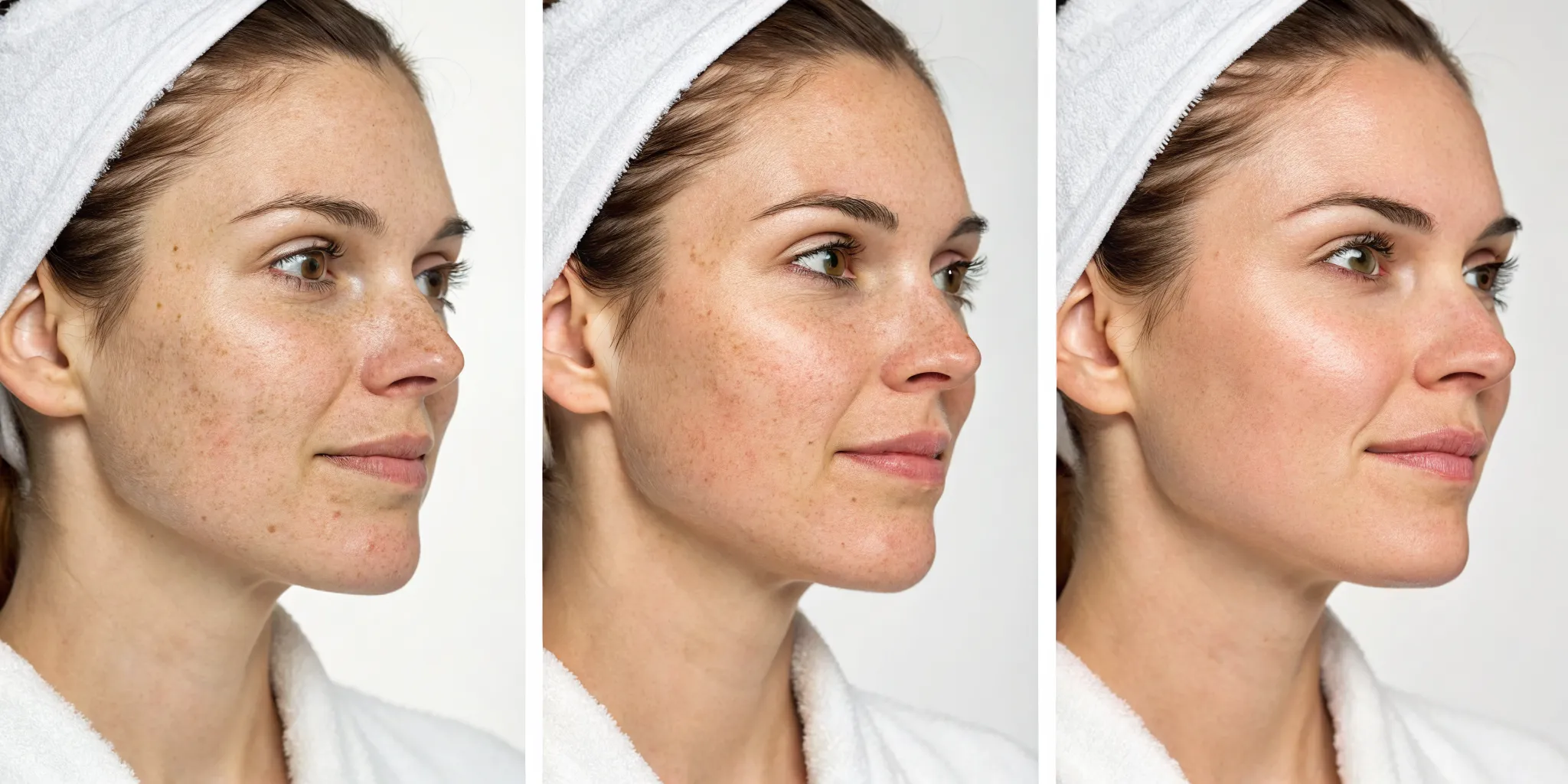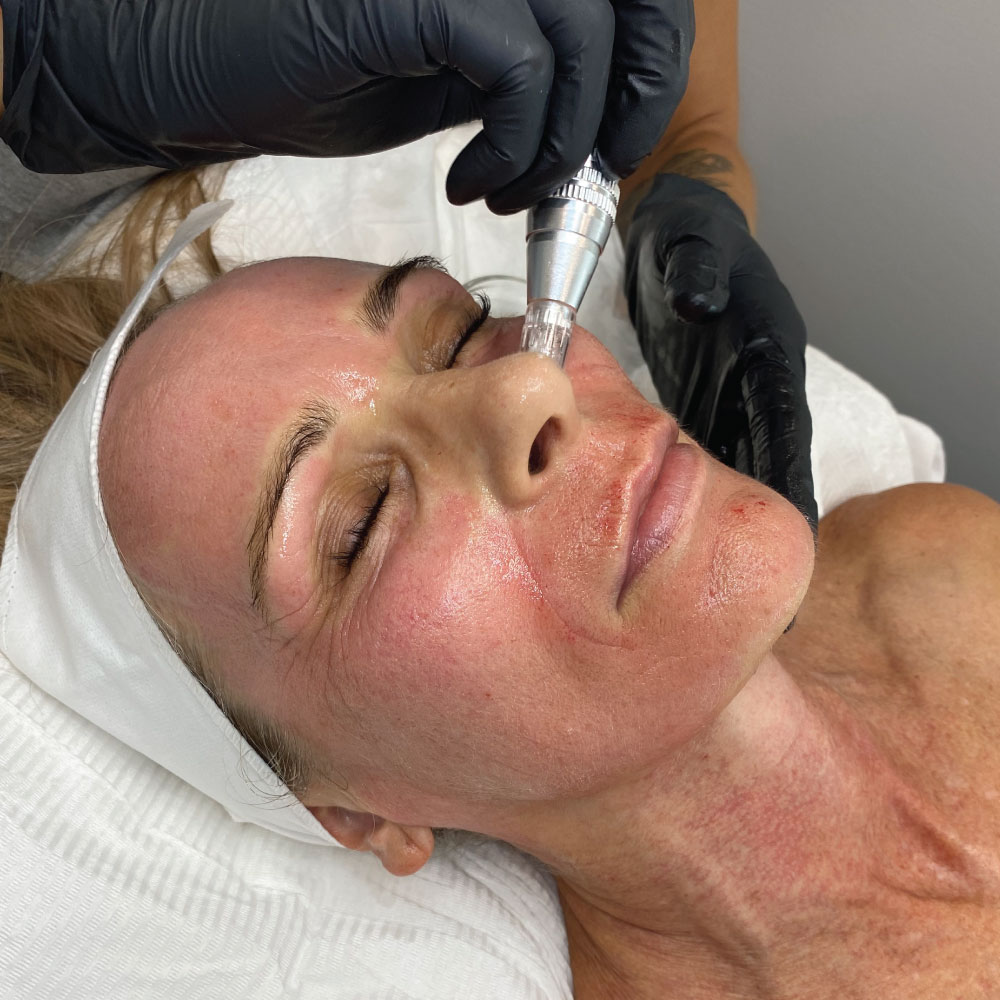
Advanced microneedling improves skin texture by creating controlled micro-injuries in the skin that trigger the body’s natural collagen and elastin production. This process smooths rough patches, refines enlarged pores, softens acne scars, and evens out skin tone over a series of treatments. A split-face comparison study published in the journal Cosmetics in 2025 found that 80 percent of participants showed greater firmness and improved skin texture on the side treated with microneedling, with 85 percent reporting a reduction in redness. This article covers how advanced microneedling works for skin texture, who it helps, how it compares to other options, and what kind of results you can realistically expect.
How Advanced Microneedling Improves Skin Texture
Advanced microneedling improves skin texture by triggering the body’s wound-healing response at a controlled, precise level. A medical-grade device equipped with tiny sterile needles creates thousands of microscopic channels in the skin. These micro-injuries send a signal to the body to produce new collagen and elastin, the two proteins responsible for keeping skin smooth, firm, and resilient. As the skin heals, it replaces damaged, uneven tissue with fresh, organized collagen fibers that create a smoother surface.
The difference between basic microneedling and advanced microneedling treatments is significant. Advanced devices use motorized, adjustable-depth needles that penetrate the skin with much greater precision than manual rollers. According to a comprehensive dermatology review compiled by Kristen Sparrow, MD in 2024, automated microneedling pens produce more uniform results and are superior to manual rollers. Needle depth can be set between 0.5 and 2.5 millimeters depending on the treatment area and concern, with 1.0 millimeters being a common setting for general texture rejuvenation.
RF microneedling takes this process even further by adding radiofrequency energy to the needle punctures. The heat reaches deeper into the dermis, causing existing collagen to contract while stimulating new collagen growth at the same time. Biopsy studies show that RF microneedling increases dermal thickness by an average of 15 to 20 percent at three months post-treatment, according to clinical data compiled by La Belle Vie Medical Spa. This deeper remodeling is why RF microneedling produces stronger and longer-lasting texture improvements than standard microneedling alone.
Does Microneedling Fix Skin Texture?
Yes, microneedling fixes skin texture. Multiple clinical studies confirm that microneedling effectively improves skin texture by reducing the appearance of scars, wrinkles, enlarged pores, and rough patches through collagen stimulation. A study published in Plastic and Reconstructive Surgery, Global Open in 2025 evaluated microneedling combined with exosome therapy and reported Global Aesthetic Improvement Scale scores of 4 to 5, indicating “very much improved” outcomes for both pore reduction and skin texture enhancement.
The way it works is straightforward. Uneven skin texture happens because the collagen matrix beneath the surface is disorganized, thinned, or damaged. Sun exposure, acne, aging, and environmental stress all break down collagen over time. When the body loses about 1 percent of its collagen per year starting in the mid-20s, according to widely cited dermatology reviews, the skin gradually becomes rougher, duller, and less even. Microneedling reverses part of this decline by forcing the body to lay down new, organized collagen in the treated areas.
Clinical trials report that approximately 85 percent of patients rate their results as “very much improved” or “much improved” on standardized improvement scales, according to La Belle Vie Medical Spa. Objective measurements show 20 to 30 percent improvement in skin elasticity and 25 to 35 percent reduction in pore size after a series of treatments. Patients commonly report smoother texture, better makeup application, and increased confidence in their skin’s appearance.
What Causes Uneven Skin Texture?
Uneven skin texture is caused by a combination of collagen loss, sun damage, acne scarring, enlarged pores, dead skin cell buildup, and environmental stress. Each of these factors disrupts the smooth, organized structure of the skin’s surface in different ways.
Sun exposure is one of the biggest culprits. UV radiation breaks down collagen and elastin fibers, which leads to rough texture, fine lines, and loss of firmness over time. According to research compiled by NCH Stats in 2026, women can lose up to 30 percent of their skin collagen in the five years after menopause, which accelerates the decline in skin quality during that window. For patients dealing with texture and scar concerns, the underlying cause is almost always some form of collagen breakdown or disorganization.
Acne scarring is another major cause. When acne heals, it sometimes leaves behind pitted or raised areas where the collagen did not rebuild correctly. These scars create an uneven surface that no amount of moisturizer or exfoliation can fix at the surface level. That is because the problem is structural, not superficial. Enlarged pores also contribute to rough texture. When collagen weakens around the pore opening, the pore stretches and becomes more visible, giving the skin a coarser appearance.
Can Microneedling Make Pores Smaller?
Microneedling can make pores appear smaller, but it does not physically shrink the pore itself. Pore size is determined by genetics and cannot be permanently changed. What microneedling does is stimulate collagen production in the skin surrounding each pore. As the collagen tightens and firms the tissue around the pore opening, the pore looks smaller and less noticeable. According to LaserAway, when skin becomes smoother, firmer, and more refined through collagen remodeling, pores tend to stand out far less.
A study cited by Liv Hospital found that 93.8 percent of patients saw significant improvement in pore appearance after four microneedling sessions. The treatment also improves the overall surface quality of the skin, which makes pores less visible even without directly changing their diameter. Many patients report that their skin looks “filtered” after completing a series of treatments because the overall surface becomes more even and reflective.
RF microneedling is especially effective for large pores because the radiofrequency energy reaches deeper into the dermis where the structural collagen that supports the skin around each pore is produced. Standard microneedling works well for surface-level texture, but for patients whose enlarged pores are tied to deeper collagen loss or skin laxity, the addition of RF energy makes a meaningful difference in results.
Is RF Microneedling Better Than Regular Microneedling for Texture?
Yes, RF microneedling is better than regular microneedling for deeper texture concerns like significant acne scarring, skin laxity, and enlarged pores tied to collagen loss. The addition of radiofrequency energy enhances the dermal wound-healing cascade well beyond what needle punctures alone can trigger, according to a review published in Plastic and Reconstructive Surgery in 2024. The thermal injury from RF energy causes fibrotic remodeling deep inside the tissue, creating tightening and restructuring that standard microneedling cannot match.
For mild texture concerns like light roughness, minor unevenness, or superficial dullness, standard microneedling with a medical-grade device like SkinPen can be very effective. But for patients who need more structural change, radiofrequency treatments combined with microneedling deliver stronger results. Clinical data shows RF microneedling produces average improvement rates of 25 to 35 percent in skin laxity scores after three treatments, compared to more modest improvements with standard microneedling alone.
The global RF microneedling market was valued at approximately $473 million in 2024 and is projected to reach $768 million by 2031, according to market research firm Reanin. That growth reflects the fact that both patients and providers consistently choose RF microneedling when they need results that go beyond surface-level improvement. We offer both standard and RF microneedling at our Bloomfield Hills practice and help each patient choose the right approach based on their specific skin concerns.
What Is Better for Rosacea, IPL or Microneedling?
IPL is generally better than microneedling for treating rosacea-related redness and visible blood vessels. IPL (intense pulsed light) targets the vascular component of rosacea directly by delivering light energy that is absorbed by the hemoglobin in dilated blood vessels, causing them to collapse and fade. A multicenter study published in 2025 evaluating IPL for rosacea found that 95.1 percent of patients were very highly satisfied with treatment outcomes, with significant reduction in erythema and telangiectasias.
Microneedling, on the other hand, is better for improving overall skin texture and stimulating collagen in patients whose rosacea is stable and not actively flaring. Papulopustular rosacea, which involves active bumps and pustules, is a contraindication for microneedling. But for patients with controlled rosacea who also deal with rough texture, enlarged pores, or scarring from past flare-ups, microneedling can complement IPL treatments nicely. Many providers use IPL first to address the redness and vascular issues, then follow with microneedling to improve texture once the skin is stable.
For patients whose primary concern is facial redness from rosacea, IPL is the better starting point. For patients whose main concern is texture, microneedling is the better choice. When both concerns are present, combining the two in a treatment plan, with appropriate spacing, gives the most complete result.
How Many Microneedling Sessions Does It Take to Improve Skin Texture?
It takes 3 to 6 microneedling sessions spaced 4 to 6 weeks apart to see significant skin texture improvement. According to a comprehensive dermatology review compiled in 2024, the recommended protocol for skin rejuvenation is a needle depth of about 1.0 millimeter, with 3 to 6 sessions followed by annual maintenance treatments. Each session builds on the previous one because collagen production is cumulative.
Short-term improvements appear within 2 to 4 weeks after the first session. By this point, new collagen starts making a visible difference in smoothness and tone. Cumulative results build over 3 to 6 months as the body continues producing and organizing fresh collagen fibers. The full effect of a completed treatment series typically peaks around the 3 to 6 month mark after the final session.
A study published in Clinical, Cosmetic and Investigational Dermatology in 2025 analyzed 16 clinical studies involving 481 patients and confirmed that fractional radiofrequency microneedling is effective as a standalone treatment for improving skin quality. For patients with more advanced texture concerns like deep acne scarring, combining microneedling with other therapies like PRP or laser treatments resulted in even stronger improvements, according to a network meta-analysis by Li H et al. cited in the Aesthetic Medicine journal in 2025.
Can You Microneedle if You Have Lupus?
Microneedling is generally not recommended for people with active lupus. Lupus is an autoimmune disease where the immune system attacks the body’s own tissues. Because microneedling creates controlled micro-injuries that rely on a healthy immune response for healing, patients with lupus are at risk of unpredictable reactions, delayed healing, or triggering a disease flare-up. According to Dr. Oracle’s medical reference database, patients with lupus erythematosus may develop skin manifestations or worsen their condition after microneedling.
The Eco Skin Clinic lists connective tissue disorders and autoimmune disorders, including lupus, as contraindications for microneedling. However, some patients with lupus that is well-controlled and in remission may still be candidates on a case-by-case basis. According to MDPen’s contraindications guide, patients with lupus or another autoimmune condition should speak with their medical provider and the treating aesthetic provider before scheduling microneedling. Medical clearance is strongly recommended.
If lupus is active, the safer approach is to wait until the disease is in remission and the skin is stable before considering any microneedling treatment. For patients with autoimmune conditions who are cleared by their doctor, conservative treatment parameters with shallower needle depths and lower treatment frequency can reduce the intensity of the skin’s response while still delivering improvement.
What Should You Put on Your Skin After Microneedling?
After microneedling, you should put gentle, hydrating, and soothing products on your skin. The microchannels created during the treatment are open for several hours, which means the skin absorbs products more deeply than usual. This is both an opportunity and a risk. Using the right products can enhance results, while using the wrong ones can cause irritation or a reaction.
In the first 24 to 48 hours, stick to a gentle cleanser, a hyaluronic acid serum for hydration, and a quality moisturizer. Avoid products with active acids, retinoids, vitamin C in high concentrations, fragrances, or alcohol during this window. Sunscreen with broad-spectrum protection is essential starting the day after treatment. For a more detailed guide on what to apply and what to skip, we cover everything in our post about aftercare products for microneedling.
Many providers now apply growth factor serums, PRP, or exosome solutions immediately after microneedling to take advantage of the enhanced absorption. A 2025 study published in Plastic and Reconstructive Surgery, Global Open found that combining microneedling with stem cell-derived exosome therapy produced “very much improved” outcomes for skin texture enhancement, with improvements sustained through 22 weeks of follow-up. The combination of microneedling with PRP is also a proven way to amplify the collagen response.
Microneedling Options for Skin Texture Compared
| Treatment Type | Best For | Depth of Action | Sessions Needed | Results Duration |
|---|---|---|---|---|
| Standard Microneedling (SkinPen) | Mild texture, fine lines, light scars | Upper to mid dermis | 3 to 6 | 3 to 6 months |
| RF Microneedling (Morpheus8, Sylfirm X) | Deep scars, laxity, pores, advanced texture | Deep dermis (up to 4 mm) | 3 to 6 | 12 to 24 months |
| Microneedling + PRP | Enhanced collagen, faster healing | Mid to deep dermis | 3 to 6 | 6 to 12 months |
| Chemical Peel | Surface texture, tone, mild roughness | Epidermis to upper dermis | 3 to 6 | 1 to 3 months |
| Laser Resurfacing | Deep scars, wrinkles, sun damage | Variable (device dependent) | 1 to 3 | 6 to 24 months |
Sources: La Belle Vie Medical Spa (2025), ASPS 2024 Procedural Statistics Report, Laguna Med Spa (2025), Comprehensive Dermatology Review (2024), Aesthetic Medicine (2025).
Is Microneedling Safe for All Skin Types?
Yes, microneedling is safe for all skin types, including darker skin tones. This is one of the major advantages microneedling has over certain laser treatments. Because microneedling works through mechanical micro-injuries and heat energy delivered below the skin surface rather than through light energy that interacts with melanin, it carries a much lower risk of post-inflammatory hyperpigmentation in patients with more melanin in their skin.
The U.S. Food and Drug Administration has cleared microneedling devices for improving the appearance of facial acne scars, facial wrinkles, and abdominal scars in patients aged 22 and older, according to the FDA’s consumer safety page. The FDA recommends that microneedling be performed by a healthcare provider with special training. According to the ASPS 2024 report, over 28.5 million minimally invasive cosmetic procedures were performed in the United States that year, and microneedling’s safety across all skin types is a key factor behind its growing popularity.
That said, certain skin conditions do require caution. Patients with active acne, eczema flare-ups, psoriasis, or rosacea in the treatment area should wait until those conditions are controlled before getting microneedled. We evaluate every patient individually during a skin wellness consultation to make sure the treatment is appropriate for their specific situation.
How Long Do Microneedling Results Last for Skin Texture?
Microneedling results for skin texture last 3 to 6 months after a single session and 12 to 24 months after a completed series of RF microneedling treatments. The duration depends on the type of microneedling used, the number of sessions completed, and individual factors like age, sun exposure, and skincare habits.
Standard microneedling produces collagen remodeling that is primarily concentrated in the upper and mid dermis. These improvements are real but tend to fade sooner because the collagen is closer to the skin surface where it breaks down faster. RF microneedling produces deeper structural changes that last significantly longer. According to clinical data from Vibrant Salon and Spa, skin tightening improvements from RF microneedling last 14 to 18 months, while pore size improvements last 9 to 12 months.
Maintenance sessions are key to keeping results over the long term. For standard microneedling, touch-ups every 6 to 12 months help sustain the texture improvement. For RF microneedling, maintenance every 12 to 18 months is typically sufficient. Daily sunscreen use, a consistent skincare routine, and avoiding excessive sun exposure all play a critical role in extending results between sessions.
Frequently Asked Questions
Does Microneedling Help With Rough Skin on the Cheeks?
Yes, microneedling helps with rough skin on the cheeks by stimulating new collagen production that replaces damaged, uneven tissue with smoother, healthier skin. The cheeks are one of the most commonly treated areas during microneedling sessions. Most patients notice a visible improvement in cheek texture after 2 to 3 sessions, with continued smoothing as collagen builds over the following months.
Can Microneedling Fix Sun-Damaged Skin Texture?
Yes, microneedling can fix sun-damaged skin texture by rebuilding the collagen that UV radiation has broken down over time. Sun damage causes roughness, dullness, uneven tone, and fine lines. According to research published in Frontiers in Medicine in 2025, microneedle RF treatment produced measurable improvements in pigmentation, vascular appearance, and hydration metrics at 30 days post-treatment. A series of 3 to 6 sessions typically produces the best results for sun-damaged skin.
How Long After Microneedling Does Skin Texture Improve?
Skin texture improves within 2 to 4 weeks after a microneedling session as new collagen starts forming. Full results take 3 to 6 months to appear because the body needs time to produce, organize, and mature the new collagen fibers. Initial improvements include a smoother feel and a healthier glow. The most dramatic texture changes become visible around the 3-month mark after completing a full treatment series.
Is Microneedling Better Than Chemical Peels for Texture?
Microneedling is better than chemical peels for deeper texture concerns like acne scars, enlarged pores, and skin laxity because it reaches the mid to deep dermis where structural collagen is produced. Chemical peels primarily affect the outer layers of the skin and are better suited for surface-level roughness, mild discoloration, and dead skin cell buildup. For patients who need structural remodeling, microneedling delivers stronger, longer-lasting results.
Can You Combine Microneedling With Laser Treatments for Texture?
Yes, you can combine microneedling with laser treatments for enhanced texture improvement. A network meta-analysis cited in Aesthetic Medicine in 2025 concluded that microneedling combined with other therapies like laser or topical treatments resulted in superior improvements compared to microneedling alone. The two treatments target different depths and mechanisms, so they complement each other well when spaced appropriately.
Does Microneedling Work for Textured Skin From Acne?
Yes, microneedling works for textured skin from acne. A systematic review published in Clinical, Cosmetic and Investigational Dermatology in 2025 analyzed 16 studies with 481 patients and found that fractional radiofrequency microneedling is effective for acne scar treatment as a standalone therapy. The controlled micro-injuries and collagen induction help fill in depressed scars and smooth out the uneven surface that acne leaves behind.
How Many Sessions of Microneedling for Enlarged Pores?
Most patients need 3 to 6 microneedling sessions spaced 4 to 6 weeks apart to see significant improvement in enlarged pores. A study cited by Liv Hospital found that 93.8 percent of patients saw meaningful pore improvement after four sessions. The collagen produced during each session tightens the tissue around the pore, making it look smaller and less visible over time. Maintenance treatments every 6 to 12 months help sustain the improvement.
Wrapping It Up
Advanced microneedling is one of the most effective ways to improve skin texture without surgery. Whether the concern is roughness, enlarged pores, acne scarring, or dull, uneven skin, microneedling addresses the root cause by rebuilding the collagen that gives skin its smooth, firm structure. Clinical evidence consistently shows high satisfaction rates, measurable improvements in texture and pore size, and results that last months to years depending on the type of treatment used.
If you are ready to improve your skin texture and want a treatment plan built around your specific concerns, the team at FACE Skincare~Medical~Wellness can help. Call us at (248) 663-0161 to schedule a consultation.