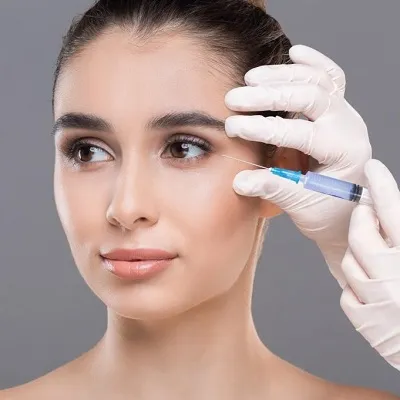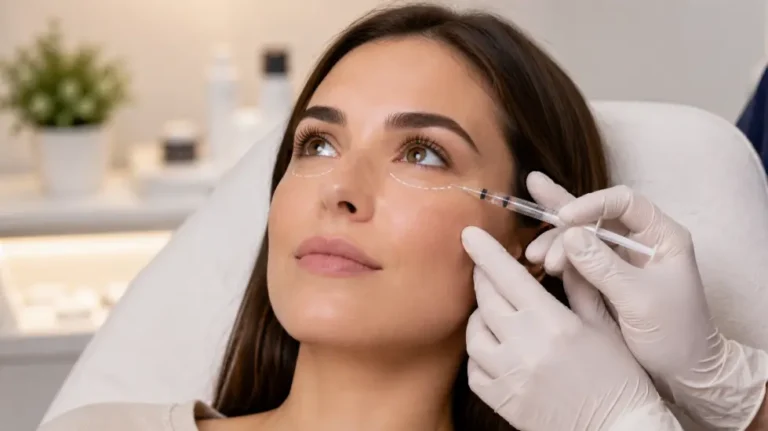
Radiofrequency microneedling tightens skin by combining tiny needle punctures with controlled radiofrequency heat deep inside the dermis. This triggers the body’s natural healing response, which produces fresh collagen and elastin for firmer, smoother skin. A comprehensive review of clinical studies shows average improvement rates of 25 to 35 percent in skin laxity scores after a series of three treatments, according to research compiled by La Belle Vie Medical Spa in 2025. In this article, we cover how the technology works, who it helps, how it compares to other options, what to expect during recovery, and how long the results last.
How Radiofrequency Microneedling Technology Tightens Skin
Radiofrequency microneedling tightens skin through a two-step process that happens at the same time. First, tiny sterile needles create controlled micro-injuries in the skin. These small punctures trigger the body’s wound-healing response, which sends fibroblasts to the area to build new collagen. Second, radiofrequency energy passes through those needles directly into the deeper layers of the dermis, heating the tissue to around 67 degrees Celsius. Research from the Journal of Cutaneous and Aesthetic Surgery in 2024 confirms that this target temperature is ideal for triggering dermal remodeling and reducing skin laxity.
The heat from the radiofrequency energy causes existing collagen fibers to contract immediately. Over the following weeks and months, the body continues to lay down new collagen and elastin in the treated zones. According to a review published in Plastic and Reconstructive Surgery in 2024, the addition of radiofrequency to microneedling represents a clear advance over traditional microneedling for skin tightening, with improvements in both safety and results over time.
Biopsy studies show that RF microneedling increases dermal thickness by an average of 15 to 20 percent at three months after treatment, according to data compiled by La Belle Vie Medical Spa. Type I collagen levels show the most significant increase, while elastin fiber organization improves gradually over the full treatment course. The body also creates new blood vessels in the treated area, which improves circulation and gives skin a healthier appearance.
Does Radiofrequency Skin Tightening Really Work?
Yes, radiofrequency skin tightening really works. Clinical evidence consistently shows measurable improvements in skin firmness, texture, and elasticity after RF microneedling treatments. A systematic review published in Clinical, Cosmetic and Investigational Dermatology in 2025 analyzed 16 studies involving 481 patients and found that fractional radiofrequency microneedling is an effective treatment when used on its own. The review included six prospective studies, six randomized clinical trials, three retrospective studies, and one comparative trial.
The global RF microneedling market was valued at approximately $473 million in 2024 and is projected to reach $768 million by 2031, according to market research firm Reanin. That kind of growth reflects real patient demand driven by real results. Non-surgical skin tightening ranked among the top five most popular non-surgical aesthetic procedures worldwide in 2024, according to the International Society of Aesthetic Plastic Surgery (ISAPS) Global Survey.
We see patients in our Bloomfield Hills practice who come in skeptical about non-surgical options. Many of them are surprised by how much improvement they see after just a few sessions of RF skin treatments. The results are gradual and natural, which is exactly what most patients want.
What Is the Difference Between Microneedling and RF Microneedling?
The difference between microneedling and RF microneedling is that RF microneedling adds radiofrequency energy to the micro-injury process, reaching deeper skin layers and producing stronger tightening effects. Traditional microneedling creates tiny channels in the skin to stimulate collagen on its own. RF microneedling does the same thing, but the needles also deliver heat energy into the dermis during the puncture.
This added heat causes fibrotic remodeling deep inside the tissue. Fibrosis of the tissue leads to extra tightening that traditional microneedling cannot match on its own. According to the Plastic and Reconstructive Surgery review from 2024, the thermal injury from radiofrequency energy enhances the dermal wound-healing cascade well beyond what needle punctures alone can do.
Traditional microneedling results typically last 3 to 6 months. RF microneedling results last 12 to 18 months, according to multiple clinical sources, because the deeper collagen remodeling creates more lasting structural changes in the skin.
How Long Does RF Skin Tightening Last?
RF skin tightening lasts 1 to 2 years in most patients, depending on the device used, the number of sessions completed, and individual skin factors like age and sun exposure. Skin tightening improvements specifically tend to last 14 to 18 months because the radiofrequency energy reaches areas where deeper structural collagen and elastin production is needed, according to clinical data from Vibrant Salon and Spa.
Wrinkle and fine line improvements typically hold for 12 to 15 months with proper skin care. Pore size improvements generally last 9 to 12 months. The reason skin tightening results last longer than pore or texture improvements is that the structural collagen deep in the dermis takes longer to break down compared to surface-level changes.
Maintenance sessions every 12 to 18 months help preserve results over the long term. We recommend patients follow a consistent at-home routine with sunscreen and quality skin care products between sessions to get the most out of their radiofrequency treatments.
Can a 70 Year Old Benefit From Microneedling?
Yes, a 70 year old can benefit from microneedling, especially RF microneedling. Age is not a disqualifier for this treatment. In fact, older patients often see meaningful improvements because they have more collagen loss to address. A study published by Sibilla et al. found that collagen content peaks between ages 25 and 34, followed by an approximate 25 percent decrease over the following four decades. Women can lose up to 30 percent of their skin collagen in the five years after menopause alone, according to dermatology research compiled by NCH Stats in 2026.
RF microneedling is safe for older skin because it is minimally invasive with very short recovery time. The treatment helps even mature skin produce new collagen. Results may be more subtle in older patients compared to someone in their 40s, but the improvements in skin firmness and texture are still real and visible. Patients with aging skin concerns at any age are good candidates as long as they have realistic expectations.
How Many RF Microneedling Sessions Do You Need for Skin Tightening?
Most patients need 3 to 6 RF microneedling sessions spaced 4 to 6 weeks apart for optimal skin tightening results. The exact number depends on the severity of skin laxity, the treatment area, and the specific device being used. According to research from Athena Plastic Surgery, most patients see initial improvements after 2 to 3 sessions, with full results becoming evident after completing the recommended treatment series.
A single session can deliver noticeable improvement in skin texture and tone that lasts several months. However, collagen production is a cumulative process. Each session builds on the last one. By the six-month mark after your final treatment, the full results are typically visible because the body needs time to produce and organize the new collagen fibers.
Some concerns require more sessions than others. Mild skin laxity may respond well to 3 sessions, while deeper wrinkles or significant sagging may need 5 or 6. A scoping review published in Aesthetic Surgery Journal in 2025 by researchers at Peking Union Medical College confirmed that RF microneedling is effective across multiple facial zones, including the cheeks, periorbital region, jawline, lower face, and neck.
What Areas of the Body Can Be Treated With RF Microneedling?
RF microneedling can treat the face, neck, chest, abdomen, arms, thighs, and hands. The face is the most common treatment area, where it addresses fine lines, wrinkles, acne scars, enlarged pores, and sagging skin. The neck and chest are also popular because those areas often show early signs of aging but are difficult to treat with topical products alone.
For the body, RF microneedling helps with stretch marks, loose skin after weight loss, and skin elasticity concerns. The treatment can reach depths of up to 4 millimeters depending on the device and needle configuration. According to the Plastic and Reconstructive Surgery review, needle depth should be adjusted to reflect the differences in skin thickness across the body. For example, 1.5 millimeters works well for the forehead, 1.0 millimeters for the cheeks, and 2.0 millimeters for the nasal sidewalls.
An open-label clinical study published in the Journal of Dermatological Treatment in 2025 evaluated RF microneedling specifically for abdominal skin laxity in postpartum women. The study found measurable improvements after three treatments spaced at 8-week intervals, showing that the technology works well beyond the face.
Is RF Microneedling Safe for All Skin Types?
Yes, RF microneedling is safe for all skin types, including darker skin tones. This is one of the key advantages of RF microneedling over certain laser treatments. Because the radiofrequency energy is delivered through needles beneath the skin surface rather than through light energy that interacts with melanin, the treatment carries a much lower risk of hyperpigmentation or discoloration in patients with more melanin in their skin.
The U.S. Food and Drug Administration has cleared multiple RF microneedling devices for skin rejuvenation and skin tightening. The American Society of Plastic Surgeons (ASPS) reported that minimally invasive cosmetic procedures increased by 3 percent in 2024, with over 28.5 million minimally invasive treatments performed in the United States that year. A significant portion of this growth comes from RF-based treatments because of their safety profile across all skin types.
That said, patients with active skin infections, open wounds, or certain inflammatory skin conditions should wait until those issues resolve before getting treated. We always evaluate each patient’s skin individually during a consultation to make sure the treatment is right for them.
Can RF Microneedling Replace a Facelift?
RF microneedling cannot fully replace a facelift for patients with severe skin sagging. However, it is an excellent alternative for patients with mild to moderate skin laxity who want to avoid surgery. The two procedures serve different levels of need. A facelift physically removes excess skin and repositions deeper tissue. RF microneedling works by stimulating the body’s own collagen production to gradually tighten and firm the skin over time.
For patients who are not ready for surgery or who do not have enough laxity to justify it, skin tightening through RF microneedling can deliver impressive results. According to the ISAPS 2024 Global Survey, non-surgical skin tightening was one of the top five non-surgical procedures performed worldwide, with over 20.5 million non-surgical procedures recorded that year. Many patients choose RF microneedling as a way to delay surgery or to maintain results after a surgical procedure.
The American Academy of Facial Plastic and Reconstructive Surgery (AAFPRS) noted in its 2024 annual trends survey that one in four surgeons anticipate growing demand for non-surgical treatments like skin tightening as more patients seek less invasive options. The question of whether RF tightening replaces a facelift depends on how much laxity you have. The data supports what we see every day: patients want natural-looking improvement without the downtime of surgery.
How Does Radiofrequency Stimulate Collagen Production?
Radiofrequency stimulates collagen production by delivering controlled heat energy into the dermis, which triggers the body’s wound-healing response. When RF energy heats dermal tissue to the target temperature of around 67 degrees Celsius, existing collagen fibers contract immediately. This sends a signal to fibroblasts, the cells responsible for making collagen, to start producing new collagen and elastin.
The process works in stages. First, there is an inflammatory phase where the body sends growth factors and healing cells to the treated area. Then comes the proliferative phase, where fibroblasts multiply and begin laying down a fibronectin matrix. Finally, new Type I and Type III collagen fibers are organized into the matrix, gradually replacing damaged or weakened tissue. Research published in Frontiers in Medicine in 2025 analyzed skin imaging data from 38 women before and after a single RF microneedling treatment and found measurable structural improvements at 30 days post-treatment.
The body’s collagen production naturally declines at a rate of about 1 percent per year starting in the mid-20s, according to widely cited dermatology reviews. RF microneedling essentially resets part of this decline by forcing the body to produce new collagen in the treated zones. The thermal effect also induces neovascularization, meaning new blood vessels form in the area, which further supports ongoing skin health.
What Should You Avoid After RF Microneedling?
After RF microneedling, you should avoid direct sun exposure, harsh skincare products, heavy exercise, and hot environments for at least 24 to 72 hours. The skin is more sensitive immediately after treatment, and protecting it during this window is critical for getting the best results.
Do not use scrubs, chemical exfoliants, retinoids, or products with active acids for at least 3 to 5 days after treatment. Avoid alcohol, caffeine, and very hot water on the treated area for 24 hours. Gentle cleansing with a mild cleanser and a quality moisturizer is all the skin needs during the first few days of recovery. Most patients are able to go back to their normal routine within 24 to 48 hours, with any redness or mild swelling resolving quickly.
For patients who want detailed preparation guidance, we recommend reviewing our tips on how to prep skin for RF microneedling before your first session. Good preparation leads to better results and smoother recovery.
Can You Combine RF Microneedling With Other Treatments?
Yes, you can combine RF microneedling with other treatments to enhance results. Many providers pair RF microneedling with platelet-rich plasma (PRP), platelet-rich fibrin (PRF), chemical peels, or laser treatments to target different layers and concerns at the same time. According to Cynosure, a leading device manufacturer, combining RF microneedling with a fractional non-ablative laser provides both immediate surface improvements and deeper long-term tightening.
The combination of RF microneedling with PRP is especially popular because the growth factors in PRP amplify the body’s collagen production response. When applied immediately after RF microneedling, the PRP penetrates deeper through the microchannels created by the needles.
There are also newer devices and platforms that integrate multiple modalities in one session. Devices like Morpheus8, Sylfirm X, and Genius RF each offer slightly different approaches to delivering radiofrequency energy through microneedles. A comparison between platforms like Sylfirm X and Morpheus8 can help patients understand which option best fits their specific concerns.
RF Microneedling Compared to Other Non-Surgical Skin Tightening Options
| Treatment | Technology | Depth of Action | Sessions Needed | Results Duration |
|---|---|---|---|---|
| RF Microneedling | Radiofrequency + microneedles | Deep dermis (up to 4 mm) | 3 to 6 | 12 to 24 months |
| Traditional Microneedling | Microneedles only | Upper to mid dermis | 3 to 6 | 3 to 6 months |
| Standalone RF (surface) | Radiofrequency only | Mid to deep dermis | 4 to 8 | 6 to 12 months |
| Ultrasound (Ultherapy) | Focused ultrasound | Deep dermis to SMAS layer | 1 to 2 | 12 to 18 months |
| Laser Skin Tightening | Laser energy | Variable (depends on device) | 3 to 5 | 6 to 12 months |
Sources: La Belle Vie Medical Spa (2025), Vibrant Salon and Spa (2025), Capital Laser and Skin Care (2025), Laguna Med Spa (2025), ASPS 2024 Procedural Statistics Report.
What Does RF Microneedling Recovery Look Like?
RF microneedling recovery is short and mild for most patients. Right after the procedure, the skin looks red and feels warm, similar to a mild sunburn. This redness and mild swelling usually fade within 24 to 72 hours. Some patients notice minor flaking or peeling in the days that follow, which is a normal part of the healing process.
Most patients return to their normal activities within 24 to 48 hours. There is no need for extended downtime, which is one of the main reasons RF microneedling has become so popular. According to the ASPS 2024 report, more than 28.5 million minimally invasive procedures were performed in the United States in 2024. Low recovery time is a major factor driving patients toward these treatments over surgical alternatives.
The real results start appearing gradually over the weeks following treatment. Initial improvements in skin glow and smoothness can show up within the first week. Ongoing collagen production leads to more substantial tightening between 4 and 8 weeks, according to clinical recovery data from Timeless Med Spa. Patients who choose devices like Morpheus8 often see continued improvement for up to 6 months as the deeper collagen layers fully mature.
Who Is the Best Candidate for RF Microneedling Skin Tightening?
The best candidate for RF microneedling skin tightening is someone with mild to moderate skin laxity who wants to improve skin firmness without surgery. Good candidates include people dealing with fine lines, early sagging, rough texture, acne scars, enlarged pores, or stretch marks. Both men and women benefit equally from radiofrequency skin tightening.
People in their 30s through their 60s tend to see the most dramatic improvements. Patients in their 30s and 40s often use RF microneedling as a preventative measure to slow collagen loss before it becomes significant. Patients in their 50s and 60s use it to restore firmness they have already lost. Even patients in their 70s can see meaningful improvement, though results may be more gradual.
The U.S. RF microneedling market is expected to grow from $75.95 million in 2024 to $174.86 million by 2035, according to Market Research Future. Much of this growth is driven by younger patients. The rising awareness of skin health among Gen Z and millennials is pushing demand for procedures that deliver real results with minimal recovery time. Here in Michigan, we see this trend clearly across all age groups who come in for consultations.
Frequently Asked Questions
Does RF Microneedling Hurt?
RF microneedling does not hurt significantly because a topical numbing cream is applied before the procedure. Most patients describe the sensation as mild warmth and light pressure during the treatment. Some areas may feel more sensitive than others, especially around the jawline and temples. The entire session typically takes 30 to 60 minutes depending on the treatment area.
How Soon Do You See Results From RF Microneedling?
You can see initial results from RF microneedling within 1 to 2 weeks after your first session, as early collagen remodeling begins. Full results take 3 to 6 months to appear because the body needs time to produce, organize, and mature new collagen fibers. According to clinical data, the best results from RF microneedling appear around 90 days post-treatment when skin elasticity and firmness have significantly improved.
Is RF Microneedling Worth It for Acne Scars?
Yes, RF microneedling is worth it for acne scars. A 2025 systematic review in Clinical, Cosmetic and Investigational Dermatology analyzed 16 studies with 481 patients and concluded that fractional radiofrequency microneedling is effective for acne scar treatment as a standalone therapy. The combination of collagen induction and thermal remodeling helps fill in depressed scars from the inside out.
Can RF Microneedling Help With Neck Sagging?
RF microneedling can help with neck sagging by stimulating new collagen and elastin production in the neck skin. The neck is one of the most commonly treated areas after the face. A needle depth of about 1.5 millimeters is recommended for neck treatments, according to the Plastic and Reconstructive Surgery review from 2024. Results on the neck tend to be visible after 2 to 3 sessions.
Does Retinol Rebuild Collagen?
Retinol does rebuild collagen to some degree by stimulating fibroblast activity and increasing collagen gene expression. However, the collagen rebuilding from retinol is surface-level and slow compared to the deep structural remodeling that RF microneedling provides. Retinol works best as part of a daily skincare routine that supports and extends the results of professional treatments.
How Often Should You Get RF Microneedling Maintenance?
You should get RF microneedling maintenance treatments every 12 to 18 months after completing your initial series. Some patients with more advanced aging or faster collagen decline may benefit from touch-ups every 9 to 12 months. Consistent maintenance helps preserve skin firmness and keeps the body’s collagen production elevated over the long term.
Is RF Microneedling Better Than Chemical Peels for Skin Tightening?
RF microneedling is better than chemical peels for skin tightening because it reaches the deeper dermis where structural collagen is produced. Chemical peels primarily affect the outer layers of the skin and are best for improving texture, tone, and surface-level concerns. For actual tightening of loose or sagging skin, RF microneedling delivers significantly stronger results because the radiofrequency energy targets tissue at depths that peels cannot reach.
Putting It All Together
Radiofrequency microneedling is one of the most effective non-surgical options for skin tightening available today. It works by combining controlled micro-injuries with deep radiofrequency heat to trigger the body’s natural collagen and elastin production. Clinical evidence supports average improvements of 25 to 35 percent in skin laxity, with results lasting 1 to 2 years. The treatment is safe for all skin types, requires minimal downtime, and can be used on the face, neck, and body.
Whether you are looking to prevent early signs of aging in your 30s or restore firmness in your 60s and beyond, RF microneedling offers real, measurable results backed by science.
If you are ready to learn more about what this treatment can do for your skin, the team at FACE Skincare~Medical~Wellness is here to help. Give us a call at (248) 663-0161 to schedule a consultation.