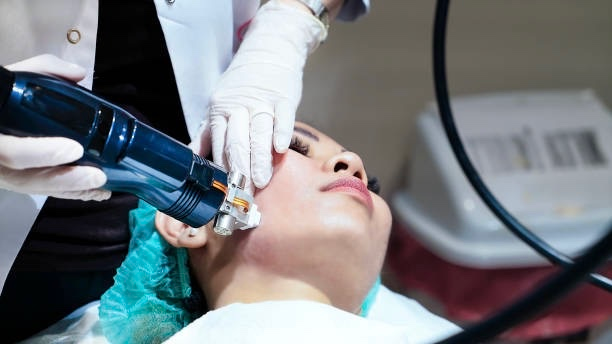
Yes, RF microneedling can cause facial fat loss, though fat loss is a reported complication of certain uses rather than the expected result of a properly performed treatment. The mechanism is simple: radiofrequency energy delivered deeper or hotter than the tissue calls for can reach the subcutaneous fat sitting below the dermis, and fat cells exposed to that heat do not recover. Reported cases are uncommon, they cluster around aggressive settings and deep treatment depths rather than around the modality itself, and the published safety literature on dermal-depth treatment looks very different from the complaint data. Below we walk through how the energy actually travels, what the FDA said in October 2025, how often fat loss is reported, which faces and which zones call for the most caution, how we protect facial volume during treatment, and what to ask any provider before you book.
Do You Lose Fat With RF Microneedling?
You do not lose fat with RF microneedling when the treatment is performed at dermal depths with settings matched to your anatomy, because the target tissue is the dermis and not the fat layer beneath it. The dermis is where collagen and elastin live, and remodeling that layer is the entire point of the treatment. Fat loss happens when energy travels past that target.
Past that target is a narrow margin on a face. Facial skin is thin in places and the subcutaneous fat compartments sit close beneath it, so the distance between a dermal treatment and a subcutaneous one is measured in fractions of a millimeter. That margin is why the conversation around this treatment is a conversation about depth and energy rather than a conversation about whether the device is safe.
Two separate things also get confused under the same label. True fat loss, called lipoatrophy, means subcutaneous fat cells were damaged and cleared, and the volume does not return on its own. An appearance of lost volume can come instead from post-treatment swelling resolving or from genuine skin contraction pulling the surface tighter. We untangle those two further down, because mistaking one for the other sends people looking for the wrong solution.
How Does RF Microneedling Reach the Skin’s Deeper Layers?
RF microneedling reaches the skin’s deeper layers by driving an array of fine microneedles through the surface and releasing radiofrequency energy from the needle tips, which creates small zones of intense heat at a chosen depth. Each needle tip produces its own thermal zone, and the pattern of those zones across the treated area is what triggers collagen remodeling. The U.S. Food and Drug Administration describes the mechanism in exactly these terms, noting that each microneedle produces a small area of intense heat that changes the tissue around it.
Tissue change at depth is controlled by four variables working together: how far the needles travel, how much energy each needle delivers, how long that energy runs, and how many times the same area is treated. Peer-reviewed histology work published in Lasers in Medical Science in 2025 confirmed that the volume of coagulated tissue scales directly with energy per needle and total applied energy, which means the dose is adjustable rather than fixed.
Needle insulation is the second control. Insulated microneedles confine the energy release to the tip, delivering coagulative thermal injury into the dermis while sparing the epidermis above. Published histology on insulated systems shows zones of denatured collagen forming within the reticular dermis, separated by bands of untreated tissue, which is the fractional pattern the treatment depends on. The reticular dermis is the layer the clinical literature identifies as the optimal target, with needle depth adjusted to reflect how epidermal and dermal thickness vary from one facial region to another.
Depth on the face usually sits at or below roughly 1.0 to 2.0 millimeters for this reason. Deeper settings exist and have a place, most often under the chin where a small, deliberate reduction in submental fullness is the goal, but those same settings applied across a midface or a temple are where trouble starts. Patients considering microneedling are often surprised that the depth conversation matters more than the brand name on the handpiece.
What the FDA Said About RF Microneedling in October 2025
The FDA said on October 15, 2025 that serious complications have been reported with certain uses of RF microneedling devices, specifically naming burns, scarring, fat loss, disfigurement and nerve damage. Some of those injuries required medical intervention or surgical repair. The agency issued the notice as a Safety Communication, which is a public alert and a request for reporting rather than a recall or a withdrawal.
The wording matters as much as the list. The FDA described complications associated with certain uses, not with the device category as a whole, and its stated evaluation is ongoing while it works with manufacturers on mitigation. Nothing in the communication asks providers to stop offering the treatment.
Three recommendations came with it, and all three are worth taking seriously. The agency advised discussing benefits and risks with a provider before booking. It advised seeking a licensed health care provider with training and experience on these specific devices, and asking which device will be used. And it stated plainly that RF microneedling is a medical procedure rather than a cosmetic treatment, and that these devices should not be used at home. That last point reflects how these devices are regulated: RF microneedling systems are Class II medical devices cleared through the FDA’s 510(k) pathway, the same classification that covers many of the radiofrequency treatments used across aesthetic medicine.
How Often Does Fat Loss Actually Happen?
Fat loss after RF microneedling is reported infrequently, with a published review of the FDA’s postmarketing database identifying 114 reports describing 224 distinct adverse events across nearly thirteen years of use. That review, published in Dermatologic Surgery, covered reports filed between January 2013 and October 2025 and found that the most frequent complications were textural changes, pigmentary alteration and fat loss. Of the subcutaneous fat loss cases identified, 24 occurred on the face or in the submental area.
Submental and facial concentration tells you where the risk lives. A second analysis of the same database, covering 2020 to 2025, reviewed 86 reports and 145 adverse events and found fat loss to be the single most reported complication, defined as indentations or contour irregularities. That analysis added the detail no patient-facing article seems to mention: the majority of device reports were associated with a bipolar radiofrequency system using insulated needles capable of reaching an 8 millimeter treatment depth. Eight millimeters is far deeper than any facial rejuvenation protocol requires.
Rarer events in the Dermatologic Surgery data included neuromuscular symptoms such as transient facial weakness, muscle spasm or dizziness, appearing in 3.1 percent of reported events, and vascular injury or ulceration at 0.9 percent each. These are voluntary reports with incomplete clinical detail, which the authors note as a limitation, so the data shows what gets reported rather than a true rate across every treatment performed.
Set that against the clinical trial literature and the picture sharpens considerably. A 2026 systematic review of RF microneedling for facial rejuvenation pooled 20 studies covering 558 participants and found adverse events were predominantly mild and transient, with erythema and edema the most common and typically resolving within hours to a few days. No serious complications were reported across that entire body of work. The authors specifically noted that no fat necrosis was observed, and attributed that to needle depth remaining largely intradermal across the included studies. Older monopolar radiofrequency literature records fat atrophy among its less frequent adverse reactions alongside persistent erythema at 1.22 percent, scarring, edema and facial palsy, which places the risk in the same uncommon tier.
Read those two bodies of evidence together and the conclusion is consistent rather than contradictory. Studies that kept the energy in the dermis produced no fat loss. Complaint reports cluster around devices and settings capable of going well past the dermis. The variable is depth, not the technology.
What Raises the Risk of Facial Volume Loss?
The factors that raise the risk of facial volume loss are treatment depth, energy per needle, dwell time, the number of passes over one area, the thickness of the tissue being treated, and the judgment of the person operating the device. Operator judgment sits at the center because it controls the other five. Here is how each one contributes:
- Needle depth set past the dermis: the most direct route to the problem, since energy released below the reticular dermis lands in subcutaneous fat
- Energy per needle set too high for the zone: histology confirms coagulation volume rises with energy, so a setting appropriate for a jawline can be excessive on a temple
- Repeated passes over the same tissue: thermal dose accumulates, and three conservative passes can add up to one aggressive treatment
- Dwell time held too long: heat spreads outward from the needle tip while the energy runs, so duration widens the treated zone as much as depth deepens it
- Thin tissue or minimal subcutaneous padding: lean faces, older faces and faces that have already lost volume have less margin between the dermis and the fat compartments
- Uniform settings applied across the whole face: a single depth and energy preset ignores the regional variation in skin thickness that the clinical literature says the depth must follow
- Devices capable of depths the face never needs: capability is not a problem on its own, but it widens the margin for error in untrained hands
- Disrupted microcirculation: excessive heat at the dermal and subcutaneous interface can affect the small vessels supplying the fat, which contributes to atrophy and contour change
Notice what is absent from that list. The brand of the device, the number of needles in the cartridge and the marketing language attached to the platform do not appear, because none of them determines where the energy lands. Settings and anatomy determine that.
Which Faces and Which Areas Call for the Most Conservative Settings?
The faces and areas calling for the most conservative settings are lean or naturally thin faces, faces that have recently lost significant weight, and the zones where fat compartments sit closest to the surface: the temples, the periorbital area, the submalar hollows and the lateral cheek. Temples and periorbital skin carry the least subcutaneous padding on the entire face, which leaves the smallest margin between a dermal treatment and a subcutaneous one.
Submalar hollows deserve particular care because they already read as volume-deficient before anyone treats them, so any further loss shows immediately. The jawline, the lower cheek and the forehead tolerate standard dermal settings more comfortably, and the submental region under the chin is the one zone where a deliberately deeper approach has a legitimate role. Depth under the chin is a decision, not a default, and it should be discussed before the handpiece comes out.
Weight loss changes the calculation in a way that has become much more common. Patients who have come down significantly on medical weight loss programs frequently arrive wanting tightening, and they arrive with less facial fat than they had a year earlier. Less facial fat means less insulation between the needle tip and the compartments worth protecting, and it also means their complaint is often volume rather than laxity in the first place. In our Bingham Farms practice this is now one of the most important distinctions we draw at consultation, because the right answer for that patient is sometimes not an energy device at all.
Device selection follows the same logic. A platform with precise, shallow depth control suits thin tissue better than one built around deep remodeling, which is part of why we run more than one system rather than treating every face with the same handpiece. Morpheus8 and the other platforms on our menu each have zones where they are the stronger choice.
Why Skin Can Look Tighter and Flatter After Treatment
Skin can look tighter and flatter after treatment without any fat being lost, because post-procedure swelling resolving and genuine skin contraction both reduce facial fullness in ways that read as volume loss. Swelling is the first and most common explanation. The days right after treatment often leave a face slightly fuller than baseline, so when that settles over the following week or two, the comparison point people remember is the swollen version rather than the real one.
Skin contraction is the second explanation and it is the treatment working as designed. Tightened skin wraps more closely around the structures beneath it, which sharpens angles and can make cheeks look flatter even though nothing underneath has changed. The effect is particularly noticeable in people who liked a softer, rounder look and did not realize that was what they were asking to change.
True lipoatrophy looks different from both. It presents as a focal depression or contour irregularity in a specific treated zone rather than an overall refinement, it does not resolve with time, and it tends to appear weeks after treatment rather than in the first few days. Anyone seeing a defined hollow rather than a general tightening should be evaluated rather than reassured, and evaluated sooner rather than later.
Does Microneedling Age You Faster?
No, microneedling does not age you faster, because the controlled micro-injury it creates triggers collagen and elastin production rather than depleting it. Collagen production is the measurable outcome across the clinical literature, and the 2026 systematic review of 20 studies found consistent improvements in skin texture and tightening supported by high Global Aesthetic Improvement Scale scores. Skin that is producing more collagen is not aging faster.
The fear behind the question is usually about repetition rather than mechanism. Repeated aggressive treatment is a real concern, since thermal dose accumulates and nothing in the body benefits from being overworked, but the answer to that is sensible spacing rather than avoidance. Properly spaced sessions give the dermis time to complete a remodeling cycle before the next stimulus arrives.
Is RF Microneedling Safe for Your Face?
RF microneedling is safe for your face when it is performed by a trained provider at dermal depths with settings matched to your tissue, which is exactly what the published clinical evidence reflects. Published evidence is worth weighing directly. Across 558 participants in 20 studies, adverse events were predominantly mild and transient, erythema and edema led the list, pain was mild to moderate and well tolerated, and no serious complications were reported.
Safe does not mean risk-free, and the FDA alert exists for a reason. What the two data sets together establish is that the risk is concentrated in a specific failure mode rather than spread evenly across every treatment, and that failure mode is controllable. The patients who ran into trouble were not unlucky so much as treated with parameters their tissue could not absorb.
That is why we treat provider selection as the main safety variable rather than a secondary one. Our RF microneedling treatments are planned around the specific face in the chair, which is a sentence every practice says and a practice that can explain its depth decisions can actually demonstrate.
Which Is Better, RF Microneedling or Microneedling?
RF microneedling is better for skin laxity and deeper remodeling, while traditional microneedling is better for texture, tone and surface concerns on thin or volume-depleted skin. The difference comes down to one thing: traditional microneedling creates mechanical micro-injury with no thermal energy at all, so it carries no heat-related mechanism for affecting fat. RF microneedling adds that energy, which buys you tightening and costs you the need for precision.
The comparison below draws on the clinical literature on needle depth and coagulation volume alongside the device classifications the FDA publishes.
| Feature | Traditional Microneedling | RF Microneedling |
|---|---|---|
| Primary mechanism | Mechanical micro-injury triggering a healing response | Needle penetration plus fractional radiofrequency heat |
| Thermal energy | None | Controlled heat released at the needle tips |
| Target layer | Epidermis and papillary dermis | Reticular dermis |
| Best for | Texture, tone, pores, superficial scarring | Laxity, deeper scarring, firmness, jawline definition |
| Relevance to facial fat | No heat-related mechanism for affecting fat | Heat must stay in the dermis, away from subcutaneous fat |
| Precision required | Depth matters | Depth and energy both require calibration to anatomy |
| Typical visible downtime | Redness for about 24 hours | Redness and swelling for one to three days |
Downtime and depth both scale with what the treatment is asking the skin to do, which is the honest way to read that table. More remodeling means more energy, more energy means more recovery, and more energy means precision stops being optional.
Insulated Versus Non-Insulated Needles
Insulated needles release energy only at the tip, which concentrates the thermal effect at a chosen depth and spares the epidermis above it. Non-insulated needles release energy along the full needle shaft, which treats a column of tissue rather than a point and has its own uses, including shallow protocols operating at depths as fine as 300 microns for pigment work. Neither design is universally safer, and the published histology shows both producing controlled dermal effects when used correctly. Our platforms differ on this point, which is part of why we compared Sylfirm X and Morpheus8 in detail elsewhere on the site.
Pulsed and continuous wave delivery add a further layer of control on newer systems. Sylfirm X is built around that distinction, which lets the same device run a vascular or pigment protocol and a remodeling protocol without applying the same thermal dose to both.
What Plastic Surgeons and Dermatologists Say About RF Microneedling
Plastic surgeons and dermatologists largely agree on the mechanism of RF microneedling fat loss and differ on how much weight to give it, because the two specialties see different patient populations. Surgeons who specialize in facial volume restoration encounter the complications, since those patients come to them specifically for correction, and several have publicly described the October 2025 FDA alert as confirmation of a pattern they had been seeing. That perspective is grounded in real cases.
Dermatologists and researchers analyzing the pooled data see the other end of the same distribution, where thousands of dermal-depth treatments produce mild transient redness and nothing else. Some have pushed back on how the complaint data is being interpreted, noting that voluntary reporting captures outcomes rather than rates and cannot tell you how many treatments were performed.
Both readings are legitimate and they are not actually in conflict. A complication can be genuinely serious for the person who experiences it and still be uncommon across the population, and the responsible position is to take it seriously without implying it is routine. What every expert voice in this debate agrees on, including the FDA, is that training and parameter selection are the controllable variables.
How We Protect Facial Volume During RF Microneedling
We protect facial volume by assessing tissue before selecting settings, mapping depth by region rather than treating the face uniformly, and choosing the platform that suits the skin in front of us. Assessment comes first because every parameter downstream depends on it. The sequence we follow:
- Assess the tissue by hand and by history. Skin thickness, existing volume, prior energy treatments, recent weight change and the specific complaint all come before any device is selected.
- Separate laxity from volume loss. Skin that has lost elasticity and a face that has lost padding look similar across a room and call for opposite treatments. Treating volume loss with tightening makes the problem worse.
- Select the platform for the face, not the schedule. Different systems offer different depth control, needle design and energy delivery, and a thin periorbital area and a heavy jawline are not the same job.
- Map depth zone by zone. Temples, periorbital skin and submalar hollows get the most conservative depth on the face. The jawline and lower cheek tolerate more. The submental area is the only zone where deeper is deliberate.
- Set energy to the thinnest tissue in each zone, not the thickest. Coagulation volume rises with energy, so the conservative setting is the one that still works everywhere in that zone.
- Control passes rather than chasing an endpoint. Thermal dose accumulates, so a planned number of passes beats treating until the skin looks a certain way.
- Space sessions to the remodeling cycle. Collagen takes weeks to lay down, and treating again before that work finishes adds dose without adding result.
- Reassess between sessions and adjust. A plan written at the first visit is a starting point, and the response to session one is better information than any preset.
Preparation on your side supports all of it. How you prep your skin in the days before an appointment affects how evenly it responds and how quickly the redness settles afterward.
How Facial Volume Is Restored If It Has Already Been Lost
Facial volume that has already been lost is restored by replacing it rather than by tightening, using regenerative and biostimulatory treatments that rebuild structure in the affected area. Replacing rather than tightening is the whole principle, and it is the point most often missed by people who respond to a hollow by booking more skin-tightening. Tightening a face that is short on volume accentuates the hollow it is trying to fix.
Evaluation comes before any treatment choice. We look at which compartments are affected, whether the change is focal or general, how long it has been present and whether any of it is still resolving on its own. Focal depressions in a previously treated zone are approached differently from the general thinning that accompanies facial volume loss with age.
From there the options are a question of what the tissue needs. Collagen-stimulating injectables rebuild structure gradually over months rather than filling a space immediately, which suits contour irregularities where the goal is to restore the quality of the tissue rather than add bulk. Regenerative approaches using your own platelet-derived material work along the same timeline, and our biostimulation treatments are built around exactly this kind of problem. Hyaluronic acid fillers have a role for immediate correction while slower-building options take effect.
None of this is a reason to avoid energy treatment altogether. It is a reason to sequence correctly, which usually means addressing volume first in a thin face and letting that settle before any tightening is considered.
Is 2 Sessions of RF Microneedling Enough?
Two sessions of RF microneedling is enough for mild texture and firmness goals, while most laxity and scarring goals are planned around three to four sessions spaced several weeks apart. Spacing drives the number more than anything else. Each session triggers a collagen remodeling cycle that takes weeks to complete, and the result you are judging at week two is not the result that session will produce.
More sessions is not automatically better, and this is where the safety conversation and the results conversation meet. Thermal dose accumulates across a series, so a plan built on four moderate sessions is both more effective and more conservative than one built on two aggressive ones. We would rather add a session after reassessing than push the settings in the room.
What Is the Best Age for RF Skin Tightening?
The best age for RF skin tightening is the late twenties through the fifties, when collagen production has begun declining but enough structural collagen remains for the treatment to build on. Collagen reserve is the real criterion rather than the number on a birthday, because the treatment stimulates production rather than supplying anything, and it needs existing tissue to work with.
Is 50 Too Old for Microneedling?
Fifty is not too old for microneedling, and the fifties are among the most common decades for this treatment. What changes after fifty is the planning rather than the eligibility. Skin is thinner, subcutaneous padding is reduced and facial volume has usually declined, which means conservative depth matters more and the question of whether volume should be addressed first becomes a real one.
Is Microneedling Worth It for Older Skin?
Microneedling is worth it for older skin when the goal is texture, firmness and tone rather than lifting, and the systematic review data showing consistent texture and tightening improvements included patients across a wide age range. Expectations are what determine satisfaction here. Older skin responds well to being remodeled and poorly to being asked to lift, and matching the treatment to the right goal is most of the work.
Will Microneedling Help Sagging Jowls?
Microneedling helps mild to moderate jowling by firming the skin along the jawline, and it does not correct significant sagging because the underlying cause is structural rather than superficial. Structural causes include descending fat compartments, bone remodeling and laxity in the deeper support layers, none of which a dermal treatment reaches. Mild jowling that is mostly skin quality responds well.
Does Radiofrequency Help Jowls?
Radiofrequency helps jowls by heating the dermis enough to contract existing collagen and stimulate new collagen along the jaw and lower face, with gradual firming over the following months. Results are real and moderate rather than dramatic. For jowling that has passed what energy can address, our skin tightening menu includes options that work at deeper tissue planes. We are straightforward with patients across the Detroit metro about where the ceiling sits for each one.
What to Ask Before You Book RF Microneedling
Ask which device will be used, what depth and energy are planned for each area of your face, what training the provider has completed on that specific system, and how your tissue thickness factored into the plan. The FDA’s own recommendation names the first two of those, and a provider who treats them as reasonable questions is already telling you something useful.
Four more are worth adding. Ask whether your goal is laxity or volume, and listen for whether the answer distinguishes them. Ask how many passes are planned and why. Ask what the plan is if you develop a contour change afterward. And ask whether the practice runs more than one platform, because a single-device practice has only one answer available regardless of what your face needs. Our full range of microneedling platforms exists so the answer can change with the patient.
Frequently Asked Questions
Is Microneedling Just as Good as Botox?
Microneedling is not the same as Botox and the two solve different problems, so neither replaces the other. Botox relaxes the muscles that create expression lines, while microneedling remodels the skin itself to improve texture, firmness and static lines. Many treatment plans use both, since lines caused by movement and lines etched into the skin surface need different mechanisms.
Can RF Microneedling Be Combined With PRF or PRP?
RF microneedling can be combined with PRF or PRP, and the combination is a common pairing because the channels created during treatment allow the platelet-derived growth factors to reach the dermis directly. The combination supports healing and amplifies the collagen response. We cover how the two work together when combined with PRP in a separate article.
Does RF Microneedling Cause Fat Loss on the Body?
RF microneedling rarely causes fat loss on the body, because body skin is substantially thicker than facial skin and the subcutaneous fat layer beneath it is far deeper. The published complaint data reflects this directly, with nearly all reported subcutaneous fat loss cases occurring on the face or in the submental area rather than on the trunk or limbs.
How Long Does Swelling Last After RF Microneedling?
Swelling after RF microneedling typically lasts one to three days, with redness often resolving in the same window. The systematic review data found erythema and edema were the most common adverse events and that they generally resolved within hours to a few days without intervention. Deeper or more extensive treatment extends that window somewhat.
Can You Have RF Microneedling if You Have Fillers?
You can have RF microneedling if you have fillers, though timing and depth both need adjusting around them. Heat delivered at depth can affect hyaluronic acid product, so treatment is usually planned either before filler placement or at a sensible interval afterward, with depth kept above the plane where product was placed. Disclose every injectable you have had and roughly when.
Does RF Microneedling Help a Double Chin?
RF microneedling helps a double chin by firming the skin under the jaw, and some protocols use deeper settings in this area deliberately to reduce submental fullness. The submental region is the one facial zone where reaching toward the fat layer is an intentional choice rather than a complication. Significant submental fullness is usually better addressed by treatments built for fat reduction.
The Bottom Line
RF microneedling can cause facial fat loss, and pretending otherwise would be dishonest after the FDA named it explicitly in October 2025. What the evidence also shows is that the risk lives in a specific, controllable failure mode. Reports cluster around deep treatment depths and aggressive settings, with one database analysis tracing most reports to a device capable of reaching 8 millimeters, while a systematic review of 20 studies and 558 participants that kept energy in the dermis recorded no fat necrosis at all and no serious complications. The variable is where the energy lands, and where the energy lands is a decision somebody makes before the handpiece touches your skin.
That is why the most useful thing you can do is ask harder questions than the treatment name. Ask about depth, ask about energy, ask about training on the specific device, and ask whether your complaint is laxity or volume, because the honest answer to that last one sometimes points away from an energy treatment entirely. We run several platforms at FACE Skincare precisely so the answer can change with the face, and we would rather talk you out of a treatment than deliver one your tissue cannot absorb. If you want your skin assessed before you decide anything, book a consultation and we will walk through it with you.