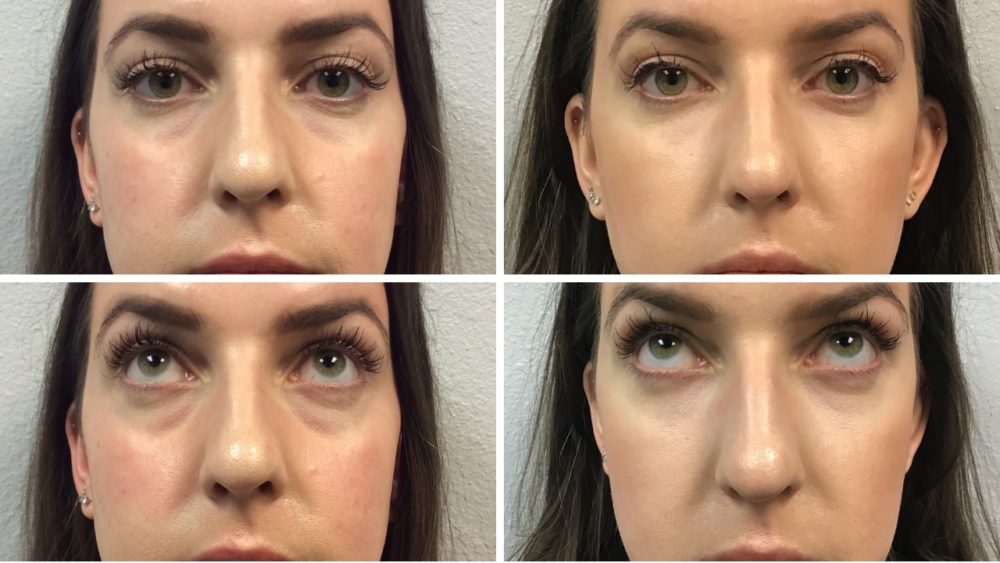
Facial treatments for enlarged pores work by tightening the collagen around each pore opening, controlling excess sebum (oil) production, and clearing the dead cell buildup that stretches pore walls outward. Professional treatments like microneedling, radiofrequency microneedling, chemical peels, and fractional laser resurfacing produce the most significant pore reduction, with clinical studies showing 22% to 70% improvement in visible pore size depending on the treatment modality. You cannot permanently eliminate pores because they serve essential biological functions, but the right combination of in-office treatments and at-home skincare can make enlarged pores dramatically less visible. This guide covers why pores enlarge, which professional facial treatments produce the strongest clinical results, how dermatologists and medical aestheticians approach pore reduction, and how to build a daily routine that supports long-term pore refinement.
Why Are My Pores So Big?
Your pores are big because of one or more of three primary factors: excess sebum production, decreased skin elasticity from collagen loss, and genetics that determine hair follicle size. A study published in the British Journal of Dermatology by researchers at Yonsei University College of Medicine found that enlarged pore sizes are significantly associated with increased sebum output, age, and male sex. In female patients, additional hormonal factors such as the menstrual cycle affect pore size.
Pores are the visible openings of pilosebaceous follicles, which are the small structures in the skin that house a hair follicle and a sebaceous (oil) gland. Each pilosebaceous follicle connects to the skin’s surface through a channel called the infundibulum. The infundibulum is lined with keratinocytes (skin cells) that can accumulate and clog the channel. When excess sebum and dead keratinocytes build up inside the infundibulum, the pore wall stretches outward. Stretched pore walls appear larger because the opening at the surface widens to accommodate the buildup underneath.
Collagen loss around the pore opening compounds the problem. Collagen fibers form a supportive scaffold around each pore, holding the walls taut. The American Academy of Dermatology confirms that collagen production decreases by approximately 1% per year starting in the mid-20s. As this collagen scaffold weakens, the pore walls lose structural support and sag open. Women can lose up to 30% of their skin collagen within the first five years after menopause, according to published dermatology reviews, which explains why pore visibility often increases sharply during that period.
What Causes Enlarged Pores Beyond Genetics?
Enlarged pores are caused by factors beyond genetics including chronic ultraviolet (UV) light exposure, acne history, comedogenic (pore-clogging) skincare products, hormonal fluctuations, and natural aging. A 2016 study published in Dermatologic Surgery identified three primary contributors to enlarged facial pores: excessive sebum production, decreased skin elasticity, and hair follicle volume. UV radiation accelerates collagen breakdown in the dermis through a process called photoaging, which degrades the collagen scaffold around pore openings and makes pores appear larger over time.
Acne contributes to pore enlargement because inflammatory lesions damage the pore wall during the breakout cycle. Repeated inflammation stretches and weakens the infundibulum, leaving the pore permanently wider even after the acne resolves. Comedogenic products compound the issue by depositing pore-clogging ingredients inside the follicle, adding physical pressure against the pore wall from within. This is why the American Academy of Dermatology recommends using only non-comedogenic, oil-free products on pore-prone skin.
Do Open Pores Get Bigger With Age?
Yes, open pores get bigger with age because the collagen and elastin fibers that hold pore walls taut weaken progressively over time. Age-related collagen loss reduces the structural support around each pilosebaceous opening, allowing the pore to stretch wider under the weight of gravity and repeated sebaceous gland activity. A multiethnic study published in Clinical, Cosmetic and Investigational Dermatology confirmed that pore sizes and densities remain relatively constant in younger decades but become more prominent as skin elasticity declines.
The sebaceous gland itself changes with age. Sebum production peaks during adolescence and early adulthood, then gradually declines after age 40. However, the damage from decades of sebum-driven pore stretching persists even as oil production slows. This is why a 2023 review article in the Journal of Cosmetic Dermatology concluded that young patients with enlarged pores should focus treatment on controlling sebum production, while older patients need rejuvenation therapies (collagen stimulation) in addition to sebum control.
Can You Permanently Reduce Pore Size?
No, you cannot permanently reduce pore size because pore diameter is determined by genetics and the physical structure of the pilosebaceous follicle. However, professional treatments can significantly reduce the visible appearance of enlarged pores by tightening the collagen around pore walls, controlling sebum output, and clearing the debris that stretches pore openings. Clinical studies consistently show measurable improvement: tretinoin produces approximately 22 to 37.5% reduction in pore area, microneedling produces visible improvement in 93.8% of patients after four sessions, and glycolic acid peels produce noticeable improvement in 70% of participants.
The distinction between “shrinking” a pore and “minimizing its appearance” matters clinically. The pore itself, as a structural opening in the skin, does not close. The tissue surrounding the pore, however, responds to collagen-stimulating treatments by thickening, firming, and tightening around the pore walls. This tightening effect narrows the visible opening and makes the pore less prominent to the eye. Treatments that target pore size reduction work through this mechanism of periosteal tightening rather than literal pore closure.
What Facial Treatments Shrink Pores on the Face?
The facial treatments that shrink pores on the face include microneedling, radiofrequency (RF) microneedling, chemical peels, fractional laser resurfacing, HydraFacial, and LED light therapy. Each treatment targets a different mechanism of pore enlargement: collagen loss, sebum overproduction, or dead cell accumulation. The 2023 review in the Journal of Cosmetic Dermatology, which analyzed 19 clinical trials covering 591 patients, concluded that multiple treatment sessions and combination therapies produce the most significant improvement in facial pore area and number.
Microneedling remains one of the most effective professional treatments for pore reduction. The procedure creates thousands of controlled micro-injuries in the dermis using fine sterile needles, triggering the wound-healing cascade that generates new collagen and elastin fibers around pore walls. A study cited in the Journal of Clinical and Aesthetic Dermatology reported that 93.8% of patients saw measurable improvement in pore appearance after four microneedling sessions spaced four to six weeks apart.
Chemical peels address pore visibility from a different angle. Glycolic acid peels dissolve the intercellular bonds between dead keratinocytes that line the pore walls, clearing the buildup that stretches pore openings. A clinical study using glycolic acid treatments every other week for approximately two months showed that 70% of participants noticed improvement in the appearance of enlarged pores. Salicylic acid peels offer an additional advantage for oily skin because salicylic acid is oil-soluble, meaning it penetrates into the sebum-filled pore and dissolves congestion from within. The treatment produces the best results for texture treatments when combined with a consistent retinoid routine at home.
How Does Microneedling Reduce Pore Size?
Microneedling reduces pore size by triggering the skin’s wound-healing cascade, which generates new collagen and elastin fibers in the dermis around each pore opening. The procedure uses a device fitted with fine sterile needles (typically 0.5 to 2.5 millimeters in depth) to create controlled micro-injuries in the upper dermis. Each micro-injury activates fibroblasts, the cells responsible for producing collagen type I and type III. New collagen fibers form around the pore walls over 4 to 12 weeks following each session, physically tightening the tissue that surrounds the pore.
The collagen remodeling process explains why microneedling results improve progressively after each session rather than appearing immediately. Fibroblasts begin producing new collagen within 48 to 72 hours after treatment, but the collagen fibers take 4 to 12 weeks to mature and cross-link into their final structure. This is why most clinical protocols recommend 3 to 6 microneedling sessions spaced 4 to 6 weeks apart. Each session builds on the collagen produced by the previous session, compounding the tightening effect around pore walls.
Is Microneedling or Laser Better for Large Pores?
Microneedling is better for mild to moderate pore enlargement with texture irregularities, while laser skin treatments are better for deeper structural pore enlargement complicated by sun damage, scarring, or significant elasticity loss. The strongest results come from combining both modalities in a sequential treatment plan. Clinics offering multi-device combination sessions report 41% higher patient retention rates, according to data from 360 Research Reports, because combination protocols deliver results that exceed what any single treatment achieves alone.
Fractional lasers like Halo laser and Clear + Brilliant create columns of controlled thermal injury in the dermis, prompting collagen remodeling at a deeper level than standard microneedling reaches. The thermal energy denatures existing damaged collagen fibers and triggers a strong new collagen response. Morpheus8 combines microneedling with radiofrequency energy, delivering thermal energy directly into the dermis through the needle tips. A study published in Frontiers in Medicine found that microneedle radiofrequency produced significant pore reduction plus a 44.41% increase in skin density. The RF component adds a thermal remodeling effect that standard microneedling alone does not produce.
How Do Chemical Peels Minimize Pores?
Chemical peels minimize pores by dissolving the dead cell buildup that lines and stretches pore walls, stimulating controlled epidermal renewal, and triggering a collagen response in the underlying dermis. The active acids in chemical peels, such as glycolic acid (an alpha-hydroxy acid) and salicylic acid (a beta-hydroxy acid), work through different mechanisms. Glycolic acid breaks the desmosomal bonds between surface keratinocytes, allowing dead cells to release from the pore lining and reducing the physical distension that makes pores appear large.
Salicylic acid functions differently because it is lipophilic (oil-soluble). Salicylic acid dissolves into the sebum inside the pore and exfoliates the interior walls of the infundibulum, clearing congestion that glycolic acid cannot reach from the surface alone. This oil-soluble penetration makes salicylic acid particularly effective for patients with oily skin and acne-related pore enlargement. A study involving over 500 patients with enlarged pores found that tazarotene cream (a prescription retinoid) produced improvement in 42% of patients after six months of daily use, compared to 20% improvement with placebo, according to research published in the Journal of the American Academy of Dermatology.
How Do Dermatologists Treat Large Pores?
Dermatologists treat large pores through a structured protocol that combines prescription topicals, professional in-office treatments, and ongoing maintenance. The clinical approach begins with an assessment of the patient’s skin type, sebum production level, degree of collagen loss, and acne history. Based on this assessment, the dermatologist or medical aesthetician builds a treatment plan that addresses the specific mechanism driving pore enlargement.
The first-line treatment for most patients is a prescription retinoid (tretinoin or tazarotene) applied nightly. A study comparing tretinoin and retinol in 120 women over 84 days found that tretinoin reduced pore dilation by an average of 37.5% and retinol by 30.6%, per research published in the Journal of Cosmetic Dermatology. Radiofrequency treatments and fractional lasers are added for patients who need deeper collagen remodeling beyond what topicals achieve. The 2023 review article analyzing 19 clinical trials confirmed that combining different modalities increased the efficacy of reducing pore size and number beyond what any single treatment achieved.
For patients in their 20s and 30s with oily, acne-prone skin, the clinical focus stays on sebum control: salicylic acid cleansers, retinoids, and professional facials with deep extraction. For patients in their 40s, 50s, and beyond, the focus shifts to collagen-building treatments: microneedling series, RF microneedling, fractional laser resurfacing, and biostimulatory injectables that trigger the body’s own collagen production over several months.
What Kind of Facial Is Best for Big Pores?
The kind of facial best for big pores is a medical-grade deep-cleansing facial that combines extraction, exfoliation, and active serum infusion. HydraFacial ranks as one of the most effective options because its vortex suction technology removes debris from inside the pore while simultaneously infusing salicylic acid and hydrating serums. Over 2 million HydraFacial treatments are performed annually in the United States, and pore congestion is one of the top concerns patients bring to these sessions.
For patients with significant pore enlargement driven by collagen loss rather than congestion alone, dermaplaning combined with a light chemical peel provides both surface smoothing and deeper exfoliation in a single session. The dermaplaning step removes the dead cell layer and vellus hair that trap oil against the skin, while the peel penetrates into the pore lining to dissolve sebum plugs. We see this combination produce noticeably smoother, more refined skin texture within 7 to 10 days after treatment.
Can an Esthetician Help With Large Pores?
Yes, an esthetician can help with large pores through professional extraction, HydraFacial treatments, chemical peels, Clear + Brilliant laser sessions, and personalized home care guidance. An esthetician working within a medical spa environment has access to stronger active ingredients and device-assisted technologies than a traditional spa esthetician. The clinical setting allows for combination protocols that address both the congestion component and the structural component of pore enlargement.
Medical treatments that require physician oversight, such as prescription-strength retinoids, RF microneedling at deeper needle depths, and ablative fractional laser resurfacing, fall outside the scope of esthetician practice. However, a skilled esthetician often serves as the primary point of contact for ongoing pore maintenance between medical treatment sessions. Adults aged 25 to 54 represent 68% of facial treatment consumers in the United States, according to data from Business Research Insights, and most of these patients work with an esthetician for their regular maintenance facials while seeing a physician for periodic advanced treatments.
| Treatment | Mechanism | Clinical Improvement | Sessions Needed | Downtime | Best For |
|---|---|---|---|---|---|
| Microneedling | Collagen induction via controlled micro-injury | 93.8% of patients improved (4 sessions) | 3 to 6 sessions, 4-6 weeks apart | 1 to 3 days redness | Texture, mild to moderate pore enlargement |
| RF Microneedling (Morpheus8) | Collagen remodeling via thermal + mechanical injury | 44.41% increase in skin density | 2 to 4 sessions, 4-6 weeks apart | 3 to 5 days redness | Moderate to severe pore enlargement, laxity |
| Chemical Peel (Glycolic Acid) | Exfoliation of pore-lining keratinocytes | 70% of participants noticed improvement | 4 to 6 sessions, every 2-4 weeks | 1 to 5 days mild flaking | Oily skin, surface congestion, mild enlargement |
| Fractional Laser (Halo, Clear + Brilliant) | Thermal collagen remodeling in dermis | Significant pore reduction (clinical trials) | 2 to 4 sessions, 4-8 weeks apart | 3 to 7 days | Sun damage, deep structural enlargement |
| HydraFacial | Vortex extraction + serum infusion | Immediate pore decongestion | Monthly maintenance | None | Congestion-driven pores, oily skin, maintenance |
| Topical Retinoid (Tretinoin) | Cell turnover acceleration + collagen stimulation | 22 to 37.5% reduction in pore area | Daily application, 8-12 weeks for results | Initial dryness/peeling | All pore types, long-term prevention |
Sources: Journal of Cosmetic Dermatology (Parvar et al., 2023); Journal of the American Academy of Dermatology (Kang et al., 2005); British Journal of Dermatology (Roh et al., 2006); Journal of Clinical and Aesthetic Dermatology; Frontiers in Medicine (2025); Curology clinical literature review.
How Does Retinol Reduce Pore Size?
Retinol reduces pore size by accelerating keratinocyte turnover inside the pore lining, stimulating collagen production in the dermis around the pore wall, and normalizing the keratinization process that contributes to pore congestion. Retinol is a form of vitamin A that converts into retinoic acid (tretinoin) through two enzymatic steps after application to the skin. Retinoic acid binds to nuclear retinoic acid receptors (RAR and RXR) on fibroblasts and keratinocytes, activating gene transcription pathways that increase cell turnover and collagen synthesis.
The accelerated cell turnover prevents dead keratinocytes from accumulating inside the infundibulum, which reduces the physical distension that stretches pore walls. The collagen stimulation thickens the dermis around each pore, tightening the periosteal scaffold that holds the pore opening in place. A comparative study of 120 women found that prescription tretinoin reduced pore dilation by 37.5% over 84 days, while over-the-counter retinol reduced pore dilation by 30.6% over the same period. Both results support the use of retinol for texture improvement and pore refinement as a daily at-home treatment.
How Long Does It Take for Retinol to Shrink Pores?
Retinol takes 8 to 12 weeks of consistent nightly use to produce visible pore reduction. The 84-day clinical study timeline aligns with this window: retinol’s enzymatic conversion to retinoic acid happens gradually, and the collagen remodeling and cell turnover effects build over multiple skin renewal cycles. Each renewal cycle takes approximately 28 days, so 8 to 12 weeks represents two to three complete cycles of retinol-accelerated turnover.
Patients often experience initial dryness, mild peeling, and increased sensitivity during the first 2 to 4 weeks of retinol use. This adjustment period, sometimes called “retinization,” occurs as the skin adapts to the accelerated turnover rate. Starting with a lower concentration (0.025% tretinoin or 0.3% retinol) and gradually increasing over 6 to 8 weeks reduces the severity of the adjustment period. The pore-refining effects become more apparent after the retinization phase resolves and the cumulative collagen stimulation reaches a visible threshold.
What Skincare Routine Is Good for Large Pores?
A good skincare routine for large pores combines gentle cleansing, active exfoliation, collagen-supporting ingredients, and daily sun protection in a consistent morning and evening protocol. The routine targets all three mechanisms of pore enlargement: sebum control, dead cell clearance, and collagen preservation. Here is the evidence-based daily routine that supports professional pore and texture improvement treatments:
- Morning cleanser: Wash with a gentle, non-comedogenic, water-based foaming cleanser using warm (not hot) water. Hot water irritates the skin and can increase inflammation around pore openings.
- Morning serum (niacinamide 5 to 10%): Apply a niacinamide serum, which regulates sebum production, reduces pore stretch, and strengthens the skin barrier. Niacinamide is water-soluble and absorbs quickly without leaving an oily residue.
- Morning moisturizer + SPF 30 or higher: Apply a lightweight, oil-free moisturizer with built-in broad-spectrum SPF. Sunscreen prevents UV-induced collagen breakdown, which is one of the primary drivers of age-related pore enlargement.
- Evening cleanser: Remove the day’s sebum, sunscreen, and environmental debris with the same gentle cleanser. Double cleansing (oil-based cleanser followed by water-based cleanser) works well for patients with oily or makeup-heavy skin.
- Evening active (retinoid): Apply a retinoid product (prescription tretinoin or over-the-counter retinol) to clean, dry skin. Wait 20 to 30 minutes after washing to reduce the likelihood of irritation. Retinoids accelerate cell turnover and stimulate collagen, addressing both congestion and structural pore enlargement.
- Evening moisturizer: Seal in hydration with a non-comedogenic moisturizer containing hyaluronic acid or ceramides. Adequate hydration supports the skin barrier and reduces the compensatory oil production that occurs when skin becomes dehydrated.
A 2025 survey of U.S. adults found that while 89% purchase skincare products, only 46% follow a daily routine, according to consumer data compiled by Circana. Closing this consistency gap produces measurable improvement even without professional treatments. The ordered routine above, used daily for 8 to 12 weeks, creates the foundation that professional treatments build upon.
Does Hyaluronic Acid Help With Large Pores?
Hyaluronic acid helps with large pores indirectly by plumping the skin around each pore opening, which makes the pore appear smaller relative to the surrounding surface. Hyaluronic acid is a glycosaminoglycan molecule that holds up to 1,000 times its weight in water. When applied topically or infused during a facial treatment, hyaluronic acid draws moisture into the dermis and epidermis, expanding the tissue volume around each pore. This volumetric plumping effect narrows the visible pore opening without changing the actual diameter of the pilosebaceous follicle.
Hyaluronic acid does not address the root causes of pore enlargement (sebum overproduction, collagen loss, or pore congestion). Its role in a pore-focused skincare routine is supportive rather than corrective. Patients who combine hyaluronic acid hydration with retinoid-driven collagen stimulation and professional treatments see the best long-term results because each component targets a different layer of the problem.
Can Serums Really Reduce Pore Size?
Yes, serums can really reduce pore size when they contain clinically validated active ingredients like retinol, niacinamide, or salicylic acid at effective concentrations. Serums that contain retinol at 0.3% or higher produce measurable pore reduction over 8 to 12 weeks of consistent use, per published clinical data. Niacinamide at 5 to 10% concentration reduces sebum production and visibly tightens pore appearance. Salicylic acid at 1 to 2% penetrates into the pore to dissolve oil plugs that stretch the pore wall.
Serums that rely on marketing claims of “pore-minimizing” effects without specifying active ingredients at clinically effective concentrations do not produce measurable results. The difference between an effective pore serum and an ineffective one lies in the ingredient concentration, the delivery vehicle (how well the formula penetrates), and the consistency of application. Over 15 million professional facial treatment procedures were performed in the U.S. in 2024, according to Business Research Insights, and many of these patients pair their in-office treatments with medical-grade serums prescribed by their provider for sustained results between sessions.
What to Avoid When You Have Enlarged Pores
Knowing what to avoid is as important as knowing what treatments to pursue. Several common habits and products actively worsen pore appearance by increasing inflammation, stretching pore walls, or accelerating collagen breakdown. Avoid the following:
- Squeezing or picking at pores manually. Aggressive extraction without proper technique pushes sebum and bacteria deeper into the follicle, increases inflammation, and stretches the pore wall permanently.
- Over-exfoliating with abrasive scrubs or high-concentration acids more than recommended. Over-exfoliation strips the skin barrier, triggers compensatory sebum overproduction, and increases inflammation around pore openings.
- Skipping sunscreen. UV radiation breaks down collagen fibers in the dermis, weakening the structural scaffold around each pore. Unprotected sun exposure is one of the most significant accelerators of age-related pore enlargement.
- Using comedogenic products (heavy oils, thick silicone-based primers, pore-clogging moisturizers). These products deposit film inside the pore that mixes with sebum and dead cells, contributing to the physical distension that makes pores appear larger.
- Using pore strips aggressively or frequently. Pore strips provide temporary visual improvement by pulling surface debris from blackheads, but repeated use can irritate the pore walls and damage the surrounding skin.
- Sleeping in makeup. Foundation, concealer, and powder settle into pore openings overnight, mixing with sebum and dead cells to form plugs that stretch pore walls over time.
Patients throughout Oakland County who commit to avoiding these habits while following a consistent treatment protocol see the most sustained improvement in pore appearance. The skin texture refinement process works best when both professional treatments and daily habits align toward the same goal.
Frequently Asked Questions
What Actually Works for Enlarged Pores?
What actually works for enlarged pores is a combination of professional treatments and consistent at-home care that addresses all three causes of pore enlargement simultaneously. Clinical data supports microneedling (93.8% improvement after four sessions), retinoids (22 to 37.5% pore area reduction), glycolic acid peels (70% of patients noticed improvement), and RF microneedling (44.41% increase in skin density). Single-ingredient or single-treatment approaches produce weaker results than combination protocols, per the 2023 review of 19 clinical trials in the Journal of Cosmetic Dermatology.
What Is Proven to Shrink Pores?
What is proven to shrink pores in published clinical trials includes topical retinoids (tretinoin and tazarotene), glycolic acid chemical peels, microneedling, fractional laser resurfacing, and radiofrequency microneedling. Each treatment is supported by peer-reviewed studies demonstrating measurable pore size reduction through digital imaging and physician assessment. The strongest clinical data supports tretinoin (37.5% average pore dilation reduction in 84 days) and microneedling (93.8% patient improvement rate after four sessions).
What Actually Tightens Pores?
What actually tightens pores is new collagen formation around the pilosebaceous opening. Any treatment that stimulates fibroblast activity in the dermis, including microneedling, RF microneedling, fractional lasers, and topical retinoids, produces a collagen response that physically tightens the tissue surrounding each pore. The tightened collagen scaffold narrows the visible pore opening by providing structural support that aging, UV damage, and sebum stretching have weakened.
How Many Microneedling Sessions Do You Need for Pores?
You need 3 to 6 microneedling sessions for visible pore improvement, spaced 4 to 6 weeks apart. Each session builds on the collagen produced by the previous session. A study published in the Journal of Clinical and Aesthetic Dermatology found that 93.8% of patients saw measurable improvement after four sessions. The collagen remodeling process continues for 4 to 12 weeks after each session, so spacing treatments 4 to 6 weeks apart aligns with the natural maturation timeline of new collagen fibers.
What Is the Difference Between Open Pores and Clogged Pores?
The difference between open pores and clogged pores is the presence of a plug inside the pilosebaceous follicle. Open pores are visible pilosebaceous openings that appear enlarged due to genetics, collagen loss, or oily skin, but they are not blocked by debris. Clogged pores contain a plug of sebum, dead keratinocytes, and sometimes bacteria inside the infundibulum. Clogged pores often appear as blackheads (open comedones) or whiteheads (closed comedones) and require both extraction-based treatments and exfoliation to clear.
Do Enlarged Pore Treatments Differ for Oily Skin Versus Aging Skin?
Yes, enlarged pore treatments differ for oily skin versus aging skin because the primary driver of pore enlargement is different in each case. Oily skin pore enlargement is driven primarily by excess sebum production that stretches pore walls outward. Treatment focuses on sebum control: salicylic acid peels, oil-regulating facials, niacinamide serums, and retinoids that normalize keratinization. Aging skin pore enlargement is driven by collagen loss and decreased elasticity. Treatment focuses on collagen rebuilding: microneedling, RF microneedling, fractional lasers, and retinoids at collagen-stimulating concentrations.
The Takeaway
Enlarged pores are one of the most common skin concerns patients bring to our practice, and the research is clear: combination treatment protocols produce the strongest, most sustained results. The most effective approach starts with a proper assessment of what is driving your pore enlargement, whether that is excess oil production, collagen loss from aging and sun exposure, or a combination of both. Professional treatments like microneedling, chemical peels, RF microneedling, and fractional laser resurfacing address the deeper structural factors that at-home products cannot reach alone. A consistent daily routine built around retinoids, niacinamide, and sun protection maintains those results between sessions.
Every treatment we recommend for pore reduction at FACE Skincare Medical Wellness is based on the clinical evidence and matched to the individual patient’s skin type, age, and goals. If enlarged pores are affecting how you feel about your skin, a consultation with our team is the most efficient first step. We will assess your skin, identify the specific mechanism behind your pore enlargement, and build a treatment plan that produces measurable, visible improvement. Call us at (248) 663-0161 to get started.