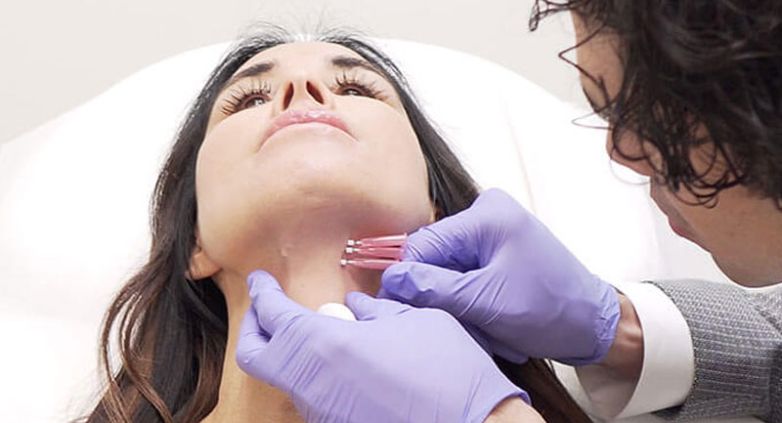
Jawline contouring with neurotoxins and dermal fillers is one of the most effective non-surgical ways to reshape the lower face. Neurotoxins relax and slim the jaw muscles, while dermal fillers add structure, definition, and lift along the jawline and chin. Together, they create a balanced, sharper-looking profile without surgery or downtime.
If you have been thinking about a sharper jawline but want to skip surgery, you are not alone. Millions of people now choose injectable treatments to improve their lower face. This article covers exactly how these two treatments work, which problems each one solves, what to expect from results, and how the two are often combined for a complete jawline transformation.
What Is Jawline Contouring With Neurotoxins and Dermal Fillers?
Jawline contouring with neurotoxins and dermal fillers is a non-surgical approach that uses injectable treatments to reshape, slim, define, and lift the lower face. These two types of injectables work in completely different ways, which is why they are often used together for the most complete results.
Neurotoxins like Botox, Dysport, and Xeomin are proteins that temporarily block the nerve signals that tell a muscle to contract. When injected into the masseter muscle (the thick chewing muscle at the back of the jaw), the muscle gradually relaxes and shrinks over a period of weeks. The result is a slimmer, more tapered lower face. According to the American Academy of Facial Plastic and Reconstructive Surgery (AAFPRS), neurotoxins are consistently the single most popular minimally invasive category in facial aesthetics.
Dermal fillers, on the other hand, work by adding volume and structure exactly where it is placed. Fillers like Juvederm Volux XC, Radiesse, and Restylane are injected strategically along the jaw border, the chin, and key transition points to build a more defined, lifted, and symmetrical look. According to Grand View Research, the global dermal fillers market was valued at approximately $5.5 billion in 2024 and is projected to reach $9.9 billion by 2030, growing at 10.3% per year. Jawline contouring is one of the fastest-growing applications driving that growth.
At our practice, we use both approaches depending on each patient’s anatomy and goals. Many patients benefit from a combination of the two.
What Are Neurotoxins in the Jaw?
Neurotoxins in the jaw are botulinum toxin type A injections placed directly into the masseter muscle to reduce its size and activity. The masseter is one of the strongest muscles in the human body. It sits along both sides of the lower jaw and is responsible for chewing. When this muscle becomes overdeveloped, whether from genetics, teeth grinding (bruxism), or repeated clenching, it creates a wide, boxy, or square-shaped face.
Injecting a neurotoxin into the masseter causes the muscle to gradually weaken and shrink. As the muscle decreases in size over time, the jawline becomes narrower and more tapered. The American Society of Plastic Surgeons (ASPS) confirms that this treatment is especially effective for people with masseter hypertrophy, meaning an enlarged jaw muscle.
We offer several neurotoxin brands at our neurotoxin services, including Botox, Dysport, and Xeomin, each with slightly different onset times and diffusion profiles. Your injector will recommend the best option for your jaw anatomy and goals.
Beyond the cosmetic benefit, masseter neurotoxin injections also provide real functional relief. Patients who clench or grind their teeth often report reduced jaw tension, fewer headaches, and better sleep quality after treatment.
What Are the Top 3 Neurotoxins?
The top 3 neurotoxins used for jawline contouring are Botox (onabotulinumtoxinA), Dysport (abobotulinumtoxinA), and Xeomin (incobotulinumtoxinA). All three are FDA-approved formulations of botulinum toxin type A and work by blocking nerve-to-muscle communication.
Botox is the most widely recognized brand and has the longest track record. Dysport tends to diffuse slightly more, which some injectors prefer for larger muscles like the masseter. Xeomin is sometimes called a “naked” neurotoxin because it contains no accessory proteins, which may make it a good choice for patients who have developed mild resistance to other brands over time.
According to industry data from Grand View Research, over 4.7 million botulinum toxin type A procedures were performed in the U.S. in 2024 to 2025, making it by far the most popular injectable category. All three brands produce comparable results for jaw slimming when dosed and placed correctly by an experienced injector.
What Is the Difference Between Neurotoxins and Dermal Fillers?
The difference between neurotoxins and dermal fillers is fundamental. Neurotoxins relax muscles to reduce bulk and soften movement, while dermal fillers add volume and physical structure beneath the skin.
Neurotoxins have no volume. They do not fill any space. They simply tell a muscle to stop contracting as strongly, which causes the muscle to shrink over time. This is why masseter neurotoxins create a slimming effect in the lower face: the muscle gets smaller, and the jaw appears narrower.
Dermal fillers are gel-like substances injected beneath the skin to physically change the shape of an area. For jawline contouring, fillers are placed along the jawline border, at the chin, and at the angle of the jaw to add definition, improve symmetry, reduce the look of sagging jowls, and create a more structured profile. Results from fillers are visible immediately after the appointment.
The two treatments address different problems. If your jawline concern is a wide or boxy jaw caused by large chewing muscles, a neurotoxin is the right tool. If your concern is a weak chin, a poorly defined jaw border, or jowling from volume loss, dermal fillers are the right tool. Many patients have both concerns at once, which is why we frequently combine the two treatments for a complete result. You can learn more about our full range of options on the injectables and fillers page.
What Is the Best Filler for Jawline Contour?
The best filler for jawline contour depends on whether you need firm structural definition or softer volume, but the most commonly used options are Juvederm Volux XC, Radiesse, and Juvederm Voluma XC.
Is Voluma or Radiesse Better for Jawline?
Voluma and Radiesse are both excellent for jawline contouring, but they serve slightly different needs. Radiesse is made of calcium hydroxylapatite microspheres, giving it a firmer consistency that is ideal for creating sharp, chiseled definition along the mandibular border. It also stimulates collagen production over time, which adds a long-term structural benefit. Radiesse typically lasts 12 to 18 months or longer. For patients seeking a more angular, structured jawline or significant lifting of jowls, Radiesse is often the preferred choice.
Juvederm Voluma XC is a cross-linked hyaluronic acid filler that provides excellent volume, lift, and contour with the added benefit of reversibility. If results need to be adjusted, an enzyme called hyaluronidase can dissolve the filler. Voluma can last up to 18 to 24 months in the jawline and chin areas. Many injectors prefer Voluma for patients who are new to jawline filler, or for those who want natural-looking softening of the jaw rather than sharp definition.
Juvederm Volux XC is worth a separate mention. It is the first and only FDA-approved filler specifically indicated for improving moderate to severe loss of jawline definition. Volux has a firmer consistency than Voluma, making it exceptionally good at creating structural support along the jaw border.
Is Juvederm or Restylane Better for Jawline?
Juvederm and Restylane are both hyaluronic acid fillers, and both can be used effectively for jawline contouring. Juvederm Volux and Voluma tend to provide better cohesivity (meaning the gel holds its shape well and resists spreading), which makes them strong choices for structural jawline work. Restylane Lyft is a firm option in the Restylane family that also works well for jawline definition. The choice often comes down to your injector’s preference and your specific anatomy. Either can produce beautiful results in experienced hands.
We also offer Radiesse as a structural option for patients who want long-lasting collagen stimulation alongside immediate jaw definition.
How Long Does Jawline Contour Filler Last?
Jawline contour filler lasts between 12 and 24 months depending on the product used, the volume injected, the treatment location, and your individual metabolism. Firmer products like Radiesse and Juvederm Volux XC tend to last on the longer end of that range because the jawline is a structural area with less muscle movement than the lips.
Hyaluronic acid fillers in the jawline are gradually broken down by the body’s enzymes over time. Radiesse lasts 12 to 18 months, with the added collagen-stimulation effect extending the aesthetic improvement even after the filler itself has been absorbed. Juvederm Voluma can last up to 18 to 24 months at the jawline, making it one of the longest-lasting options in the HA filler category.
Most patients schedule a touch-up or maintenance treatment once a year to maintain the result. With consistent treatment over several years, many patients find they need less volume to maintain the same result because the stimulated collagen supports the area.
Thread lifts are another option some patients combine with fillers for longer structural support. You can read more about that option on our threadlifts and liquid lifts page.
What Do Celebrities Do for Sagging Jowls?
Celebrities address sagging jowls using a combination of dermal fillers, neurotoxins, skin tightening treatments, and in some cases, surgical procedures. For non-surgical correction, the most common approach is placing filler at the angle of the jaw and along the posterior jaw border to re-lift and redefine the lower face. When fillers are placed at key structural points, they restore the scaffolding that jowling collapses.
Neurotoxins also play a role. When injected into the platysma muscle (the broad flat neck muscle), they reduce the downward pull that contributes to jowl formation. This is sometimes called a Nefertiti neck lift. You can learn more about this specific technique on our Nefertiti neck lift page.
For skin laxity that goes beyond what fillers and neurotoxins can address alone, energy-based skin tightening treatments like radiofrequency and Ultherapy can tighten and lift the tissue from within. The jawline is one of the most common areas addressed on our skin tightening service menu for this reason.
The honest answer is that celebrities typically use a multi-modality approach. No single injectable does everything. A skilled injector assesses each person’s jaw anatomy and recommends the right combination of tools.
Do Jawline Fillers Cause Sagging?
Jawline fillers do not cause sagging when placed correctly by an experienced injector. This is one of the most common concerns we hear, and it deserves a direct answer. Fillers add volume to the jawline, which actually has the opposite effect of sagging. They lift and define the area rather than pulling it down.
The concern about sagging is more relevant to masseter neurotoxin injections than to fillers. For some patients, particularly those over 40 with existing skin laxity, relaxing the masseter muscle can reveal or slightly worsen pre-existing jowling because the muscle was providing some structural support. This is more likely in patients with significantly enlarged masseter muscles. It is rare in younger patients or those with good skin elasticity.
When this is a concern, the solution is to combine masseter neurotoxin with jawline filler to replace the structural support while still achieving the slimming effect. This combination approach is one of the most effective ways to contour the lower face at any age.
According to Dallas Dermatology Partners, if any jowling does occur after masseter Botox, it is usually mild and temporary. As the neurotoxin wears off within three to six months, the muscle regains strength and the skin may return to its prior position.
How to Take 10 Years Off Your Face?
Taking 10 years off your face non-surgically involves restoring volume, lifting the jawline, smoothing wrinkles, and improving skin quality through a combination of strategic injectables and skin treatments. No single product accomplishes all of this on its own.
For the lower face, the most impactful steps are jaw and chin filler to rebuild definition and lift jowling, combined with neurotoxins to soften the neck bands and reduce the muscle activity that pulls the face downward. Studies cited in the 2025 AAFPRS Annual Trends Survey show that 32% of facelift patients are now aged 35 to 55, suggesting that more people are starting rejuvenation earlier. For many of these individuals, a combination of injectables and skin tightening achieves results that previously required surgery.
Beyond the jaw, restoring cheek volume (which supports the midface and reduces the look of jowling), treating the under-eye hollow, and addressing fine lines with Botox and filler all contribute to a significantly younger-looking result. We build comprehensive facial rejuvenation plans that address the face as a whole system, not just individual areas.
Patients dealing with broader loss of volume and structure throughout the face can also explore our facial volume and contouring condition page for a complete picture of what we address.
What Tightens Sagging Jowls?
What tightens sagging jowls depends on the severity of the sagging and the underlying cause. For mild to moderate jowling, dermal filler placed at the jawline angle and posterior border is one of the most effective non-surgical solutions. Filler restores the structure the jaw has lost over time and lifts the overlying skin upward.
For jowling caused primarily by skin laxity rather than volume loss, energy-based skin tightening devices like radiofrequency (RF) and high-intensity focused ultrasound (Ultherapy) are effective. These treatments stimulate collagen production deep within the tissue and gradually tighten the skin from the inside. Results become visible over two to four months and can last a year or more. You can explore those options on our radiofrequency skin treatments page.
Neurotoxins targeted at the platysma (neck muscle) can reduce the downward pull on the jowl area. PDO thread lifts can also physically lift and reposition jowl tissue for patients who need more structural correction. For severe skin sagging, a surgical facelift remains the most definitive solution, but most patients in their 40s and early 50s respond well to non-surgical combinations.
Why Are People Moving Away From Fillers?
People are moving away from overdone filler results, not from fillers themselves. The aesthetic industry has shifted significantly toward a more natural, less-is-more philosophy. The heavily augmented “pillow face” look that dominated a decade ago is now considered outdated. Patients today want results that look like a better version of themselves, not a different person.
This shift has driven growth in two directions. First, there is growing demand for biostimulators like Sculptra and Radiesse, which stimulate the body’s own collagen rather than adding large volumes of filler. Second, there is increased interest in structural placement techniques, where smaller amounts of filler are placed at key anatomical points to lift and define rather than simply add volume everywhere.
According to AAFPRS 2024 data, non-invasive treatments including neurotoxins and dermal fillers remain the most popular categories among facial plastic surgeons. So the data does not support fillers losing popularity overall. What is changing is how fillers are being used, with a focus on precision, subtlety, and natural-looking balance. We approach every jawline contouring treatment this way. The goal is always to enhance your natural structure, not overwrite it.
Our facial biostimulation services offer regenerative filler options for patients interested in treatments that work with the body’s natural processes.
Is 70 Too Old for Botox and Fillers?
No, 70 is not too old for Botox and fillers. Age alone does not determine whether someone is a good candidate for injectables. What matters is skin condition, bone structure, the degree of volume loss, and the patient’s realistic goals.
Patients in their 70s often benefit greatly from jawline fillers because age-related bone resorption in the jaw accelerates after 60, making the lower face lose its structural foundation faster than softer facial areas. Replacing this lost volume with a structural filler can dramatically improve jaw definition and reduce jowling in older patients.
Neurotoxins remain effective at every age for reducing muscle-driven movement and softening the appearance of neck bands. The key at any age is choosing the right amount and the right placement. Overfilling a face at 70 looks unnatural. The goal is to restore what has been lost, not to attempt a surgical result through injections. A skilled injector tailors the approach to the patient’s actual anatomy and goals regardless of age.
Neurotoxins vs. Dermal Fillers for Jawline: A Side-by-Side Comparison
| Feature | Neurotoxins (e.g., Botox) | Dermal Fillers (e.g., Juvederm Volux, Radiesse) |
|---|---|---|
| Primary Action | Relaxes and shrinks muscle | Adds volume and structural support |
| Best For | Wide/boxy jaw from large masseter muscles, teeth grinding, TMJ tension | Weak chin, undefined jaw border, jowling, asymmetry |
| Onset of Results | 2 to 6 weeks for full slimming effect | Immediate (visible right after treatment) |
| Duration | 4 to 6 months; may extend with repeated treatment | 12 to 24 months depending on product |
| Reversible? | Yes, naturally wears off over time | HA fillers: yes, with hyaluronidase. CaHA fillers: no |
| Downtime | Minimal; can resume daily activities immediately | Minimal; mild swelling or bruising for 1 to 5 days |
| Common Products | Botox, Dysport, Xeomin | Juvederm Volux XC, Juvederm Voluma XC, Radiesse, Restylane Lyft |
| Market Popularity | 4.7M+ procedures in 2024 (Grand View Research) | 5.3M+ HA procedures in 2024 (DeWitt Pharma); market valued at $5.5B in 2024 |
Sources: Grand View Research Dermal Fillers Market Report 2024; DeWitt Pharma Injectable Statistics 2024; AAFPRS 2024 Annual Trends Survey; Allergan Aesthetics FDA approval data for Juvederm Volux XC.
What Are the Side Effects of Neurotoxin Injections?
The side effects of neurotoxin injections for jaw contouring are generally mild and temporary. The most common side effects are mild swelling, bruising, tenderness, or soreness at the injection site. These typically resolve within a few days. The procedure itself takes about 15 to 30 minutes and most patients return to their regular activities immediately afterward.
A less common side effect specific to masseter neurotoxin is a temporary feeling of chewing weakness or jaw fatigue, particularly when eating foods that require a lot of chewing. This fades as the body adjusts to the reduced muscle activity and resolves entirely as the neurotoxin wears off.
As discussed earlier, patients with existing skin laxity and very large masseter muscles can occasionally experience a subtle worsening of jowling after the muscle shrinks. This risk is low when the treatment is performed by an experienced injector who assesses skin quality and jaw anatomy before injecting. In Bloomfield Hills, patients who come to us for jawline neurotoxins receive a thorough consultation before any treatment begins.
Serious side effects are rare when treatments are performed by qualified medical providers. These can include asymmetry, unintended muscle weakness, or bruising near a blood vessel. The best protection against complications is choosing a practice with extensive injectable experience and a physician-led team.
What Is the Riskiest Place for Fillers?
The riskiest places for fillers are areas close to major blood vessels, particularly the nose (nasal tip and bridge), the glabella (between the eyebrows), and the temples. These areas have dense vascular anatomy and the risk of accidental intravascular injection is higher. An intravascular injection can cut off blood supply to surrounding tissue and in rare cases cause vision changes or skin damage.
The jawline is generally considered a safer area for filler than the high-risk zones listed above, but it still requires expert placement. The facial artery runs along the mandible, and injectors must have detailed anatomical knowledge to avoid it. This is why selecting a highly trained, medically qualified provider is so important for any injectable treatment.
When properly performed, jawline filler carries a low risk profile. Mild bruising and swelling are the most common side effects and typically resolve within a few days. The use of microcannulas (blunt-tipped instruments instead of sharp needles) in certain areas further reduces the risk of bruising and vascular injury.
Frequently Asked Questions
What Is the New Filler for Jawline?
The newest FDA-approved filler specifically indicated for the jawline is Juvederm Volux XC, which received FDA approval for improving moderate to severe loss of jawline definition. It is the first and only HA filler with this specific jawline indication and is formulated with a firmer consistency than other Juvederm products to provide structural support and lasting contour along the mandibular border.
What Filler Gives You a Sharper Jawline?
The fillers that give you the sharpest jawline are Juvederm Volux XC and Radiesse. Juvederm Volux XC is FDA-indicated specifically for jawline definition, making it one of the top choices for structural sharpening. Radiesse’s calcium hydroxylapatite composition gives it a higher G-prime (stiffness) that excels at creating defined, angular contours, particularly for patients who want a more sculpted or masculine jaw profile.
What Is the New Filler That Lasts 5 Years?
No FDA-approved injectable filler currently lasts 5 years as a standard result. The longest-lasting approved HA fillers, such as Juvederm Voluma, can last up to 24 months with optimal treatment. Radiesse with its collagen-stimulating properties can sometimes extend results beyond 18 months. The 5-year claim is associated with permanent or semi-permanent fillers, which carry much higher risk profiles and are not widely recommended by aesthetic physicians in the U.S.
Why Is Everyone Suddenly Taking Collagen?
The surge in collagen interest reflects a broader shift toward regenerative aesthetics, where the goal is to stimulate the body’s own structural proteins rather than simply filling from the outside. Treatments like Sculptra (poly-L-lactic acid) and Radiesse work as biostimulators, prompting the skin and deeper tissue to produce new collagen over time. According to the AAFPRS 2025 survey, fat grafting (another collagen-supporting approach) increased by 50% recently, reflecting just how strongly the trend toward natural, long-term regeneration is growing across all of aesthetics.
What Are the Side Effects of Neurotoxin Injections for the Jaw?
The side effects of neurotoxin injections for the jaw are usually mild and short-lived. Common effects include tenderness, minor swelling, and occasional bruising at the injection site, which resolve within a few days. Some patients notice temporary jaw fatigue when chewing hard foods, which fades as the muscle adjusts. Less commonly, patients with existing skin laxity may notice subtle jowling as the masseter shrinks, which can be addressed by combining treatment with jawline filler for structural support.
Is Xeomin Safer Than Botox?
Xeomin is not necessarily safer than Botox, but it does have a distinct formulation difference. Xeomin contains only the active botulinum toxin without accessory proteins, sometimes called a “naked” neurotoxin. This means there is theoretically a lower chance of developing antibody resistance over time with repeated use. Both Xeomin and Botox are FDA-approved and have excellent safety records when administered by qualified providers. The choice between them often comes down to the injector’s clinical preference and the patient’s treatment history.
How Many Units of Botox Are Needed for Jaw Slimming?
Jaw slimming with Botox typically requires 20 to 30 units per side, for a total of 40 to 60 units across both masseter muscles. The exact amount depends on the size of the masseter, the desired degree of slimming, and the patient’s prior treatment history. First-time patients with very large masseter muscles may require a higher dose to achieve visible results. Experienced injectors assess the muscle manually during the consultation to determine the appropriate amount before treatment begins. You can learn more about what to expect from the full jaw contouring process on our jawline contouring service page.
The Bottom Line
Jawline contouring with neurotoxins and dermal fillers gives you real, visible results without surgery. Neurotoxins slim the jaw by relaxing and shrinking the masseter muscle over several weeks, while dermal fillers add immediate structure, definition, and lift along the jaw border and chin. The two treatments address different problems, which is exactly why combining them produces the most complete and balanced lower face transformation.
The global demand for these treatments continues to grow because they work. The dermal fillers market alone is projected to reach $9.9 billion by 2030, driven largely by increasing demand for jawline and facial contouring applications. Patients are choosing non-surgical options because the results are natural-looking, the downtime is minimal, and experienced injectors can now achieve outcomes that were once only possible through surgery.
Whether your concern is a wide jaw, a weak chin, early jowling, or all three, there is an injectable approach that can help. At FACE Medspa, we create personalized treatment plans based on your actual anatomy and goals. If you are ready to explore jawline contouring, reach out to schedule a consultation with our team.