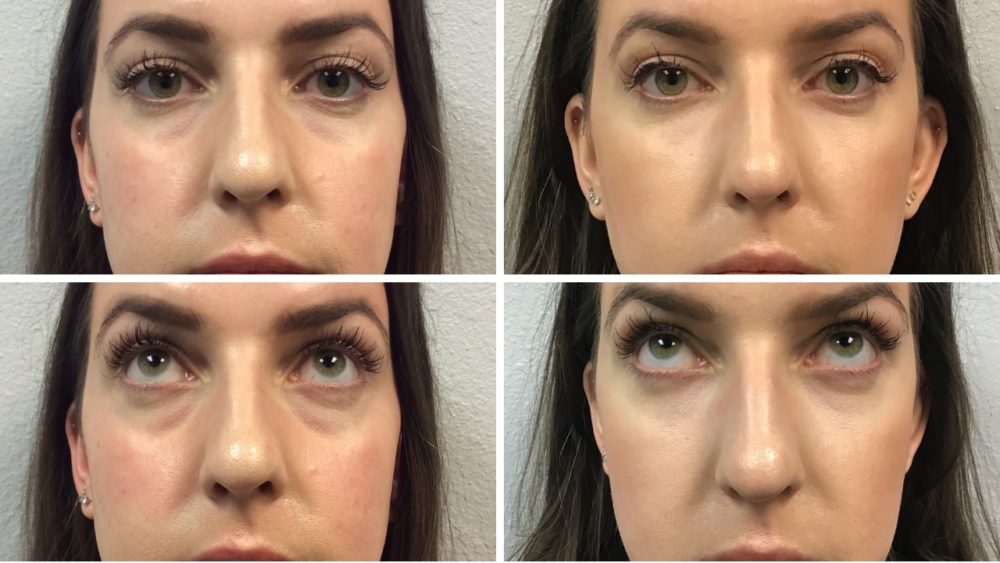
Micro Botox is a skin-refinement technique that delivers tiny doses of diluted botulinum toxin into the superficial layers of the skin rather than into the muscles. It shrinks pores, reduces oil production, smooths fine lines, and tightens skin texture, all without affecting facial movement or expression. It is one of the fastest-growing injectable treatments in aesthetic medicine right now.
More patients than ever are asking about this treatment at consultations. Some have seen it on social media under names like MesoBotox, MicroTox, Skin Botox, or Baby Botox. Others have read about how popular it has been in South Korea for years and are only now discovering it in the U.S. This article covers exactly how micro Botox works, who it is for, how it compares to traditional Botox, and what you can realistically expect from results.
Does Micro Botox Work?
Yes, micro Botox works. Multiple clinical studies and peer-reviewed publications confirm that intradermal botulinum toxin injections reduce pore size, decrease sebum production, smooth fine surface lines, and improve overall skin texture. A study published in the Journal of Cosmetic Dermatology compared intradermal micro Botox injections to topical Botox applied after microneedling and found that the injected technique produced greater efficacy and longer-lasting results in patients with enlarged facial pores and seborrhea.
The technique was first conceptualized in 2001 and documented in the medical literature as Microbotox. Research published in the Aesthetic Surgery Journal, Oxford Academic, confirmed that micro-droplets of diluted botulinum toxin injected into the dermal and subdermal plane improve skin luminosity, reduce pore size and sebum production, and soften fine lines without compromising deeper facial muscle function.
What makes the results meaningful is that micro Botox targets structures traditional Botox never reaches. Specifically, it acts on the arrector pili muscles (tiny muscles attached to hair follicles and pores), sebaceous glands (oil glands), and sweat glands. Relaxing and temporarily atrophying these structures tightens the skin envelope and makes pores appear noticeably smaller. The Plastic Surgery Key medical reference confirms that this skin-thinning and tightening effect, combined with reduced sebum secretion, is what creates the smooth, airbrushed appearance patients describe after treatment.
Results typically appear 5 to 7 days after treatment and last 3 to 4 months with a single session. We offer neurotoxin treatments including the micro technique at our practice for patients who want skin-quality improvements rather than traditional muscle-relaxing results.
What Is the Difference Between Botox and Micro Botox?
The difference between Botox and micro Botox is in the depth of injection, the dilution of the solution, and the type of results produced. Traditional Botox is injected deeply into specific muscles to relax them and prevent dynamic wrinkles. Micro Botox is injected superficially into the skin itself, targeting the skin structures rather than the muscles below.
Which Is Better, Microinfusion or Microneedling?
Microinfusion and microneedling are not competing treatments. They target different concerns and work at different depths, which is why they are often combined rather than chosen between. Microinfusion (which is the delivery method used in the micro Botox technique when a microneedling stamping device is used) delivers active ingredients like diluted botulinum toxin directly into the skin through tiny channels. The result is improved pore size, skin texture, oil control, and surface tightening, typically visible within a week.
Microneedling on its own works by creating controlled micro-injuries in the dermal layer, triggering the skin’s wound-healing response and stimulating collagen and elastin production. The improvements from microneedling are deeper and longer-lasting, but they build gradually over several months. Microneedling is better for acne scarring, deeper textural irregularities, and overall skin remodeling. Microinfusion with Botox is better for immediate pore refinement, oil control, and fine-line softening without downtime.
Many patients benefit from both. At our practice, we offer microneedling treatments that can be customized and combined with other modalities based on each patient’s skin goals.
Patients who have explored the difference between these treatments often also find our post on combining RF microneedling with PRP helpful for understanding how combination approaches work.
Is Microinfusion as Good as Botox?
Microinfusion is as good as Botox for specific skin-quality concerns, but it is not a replacement for traditional Botox for dynamic wrinkle relaxation. They do different things. If your goal is to reduce deep forehead lines created by muscle movement, traditional Botox placed into the frontalis muscle is the right treatment. If your goal is to reduce large pores, cut down on facial shine, smooth fine surface lines, and improve skin texture, microinfusion with diluted neurotoxin is the better choice. For patients who have both concerns, both can be done in the same session.
Why Is Gen Z Saying No to Botox?
Gen Z is not saying no to Botox. They are saying no to overdone Botox. This is an important distinction. According to a 2025 analysis from Skin Vitality, Gen Z is entering aesthetics with a focus on authenticity, skin health, and subtle prevention rather than dramatic transformation or the “frozen face” look that defined an earlier era of injectable culture. Research from Impressions Dental found that in 2022, patients aged 18 to 34 received approximately 2.2 million botulinum toxin procedures in the U.S., reflecting strong Gen Z participation in the category.
What Gen Z prefers is micro Botox, preventative dosing, and combination approaches that improve skin quality without making them look obviously treated. This is precisely why micro Botox has exploded in popularity among younger patients. It delivers the “glass skin” effect they are looking for on social media, with none of the stiffness or expressionlessness they are trying to avoid. According to the booking platform Fresha’s 2025 analysis of global search data across the U.S., UK, UAE, and Australia, Botox remains the world’s most searched aesthetic treatment while regenerative and skin-quality-focused treatments are seeing the fastest growth.
The shift is not away from injectables. It is toward injectables done more subtly, more strategically, and with more respect for natural facial movement.
What Do Koreans Use Instead of Botox?
Koreans pioneered what Americans are now calling micro Botox. The treatment has been popular in South Korea for over a decade under the term Skin Botox or Botox Facial. Korean aesthetic medicine has long emphasized skin quality, glass skin texture, and pore refinement over wrinkle elimination, which is exactly what intradermal Botox delivers. The technique involves highly diluted botulinum toxin, sometimes mixed with hydrating serums, vitamins, or growth factors, stamped or injected across the full face at a shallow depth.
Beyond micro Botox, Korean aesthetic practice also makes heavy use of PDRN (Polydeoxyribonucleotide) injections, also known as salmon DNA therapy, for skin repair and hydration. Skinbooster injections (superficial hyaluronic acid), exosome treatments, and polynucleotide therapies are also extremely popular for achieving skin quality without altering facial structure or expression. Many of these regenerative approaches are now being adopted widely in U.S. medspas. You can explore our regenerative aesthetics offerings, which include several of these next-generation skin treatments.
Patients who are specifically dealing with enlarged pores alongside oiliness can also read our in-depth look at how to shrink large pores for a broader view of treatment options beyond injectables alone.
Is Microtox Worth It?
Yes, microtox is worth it for patients whose primary concerns are large pores, oily or shiny skin, fine surface lines, or a dull, rough skin texture. Those patients consistently report visible improvements in skin quality within a week of treatment, with results lasting 3 to 4 months per session. The procedure takes about 20 to 30 minutes, has minimal downtime, and does not affect facial movement or expression in any way.
Microtox is especially worth it for patients who want improvements that look like better skin rather than cosmetic work. The results read as natural. People look refreshed and glowing, but nobody can point to a specific change. This “no one can tell” quality is one of the main reasons the treatment has grown so rapidly in demand across all age groups.
It is less worth it for patients whose main concern is deep dynamic wrinkles from muscle movement, significant volume loss, or significant skin laxity. Those concerns require traditional Botox, dermal fillers, or skin tightening treatments that go deeper than the intradermal layer.
How Many Units Is Micro Botox?
Micro Botox typically uses far fewer units than traditional Botox injections. A standard micro Botox facial treatment requires approximately 20 to 40 units of botulinum toxin total, spread across a large surface area of the face. Because the solution is diluted before injection, each injection point receives only a fraction of a unit. This is a significant difference from traditional Botox, where a single forehead treatment might use 10 to 20 units concentrated into just a few muscle points.
Some delivery variations use even fewer units. When the micro Botox technique is applied using a microneedling device that spreads the solution topically after creating channels in the skin, published research from Sohag University used as few as 20 units of botulinum toxin diluted in 1 mL of solution for a full treatment session. The exact unit count depends on the specific technique, the dilution ratio used, the area being treated, and the provider’s clinical protocol.
Because of the lower unit count, micro Botox is also often more affordable per session than a full traditional Botox treatment plan. It is a meaningful entry point for younger patients who want to start with something subtle.
Does Micro Botox Tighten Skin?
Yes, micro Botox does tighten skin. The skin-tightening effect from micro Botox comes from the atrophy of sebaceous glands and sweat glands in the superficial skin layer, as well as the relaxation of the tiny arrector pili muscles attached to each pore. As these structures reduce in activity and size, the skin envelope becomes thinner, smoother, and tighter. According to the Plastic Surgery Key textbook description of the technique, this produces a noticeable improvement in skin firmness and smoothness in treated areas.
The tightening effect is subtle. It is not equivalent to a radiofrequency skin tightening treatment or ultrasound therapy that heats the deeper dermal and fascial layers to stimulate collagen remodeling. Micro Botox tightens at the surface level, which is why patients often describe the result as their skin looking smoother, more refined, and less slack rather than dramatically lifted.
For patients who want a more significant lifting and tightening effect, we recommend combining micro Botox with deeper energy-based treatments. Our skin tightening services address laxity at multiple tissue depths for more comprehensive results.
How Long Does Microtox Last?
Microtox results last approximately 3 to 4 months on average. This is a similar timeline to traditional Botox, which makes sense because the same botulinum toxin molecule is being used. The body naturally metabolizes the neurotoxin over time, and as it does, the treated sebaceous glands, sweat glands, and arrector pili muscles gradually return to normal activity. Pore size slowly returns to baseline, and skin texture reverts over the same 3 to 4 month window.
Some patients, particularly those who receive intradermal injections rather than the topical post-microneedling application, report results lasting closer to 4 months. Research published in the Journal of Cosmetic Dermatology found that intradermal injection produced better longevity than topical application after microneedling at the 4-month follow-up mark.
To maintain results consistently, most patients schedule sessions every 3 to 4 months, similar to how they would approach a traditional Botox maintenance plan. Patients who combine micro Botox with collagen-stimulating treatments like microneedling or laser resurfacing may find their overall skin quality improves over time, making each micro Botox session produce progressively better-looking results.
What Happens to Your Face After 20 Years of Botox?
After 20 years of Botox, most patients show fewer deep dynamic wrinkles than people their age who never had treatment. According to the Cleveland Clinic, the long-term effects of Botox are still temporary between sessions, but with consistent repeat treatment, the muscles targeted by Botox can experience mild atrophy over time. This means the muscles that cause expression lines become less forceful, so the lines they create become less pronounced. Over many years, patients often find they need the same or slightly lower doses to achieve the same effect because the muscles have adapted.
A 2020 review cited in the National Institutes of Health (NIH) database concluded that there are no long-term or life-threatening adverse effects associated with cosmetic uses of botulinum toxin when performed by trained professionals at appropriate doses. Northwest Face and Body notes that deep wrinkles may still be less pronounced in long-term users than they would have been without any treatment, since Botox prevented years of constant skin folding.
The most important factor for long-term results is how the treatment is done, not simply how long it has been done. Thoughtful dosing, proper technique, and periodic re-evaluation as the face naturally ages are what determine whether a long-term Botox patient looks naturally refreshed or overdone. We see this every day in Bloomfield Hills. Patients who have been coming to us for years look better not because of how much treatment they have had, but because of how intelligently it has been applied.
For patients who want to support skin quality alongside long-term neurotoxin use, pairing Botox with collagen-stimulating treatments is a smart approach. Our anti-aging treatment menu is designed around this combined approach.
Is 40 Too Late for Botox?
No, 40 is absolutely not too late for Botox. Patients in their 40s are actually among the most ideal candidates for both traditional Botox and micro Botox. In their 40s, patients typically have a combination of dynamic wrinkles from years of facial movement and early signs of volume loss and skin laxity. This makes a combined approach using neurotoxins for muscle-driven lines and fillers or skin tightening for structural concerns the most effective strategy.
According to Impressions Dental’s analysis of Botox statistics, patients aged 35 to 50 received the majority of botulinum toxin procedures in recent years, nearly half of all injections performed in the U.S. This confirms that 40s patients make up the core treatment population, not a niche one.
What matters at 40 is not whether to start, but how to start well. A proper consultation that assesses skin quality, muscle activity, volume distribution, and skin laxity allows a provider to build a plan that addresses the actual causes of aging rather than just treating surface symptoms. Patients who are newer to injectables and want to understand the bigger picture of timing will also find our blog on what age is best for preventative Botox a helpful starting point.
To discuss what approach is right for your skin at this stage, you can book a skin wellness consultation with our team.
Micro Botox vs. Traditional Botox: Side-by-Side Comparison
| Feature | Traditional Botox | Micro Botox (MicroTox / MesoBotox) |
|---|---|---|
| Injection Depth | Deep, into muscle tissue | Superficial, into the dermis and subdermis |
| Primary Target | Facial muscles (frontalis, corrugator, orbicularis) | Arrector pili muscles, sebaceous glands, sweat glands |
| Primary Benefits | Reduces dynamic wrinkles (forehead, crow’s feet, frown lines) | Shrinks pores, reduces oil and shine, smooths fine lines, tightens skin texture |
| Effect on Expression | Temporarily reduces movement in treated muscles | No effect on facial movement or expression |
| Units Required | 10 to 60+ units per treatment area | 20 to 40 units total, highly diluted |
| Onset of Results | 3 to 14 days | 5 to 7 days |
| Duration | 3 to 6 months | 3 to 4 months |
| Downtime | Minimal; occasional bruising | Minimal to none; mild redness for a few hours |
| Best Candidate | Patients with dynamic wrinkles from muscle activity | Patients with large pores, oily skin, fine texture lines, or those wanting natural skin refinement |
| Popularity | 4.7M+ U.S. procedures in 2024 to 2025 (Grand View Research) | Fastest-growing aesthetic segment in 2025 (Fresha global search analysis) |
Sources: Grand View Research Facial Injectables Market Report 2024; Fresha Global Aesthetic Search Analysis 2025; Aesthetic Surgery Journal (Oxford Academic) Microtoxin Roundtable 2023; Journal of Cosmetic Dermatology Salem 2023.
Which Is Safer, Microneedling or Botox?
Both microneedling and Botox are safe when performed by qualified providers, and the two are not directly comparable because they address different concerns. Botox has a longer regulatory and clinical track record, having been FDA-approved for cosmetic use since 2002 and used medically for decades before that. A 2020 safety review published in the National Institutes of Health database concluded that no long-term or life-threatening adverse effects exist for cosmetic botulinum toxin use when done correctly. Side effects are typically short-lived and include mild bruising, swelling, or temporary asymmetry.
Microneedling is also very safe. Side effects are limited to temporary redness, mild swelling, and sensitivity in the days following treatment. Neither treatment is riskier than the other in any meaningful way when performed by a licensed medical professional at a qualified practice. The choice between them should be based on what your skin needs, not on a perceived safety difference.
What Is the 4-Hour Rule for Botox?
The 4-hour rule for Botox refers to the aftercare instruction to avoid lying face down for at least 4 hours after a Botox injection. The concern is that lying flat too soon after injection could cause the neurotoxin to migrate from the intended injection site to a neighboring muscle. In the case of forehead Botox, migration could cause the neurotoxin to affect the levator muscle that lifts the eyelid, resulting in a temporary drooping eyelid (ptosis).
This rule is most relevant for traditional muscle-depth Botox injections in the forehead and brow area. For micro Botox, which is injected into the superficial skin layer across the full face, the migration risk is different because the neurotoxin is intentionally distributed broadly. Your provider will give you specific aftercare guidance based on the exact technique used. Other common post-Botox instructions include avoiding strenuous exercise for 24 hours, not rubbing the treated area, and skipping alcohol for 24 hours.
What Is the Riskiest Place for Botox?
The riskiest places for Botox are areas close to muscles that serve critical functions or near major blood vessels where unintended effects would be more visible or functionally significant. The glabella (between the eyebrows) is considered high-risk because the corrugator muscles are very close to the levator palpebrae muscle that lifts the eyelid. Injecting too deep or using too much product here can cause temporary eyelid drooping. The area around the lips requires particular precision because the orbicularis oris controls lip movement, and treating it incorrectly can affect the ability to drink through a straw or speak clearly.
For micro Botox specifically, risk is lower because the injections are superficial and do not reach the muscles responsible for functional movements. Choosing an experienced injector at a physician-led practice significantly reduces the risk of any placement-related complication for any Botox technique. Our Botox treatments are performed by trained medical professionals who understand facial anatomy thoroughly.
Frequently Asked Questions
Is Microinfusion Better Than Botox?
Microinfusion is not better or worse than Botox. They serve entirely different purposes. Microinfusion (the delivery method in micro Botox) targets skin quality at the surface level, improving pores, oil, shine, and fine texture. Traditional Botox targets muscles to relax dynamic wrinkles. For patients with both concerns, combining the two techniques in a single session produces the most complete result. Neither replaces the other.
What Do Celebrities Use Instead of Botox?
Many celebrities now use micro Botox and microinfusion techniques instead of, or in addition to, traditional Botox. The appeal is that micro Botox improves skin quality without producing the obvious frozen or stiff appearance sometimes associated with heavy traditional Botox use. Other treatments gaining celebrity interest include polynucleotide injections, exosome therapies, and PRF (platelet-rich fibrin) for regenerative skin improvement. The trend in celebrity aesthetics has shifted strongly toward treatments that look like great skin rather than obviously treated skin.
Is 40 Too Old for Microneedling?
No, 40 is not too old for microneedling. Patients in their 40s and beyond are excellent candidates for microneedling because this age group typically has the collagen depletion, texture irregularities, and acne scars that microneedling is most effective at addressing. Collagen production naturally declines starting in the mid-20s, making treatments that stimulate new collagen formation especially valuable in the 40s and 50s. Results build progressively with each session, and most patients in this age range are recommended a series of 3 to 6 treatments spaced 4 to 6 weeks apart.
Why No Botox After 65?
There is no absolute rule against Botox after 65. This question is based on a common concern rather than a medical fact. Patients over 65 can absolutely benefit from Botox, but the goals and approach change with age. At 65 and beyond, significant skin laxity, volume loss, and bone resorption mean that Botox alone addresses only one part of the aging picture. Too much Botox in areas with pre-existing laxity can occasionally worsen the appearance of sagging by removing any remaining muscle support. A thoughtful, conservative plan that combines small amounts of neurotoxin with fillers and skin tightening typically produces the best results for patients in this age group.
What Is the 2 cm Rule for Botox?
The 2 cm rule for Botox refers to a clinical guideline used in specific injection protocols, most commonly associated with forehead and brow treatments. It describes maintaining at least 2 centimeters of distance from the brow when injecting the lower forehead to reduce the risk of neurotoxin migrating to the levator palpebrae muscle and causing eyelid drooping (ptosis). This is one of several anatomical safety rules experienced injectors follow to deliver consistent, safe results. Variations of this rule exist for different facial zones, and trained providers learn multiple such guidelines as part of their injection education.
What Are the Long-Term Effects of Micro Botox?
The long-term effects of micro Botox are considered positive and low-risk. Consistent sessions over time may lead to gradually improving skin texture as the cumulative reduction in sebaceous gland activity keeps pores smaller between treatments. There is no documented evidence of harmful long-term effects from intradermal botulinum toxin use at the doses and dilutions used in micro Botox. The treatment wears off naturally within 3 to 4 months, and the treated structures return to baseline activity if treatment is stopped. Patients who maintain regular sessions typically report that their skin quality improves steadily year over year when micro Botox is part of a broader skin health routine.
Putting It All Together
Micro Botox is not a trend that will fade. It is a clinically validated technique that addresses a real and common set of skin concerns, including large pores, excess oil, fine surface lines, and dull skin texture, using the same well-researched botulinum toxin molecule that has been used safely in aesthetics for over two decades. What makes it distinct is the technique: shallow placement, high dilution, and wide distribution across the skin surface rather than targeted muscle injection. The result is a skin-quality improvement that looks natural, requires no downtime, and appeals to patients across every age group.
The rise of micro Botox also reflects a broader shift happening across aesthetic medicine. Patients want to look like themselves, just clearer, smoother, and more refined. They are moving away from dramatic transformations and toward treatments that read as excellent skin. According to Fresha’s 2025 global search analysis, Botox remains the world’s most searched aesthetic treatment, while the fastest-growing category is regenerative and skin-quality-focused treatments. Micro Botox sits right at the intersection of both.
If you are curious whether micro Botox is the right treatment for your skin, the best place to start is a conversation. At FACE Medspa, we build treatment plans based on your specific skin, not a one-size-fits-all menu. Reach out to us to schedule a consultation.