Yes, a way exists to permanently reduce armpit sweat, but no treatment ends sweating for life. The miraDry system destroys underarm sweat glands, and sweat dropped 82% on average after two treatments in International Hyperhidrosis Society (IHS) data. Treated glands are not believed to grow back. Botox and prescription products also work, though their results fade.
Key Takeaways
- Microwave treatment with miraDry destroys underarm sweat glands, and the FDA cleared it in 2011 for primary axillary hyperhidrosis.
- Two miraDry treatments spaced three months apart are recommended, and average sweat reduction is 82%.
- Botox for underarm sweat lasts 3 to 10 months, so repeat visits are needed.
- Primary hyperhidrosis is managed rather than ended, but secondary hyperhidrosis can go away when its cause is treated.
- A prescription-strength antiperspirant is the usual first step before procedures.
Is There a Way to Permanently Stop Armpit Sweat With a Medical Treatment?
Yes, a medical treatment can permanently reduce armpit sweat by destroying the sweat glands under the arm, though results vary by person. The short answer to is there a way to permanently stop armpit sweat is a qualified yes.
Two kinds of procedures remove sweat glands for good. One is miraDry treatment, which uses microwave energy in the office. The other is surgical sweat gland removal.
The American Academy of Dermatology (AAD) states that surgery can permanently stop excessive sweating in the treated area. Cleveland Clinic adds that treatment manages focal hyperhidrosis but does not end the condition.
Nerve surgery, called sympathectomy, cuts the nerves that signal sweat glands. Doctors usually keep it as a last resort. Microwave treatment is the less invasive route, so the next step is understanding how it works.
What Is MiraDry and How Does It Work?
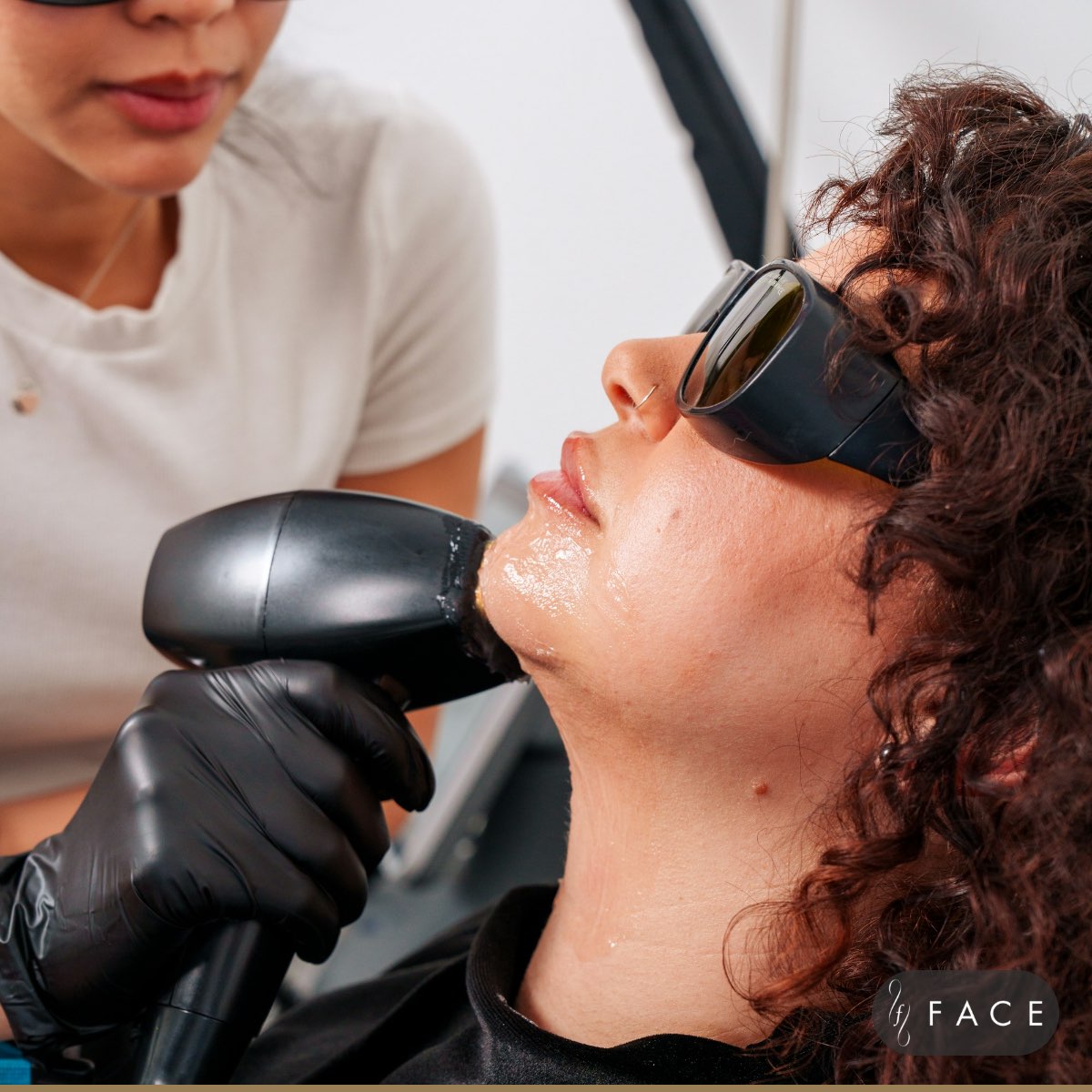
miraDry is a noninvasive microwave treatment that heats and destroys sweat glands in the underarm. A handheld device sends electromagnetic energy to the layer of skin where the glands sit.
The IHS reports that the energy works 2 mm to 5 mm below the skin surface. The device cools the top skin layers at the same time. The glands break down through thermolysis, which means decomposition by heat.
The FDA cleared the miraDry system on January 28, 2011 (510(k) number K103014). The clearance covers primary axillary hyperhidrosis, meaning excessive underarm sweating with no medical cause. The FDA summary states the device is not indicated for other body areas or generalized hyperhidrosis.
Underarms hold less than 2% of the body’s sweat glands, according to the IHS. Experts cited by the society expect no effect on body temperature control. The next question is whether the treatment delivers.
Does MiraDry Work for Excessive Underarm Sweat?
Yes, miraDry reduced underarm sweat in over 90% of patients in University of British Columbia data, with an average drop of 82%. The IHS reports both figures on its miraDry page.
A 2013 study in the Journal of Cosmetic and Laser Therapy treated 11 patients in Asia. At 7 months, 83.3% of treated underarms improved by 2 points on the Hyperhidrosis Disease Severity Scale (HDSS). The HDSS rates how much sweat disrupts daily life.
A German clinic survey adds real-world detail. Park-Klinik Birkenwerder treated 282 patients between 2017 and 2024, and 80 of 220 contacted patients responded. Of those, 81.2% would recommend the treatment.
Evidence limits apply. The 2013 study was small, and the survey response rate was 36.4%. Some survey patients described disappointment that sweat did not drop to zero, so a realistic goal is less sweat, not none. The next section covers what miraDry results look like over time.
What Are MiraDry Results and How Long Do They Last?
miraDry results appear almost immediately and are described as lasting, because treated sweat glands are not believed to grow back. The IHS makes this statement on its miraDry page.
Timing matters. The IHS notes that the treated area is fully dry right after treatment. After 2 to 3 weeks, some sweating returns as swelling fades. The long-term reduction then settles at a level that differs for each person.
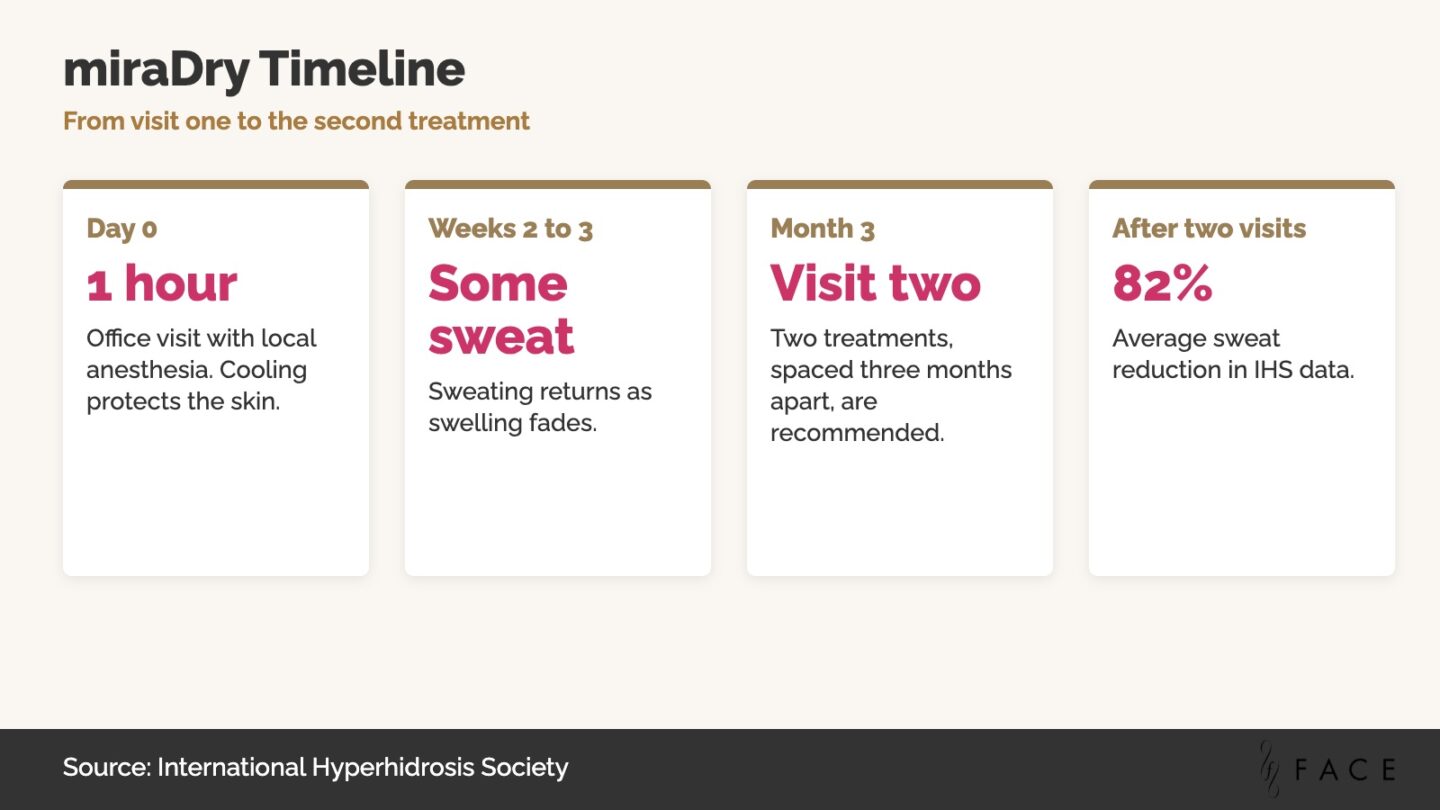
The timeline graphic above shows each stage from the office visit to the second treatment.
The IHS recommends two treatments spaced three months apart. A third treatment is occasionally needed, and a starch-iodine test first shows where remaining sweat comes from. In the German survey, 73.8% of patients had one treatment, 23.2% had two and 3% had three.
Some survey patients reported a weaker effect after 2 years. Treatment plans therefore stay personal, and a provider can review options if sweat increases again over time. The next section explains what a visit involves.
What Should You Expect During MiraDry Treatment and Recovery?
A miraDry visit takes about one hour and uses local anesthesia plus skin cooling for comfort. The IHS describes the procedure as in-office with minimal to no downtime.
A typical visit follows these steps:
- Review your history, including medications, how long you have sweated heavily and which areas are affected, as the AAD suggests.
- Receive local anesthetic in each underarm, usually lidocaine injections.
- Have the handheld device placed across the underarm in several passes while the skin stays cooled.
- Use ice packs and over-the-counter pain medicine for a few days, as the IHS recommends.
- Return to normal activities, with exercise resuming within several days.
Recovery has a clear pattern. The IHS reports swelling, redness and tenderness for several days. Numbness or tingling in the upper arm or underarm may last about 5 weeks. The AAD says temporary discomfort, swelling and tenderness usually clear within 4 weeks.
Good candidates are adults with primary axillary hyperhidrosis whose antiperspirants no longer control sweat. In the German survey, 87.5% of patients had already tried aluminum deodorants or botulinum toxin. Patients with darker skin tones should ask their provider about pigment changes before treatment, as the IHS advises.
Not every case of underarm sweat needs a procedure. The next questions cover what causes sweat and whether it ever resolves.
Can Hyperhidrosis Go Away on Its Own?
Hyperhidrosis goes away only when a treatable cause drives it, as with secondary generalized hyperhidrosis. Cleveland Clinic states that generalized hyperhidrosis can resolve when a provider treats the underlying condition or medication.
Primary focal hyperhidrosis behaves differently. Cleveland Clinic reports a genetic change as the cause, and the condition tends to start before age 25. The clinic states treatment manages focal hyperhidrosis but does not end it. An estimated 3% of US adults between ages 20 and 60 have hyperhidrosis.
Cleveland Clinic also notes that focal hyperhidrosis runs in families. A provider separates the two types with a history, an exam and sometimes lab tests. The result guides the plan, starting with the triggers that set sweat off.
What Triggers Armpit Sweat?
Heat, exercise, stress, anxiety and fear trigger armpit sweat, along with certain foods and drinks. Cleveland Clinic lists these triggers for sweat glands in general:
- Warm temperatures and humidity
- Exercise and physical activity
- Emotions such as stress, anxiety, fear or nervousness
- Spicy, fatty, sugary, salty or high-protein foods
- Caffeine and alcohol
Some medications also raise sweating. Cleveland Clinic names naproxen as one example, and conditions such as diabetes and Parkinson’s disease as others. In hyperhidrosis, the glands switch on more often than body heat requires.
Avoiding triggers lowers everyday sweat for many people, so daily habits come next.
How to Stop Underarm Sweat at Home?
Apply antiperspirant to clean, dry underarms at bedtime to lower underarm sweat overnight. Healthline and the AAD both give this timing, because the active ingredient needs cool, dry skin to work.
The AAD states that nonprescription antiperspirants only work for mild hyperhidrosis. Healthline notes that stronger over-the-counter products contain 10% to 15% aluminum chloride. Research has not found that aluminum in antiperspirants causes Alzheimer’s disease, according to the AAD.
These habits support the product:
- Wait a few minutes after a shower before dressing, so skin cools and dries.
- Choose loose, breathable clothing such as cotton, and avoid polyester, which can trap heat.
- Limit caffeine and alcohol, which Cleveland Clinic lists as triggers.
- Shave or trim underarm hair, since hair holds moisture, per Healthline.
Home steps help mild cases. When they fall short, a provider can prescribe stronger options.
What Do Doctors Prescribe for Excessive Sweating?
Doctors prescribe a prescription-strength antiperspirant first, then medicated cloths or gel, oral medicines or Botox injections when needed. The AAD describes this stepwise plan, built around where you sweat and your preferences.
The table below compares common prescription and procedure options for the underarms.
The table shows that only the gland-destroying option is long-lasting by design.
The FDA label for underarm Botox covers severe primary axillary hyperhidrosis that topical agents have not managed. The labeled dose is 50 Units per armpit. In one study, 91% of treated patients (219 of 242) cut sweat by half at week 4. Placebo patients reached 36%.
The AAD reports that patients notice less sweating within 7 to 10 days of Botox. The label gives a median response of 201 days, and the AAD range is 3 to 10 months for underarms. A separate guide covers Botox duration in other areas.
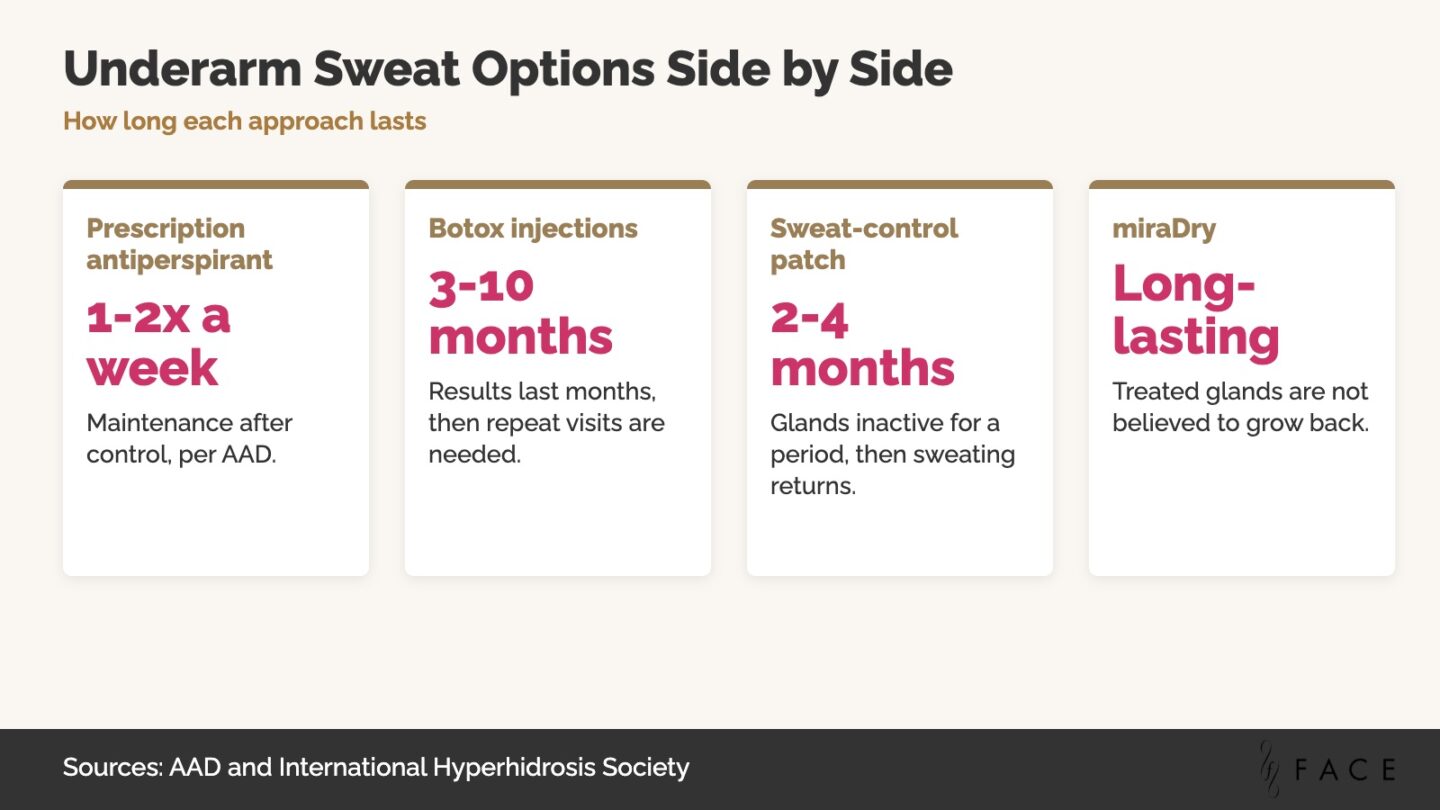
The comparison graphic above lines up the duration of each underarm option.
New patients can start with a guide to Botox basics before a visit. Several other questions come up once a plan takes shape.
What Else Should You Know About Underarm Sweat Treatments?
Does MiraDry Also Reduce Underarm Hair and Odor?
Yes, miraDry also reduces underarm hair and odor, according to the AAD, which cites studies. The FDA cleared the device in 2015 for permanent underarm hair reduction.
The IHS states that miraDry works on all hair colors. Laser hair reduction depends on contrast between hair and skin.
Is Surgery an Option for Underarm Sweat?
Surgery is an option when other treatments fail, and a dermatologist refers you to a surgeon. The AAD lists sweat gland removal by scraping, liposuction, laser or excision for the underarms.
Sympathectomy needs general anesthesia and cuts nerves to the underarms or palms. Compensatory sweating, meaning more sweat in other areas, can follow, so doctors discuss it first.
Can Botox Treat Sweat Outside the Underarms?
Botox treats sweat outside the underarms in practice, though the FDA label covers only the underarms. The AAD states dermatologists also use botulinum toxin on the hands, feet and face.
Results on these areas last about 3 to 6 months on the feet and 4.5 months on the face, per the AAD. A guide to areas Botox treats shows other uses.
When Should You See a Provider About Sweating?
See a provider when sweat interferes with daily life or starts suddenly in adulthood. Cleveland Clinic notes that sweating at night or all over the body can signal an underlying cause.
Bring a list of medications, the areas affected and any family history. The AAD uses the same questions for diagnosis. For ongoing problems, excessive sweating treatment options can be reviewed in one visit.
How Does FACE Medspa Help With Underarm Sweat?
FACE Medspa helps patients who ask is there a way to permanently stop armpit sweat. We review history, goals and options in a consultation. We explain how miraDry works, how many visits to plan and what recovery looks like.
Our team offers underarm sweat treatment with miraDry, plus Botox for patients who prefer a temporary option. We compare both against the evidence in this guide and match the plan to your sweat pattern.
Patients from Bloomfield Hills and nearby communities visit us for these consultations. Your provider reviews medications, skin tone and past treatments before recommending a plan. The FACE Medspa providers are available by phone or online to schedule a consultation.