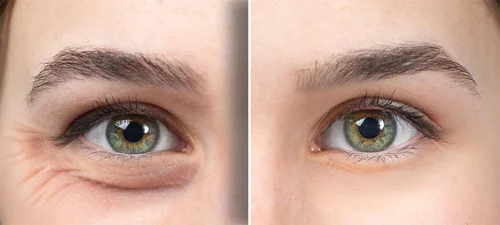
CO2 laser resurfacing before and after results show the clearest change in acne scars, sun damage, skin texture, and pore size, with visible improvement around day 10 and the full result arriving three to six months later as collagen rebuilds. A single treatment produces mild to moderate improvement in published trials, and the dramatic comparisons most people picture come from a series of three or four sessions. This article covers what the research actually measured for each concern, where CO2 hits its ceiling, how long results hold, and two evidence-backed ways to get more out of the same treatment.
What Is CO2 Laser Resurfacing and What Does It Do?
CO2 laser resurfacing removes damaged surface skin and heats the dermis underneath, triggering a wound healing response that builds new collagen over the following months. The laser emits a 10,600 nm wavelength that water absorbs intensely, so the energy vaporizes tissue where it lands and spreads heat into the surrounding dermis. Both effects contribute to the result, and they arrive on different schedules.
Ablation handles the surface. Removing sun-damaged epidermis clears pigment and smooths rough texture, and that change is visible as soon as the new skin surfaces.
Thermal remodeling handles the depth. Heat delivered into the dermis stimulates collagen and elastin production that continues for months, which is why CO2 laser resurfacing keeps improving long after you have stopped thinking about the appointment.
What Are the Types of CO2 Laser Resurfacing?
There are two types of CO2 laser resurfacing, fully ablative and fractional, and nearly all cosmetic treatment today is fractional. Fully ablative removes the entire surface layer across the treatment area, while fractional delivers energy in a grid of microscopic columns and leaves healthy tissue between them. The untreated tissue is what makes recovery manageable.
Fully ablative produces the most change in one session and carries substantially higher risk of prolonged redness, hypopigmentation, and scarring. It is rarely used for full-face treatment now, though it still has a role on small areas of severe scarring.
Fractional preserves a reservoir of untreated skin that drives rapid healing across the treated columns. Because settings control depth, density, and energy independently, one device covers everything from a light refresh to an aggressive scar treatment.
What Do CO2 Laser Resurfacing Before and After Results Look Like by Concern?
CO2 laser resurfacing produces its strongest measured results on acne scars, pore size, texture, and sun damage, and its weakest on skin laxity. In a randomized controlled trial with blinded evaluation, a single full-face fractional CO2 treatment produced statistically significant improvement in texture, laxity, wrinkles, enlarged pores, and acne scars, though the authors characterized the magnitude after one session as mild to moderate. The larger changes in the photos people share online come from multiple sessions.
| Concern | What the research measured | Sessions for a strong result | Realistic ceiling |
|---|---|---|---|
| Atrophic acne scars | Significant ECCA score reduction, with the most pronounced improvement at 12 months | 3 to 4 at 6-week intervals | Meaningful smoothing, not elimination |
| Enlarged pores | Statistically significant reduction, outperforming Er:YAG on VISIA pore measurement | 1 to 2 | Visibly refined, not closed |
| Skin texture | Statistically significant improvement after a single treatment | 1 to 2 | One of the most consistent responders |
| Sun damage and pigment | Clearing of mottled pigmentation as treated epidermis sheds | 1 to 2 | Strong clearing, though new damage accumulates |
| Fine lines | Statistically significant wrinkle improvement | 1 to 2 | Noticeable softening |
| Deep static wrinkles | Improvement measured, magnitude lower than for texture and pigment | 1 to 3 | Softened, not erased |
| Skin laxity | Statistically significant but modest change from collagen contraction | 1 to 2 | Mild firming only, no lift |
Sources: randomized controlled trial with blinded response evaluation of fractional CO2 for atrophic acne scars and skin rejuvenation; one-year comparative study of CO2 array laser versus Er:YAG for acne scars using ECCA scoring, VISIA Skin Analysis, and DLQI; fractional CO2 monotherapy study of 60 patients with moderate to severe atrophic acne scars, Journal of Cutaneous and Aesthetic Surgery.
Satisfaction runs high even where measured change is moderate. In the blinded trial above, 86 percent of patients reported being satisfied to very satisfied with their outcome, which suggests the improvement reads better in a mirror than it scores on a grading scale. Our Active FX and Deep FX settings are chosen around which row of that table matters most to you.
How Long After a CO2 Laser Will You See Results on Your Face?
You will see the first results about 10 days after a CO2 laser, and the full result arrives three to six months later. Pigment and texture change appear first because they depend on the surface being replaced, while scar depth, firmness, and fine line softening depend on collagen that takes months to build. Two different clocks, one appointment.
Pigment clears as the treated epidermis sheds, so sun spots look lighter as soon as peeling finishes. Texture follows within the same window, with skin feeling smoother before it looks dramatically different.
Scars behave differently and reward patience. In a one-year comparative study, ECCA scar scores kept improving throughout follow-up with the most pronounced reduction recorded at the 12-month mark, meaning the photo taken at three months underrepresents where the result eventually lands.
What Do CO2 Results Look Like for Acne Scars?
CO2 results for acne scars show meaningful smoothing of rolling and boxcar scars, partial improvement of icepick scars, and no complete elimination of any of them. Sixty patients treated with three to four sessions at six-week intervals were assessed six months after their final session on a quartile scale, where an excellent response meant more than 50 percent improvement in scar appearance and skin texture. That threshold is the honest benchmark.
Scar shape predicts response better than scar age does. Broad, shallow rolling scars and sharp-edged boxcar scars respond well because the laser can smooth their edges into the surrounding skin. Narrow icepick scars extend too deep for resurfacing alone and often need subcision or another approach alongside it.
CO2 also outperformed erbium over the long run for this indication specifically. The one-year comparative study found CO2 delivered superior scar reduction at 12 months, attributed to deeper penetration and the combined coagulative and ablative action. Our approach to scar treatments matches the modality to the scar type rather than defaulting to one device.
What Do CO2 Results Look Like for Large Pores?
CO2 results for large pores show visible refinement rather than closure, and pore size is one of the most consistently improved measures in the research. The one-year comparative study using VISIA Skin Analysis found CO2 outperformed Er:YAG on pore size measurement, and the blinded randomized trial recorded statistically significant improvement in enlarged pores after a single treatment. Pores cannot be eliminated, and they can look considerably smaller.
The mechanism is structural rather than cosmetic. Pore appearance depends partly on the collagen supporting the surrounding skin, and firmer dermal support narrows the visible opening. That is why pore improvement continues alongside the collagen timeline rather than appearing all at once.
Results here hold reasonably well with sun protection. Patients treating primarily for pores and texture generally see their best appearance around the three to four month mark.
What Do CO2 Results Look Like Under the Eyes?
CO2 results under the eyes show smoother, tighter eyelid skin with softened crepey texture, and no change to under eye bags. Resurfacing improves the quality of the skin, and a true under eye bag is orbital fat pushing forward through a weakened septum, which no laser moves. The distinction determines whether you will be pleased at month three.
Periocular skin is treated at conservative settings with metal corneal shields in place. Swelling in this area runs more pronounced and lasts longer than anywhere else on the face, though results tend to hold well because the skin sees little movement stress.
Fine crepey lines and lax eyelid skin respond genuinely well. Anyone whose primary concern is shadowing, hollowing, or a distinct bulge should have those under eye concerns assessed before assuming a laser is the answer.
Will CO2 Laser Get Rid of Deep Wrinkles?
CO2 laser softens deep wrinkles and does not get rid of them. Blinded evaluation confirmed statistically significant wrinkle improvement from fractional CO2, and the magnitude of that improvement runs lower than what the same treatment achieves for texture and pigment. Static lines etched into the skin over decades do not disappear from resurfacing.
Perioral and periorbital lines respond best, since those areas have thinner skin where the laser reaches a greater proportion of the total depth. Deep folds driven by volume loss respond least, because the problem is not in the skin at all.
Combining approaches produces better outcomes than repeating resurfacing. Where volume loss or muscle movement is contributing to what you see, treating wrinkles with a layered plan beats asking one device to solve every cause.
Does a CO2 Laser Tighten Skin, and Can Laser Fix Sagging Jowls or Turkey Neck?
A CO2 laser tightens skin modestly and cannot fix sagging jowls or a turkey neck. Collagen contraction from thermal energy firms the skin envelope, and firming an envelope does not reposition tissue that has descended. This is the clearest ceiling in the entire treatment and the one worth stating plainly.
Measured laxity improvement in the blinded trial reached statistical significance while remaining modest in size. That is enough to matter on skin with early looseness and nowhere near enough on a jawline that has genuinely dropped.
Loose neck skin is the hardest version of this. Where laxity is the dominant concern, energy-based skin tightening reaches the relevant tissue far more directly, and pronounced skin excess is a surgical question rather than a laser one.
Is CO2 Better Than Botox?
CO2 is better than Botox for skin quality and worse than Botox for movement lines, because the two treat entirely different causes. Neurotoxin relaxes the muscles that fold the skin, while resurfacing rebuilds the skin that has been folded. A forehead line that only appears when you raise your brows is a muscle problem no laser addresses.
Most patients past their forties have both. Dynamic lines from expression respond to neurotoxins, while the sun damage, texture change, and etched static lines underneath respond to resurfacing.
Sequencing matters when combining them. Neurotoxin is typically placed either well before resurfacing or after healing is complete, rather than into freshly treated skin.
How Many Times Can You Do CO2 Laser Resurfacing?
You can have CO2 laser resurfacing once or twice a year, with an initial scar series spaced closer together. Published acne scar protocols used three to four sessions at six-week intervals, while general resurfacing usually needs only one session followed by annual maintenance. The gap exists because collagen remodeling has to finish before another round makes sense.
- Consultation and skin typing. Fitzpatrick type, sun history, melasma history, and medication history all get established before settings are chosen.
- Set expectations by concern. The table above should be the conversation, so nobody books hoping for a lift.
- Session one. Settings matched to the concern and to how much recovery you can accommodate.
- Reassess at three months. Collagen is still building, so evaluating sooner leads to unnecessary treatment.
- Additional sessions for scarring only. Most general resurfacing patients never need a second.
- Annual maintenance. A lighter treatment each year preserves the result more comfortably than repeating full resurfacing.
Combining depths in one appointment is often more efficient than separate visits. Total FX pairs the superficial and deep treatments in one session, and our providers in Bingham Farms select that combination when both pigment and texture need addressing.
How Long Do CO2 Laser Results Last?
CO2 laser results last several years for texture and scarring and shorter for pigment. New collagen built during remodeling stays in the skin, which is why textural and scar improvements are durable, while pigment results depend entirely on how much new sun exposure accumulates afterward. Your habits determine the pigment half of the outcome.
Scar improvement holds best of all. Remodeled scar tissue does not reform into its original shape, and the one-year comparative study showed scar scores still improving at the twelve-month mark rather than regressing.
What does not stop is aging. The treatment resets your starting point rather than removing you from the curve, so ongoing sun protection and a maintenance plan preserve considerably more of the result than treatment alone.
What Makes CO2 Results Better?
Two post-treatment approaches have measurably improved CO2 outcomes in published research, and almost nobody discusses them. Both work by supporting the healing phase rather than by changing the laser settings, which means better results from the same treatment. Here is what the evidence supports:
- Hyaluronic acid dressing after treatment. A systematic review and meta-analysis of randomized trials found that adding an HA dressing to fractional CO2 reduced ECCA scar scores further, shortened both crust formation and crust removal time, raised patient satisfaction, and cut hyperpigmentation incidence substantially.
- Exosome application after treatment. In a double-blind randomized split-face study of 25 patients receiving three fractional CO2 sessions, the exosome-treated sides achieved a 32.5 percent reduction in ECCA scores versus 19.9 percent on the control sides, with milder erythema and shorter downtime.
- Antiviral prophylaxis. Herpes reactivation occurred in 10.6 percent of fractional CO2 treatments in one retrospective analysis, and prophylaxis started before treatment prevents the disruption to healing that an outbreak causes.
- Rigorous sun avoidance. Unprotected exposure during healing is the fastest route to pigmentation problems that undo the pigment result you treated for.
- Not picking. Crusts release when the skin beneath is ready, and removing them early raises the risk of textural change in exactly the areas you were trying to smooth.
The exosome finding is the more striking of the two, since it nearly doubled scar improvement on the same faces receiving the same laser treatment. An exosome treatment applied after resurfacing is one way we support the healing window, planned individually rather than added by default.
Is CO2 Laser on Face Worth It?
CO2 laser on the face is worth it for patients with acne scarring, significant sun damage, or textural change who can accommodate the recovery. It remains the most powerful non-surgical resurfacing option available, and 86 percent of patients in the blinded trial reported being satisfied to very satisfied with their results. Worth it depends heavily on what you brought to it.
It is worth it if your concern sits in the top four rows of the table above. It is not worth it if your concern is laxity, because you will spend the recovery week to buy modest firming that a different device delivers better.
It is also worth being honest about who should approach carefully. In a cohort with predominantly deeper skin tones, post-inflammatory hyperpigmentation reached 55.5 percent at one month, falling to 11.1 percent by six months, while a review of 856 treatments in a broader population recorded PIH in just 1.1 percent. Settings and skin type explain that gap, and both belong in the consultation.
What About Recovery?
Recovery from CO2 laser runs about a week of visible healing followed by weeks of fading pinkness. Swelling peaks around day two, crusting and peeling run days three through seven, and new skin surfaces between days eight and fourteen. Erythema resolution averaged 3.11 weeks in one comparative study, longer than most patients expect.
The full stage-by-stage breakdown, including which day most patients find hardest and what surfaces weeks later, sits in our guide to CO2 laser recovery.
How Does CO2 Compare With Other Lasers?
CO2 is the strongest resurfacing option and not always the right one, which is the short version of a longer comparison. Concerns centered on pigment, tone, and surface texture often reach a similar endpoint through gentler treatments with roughly half the downtime. Strongest and best are different questions.
Our full comparison covering downtime, pain, pigmentation risk, and candidacy across both devices sits in Halo vs CO2 laser, along with where MOXI, BBL, and radiofrequency microneedling fit.
Frequently Asked Questions
Who Is a Good Candidate for CO2 Laser Resurfacing?
Good candidates for CO2 laser resurfacing have acne scarring, sun damage, textural irregularity, or moderate wrinkles, and can commit to the recovery period and to strict sun avoidance afterward. Non-smokers heal better. Recent isotretinoin use, active skin infection, a keloid history, and pregnancy are all reasons to defer.
Is CO2 Laser Safe for Darker Skin Tones?
CO2 laser carries a higher risk of post-inflammatory hyperpigmentation in deeper skin tones, and treatment remains possible with conservative settings and an experienced provider. One study in a predominantly higher-Fitzpatrick cohort recorded PIH in 55.5 percent of patients at one month, resolving to 11.1 percent by six months. Deep FX can be used on darker skin tones with appropriate parameters.
Can CO2 Be Done on the Neck and Chest?
CO2 can be done on the neck and chest at more conservative settings than the face. Skin in both areas is thinner with fewer oil glands and less blood supply, so healing runs slower and the risk of textural change is higher. Recovery typically extends several days beyond the facial timeline.
Does CO2 Help With Melasma?
CO2 can improve melasma and can also aggravate it, which makes it a cautious choice for this specific condition. Heat is a known melasma trigger, and resurfacing delivers a great deal of it. A melasma history should be discussed before any resurfacing plan, and gentler pigment-directed options are often the better first step.
Can CO2 Be Combined With Injectables?
CO2 can be combined with injectables across a treatment plan, though usually not in the same appointment. Fillers and neurotoxins are typically placed either two weeks before resurfacing or after healing completes. Combining approaches works well because they address different causes of the same visible aging.
How Soon Before an Event Should You Schedule CO2 Laser?
Schedule CO2 laser at least three months before an important event, and six months if scarring is the concern. Visible healing takes one to two weeks, residual pinkness can persist for several more, and the result itself is still developing at three months. Booking closer than that means being photographed mid-process.
The Takeaway
The realistic version of CO2 laser resurfacing before and after looks like this: strong, measurable improvement in acne scars, pore size, texture, and sun damage, real but more modest softening of wrinkles, and very little change in laxity. One treatment produces mild to moderate improvement in blinded evaluation. Three or four produce the results people picture when they search for photos. Visible change arrives around day 10 and the result you are actually paying for shows up three to six months later, with scar improvement still building at a year.
The patients who come away happiest are the ones who knew which row of that table applied to them before they booked. Our team in Bingham Farms will tell you honestly where your concern sits, including when a gentler treatment would reach the same place or when what you want is not something a laser does. If you want to know what your own skin would realistically look like six months from now, we would be glad to work through it at a consultation with our team at FACE Skincare~Medical~Wellness.