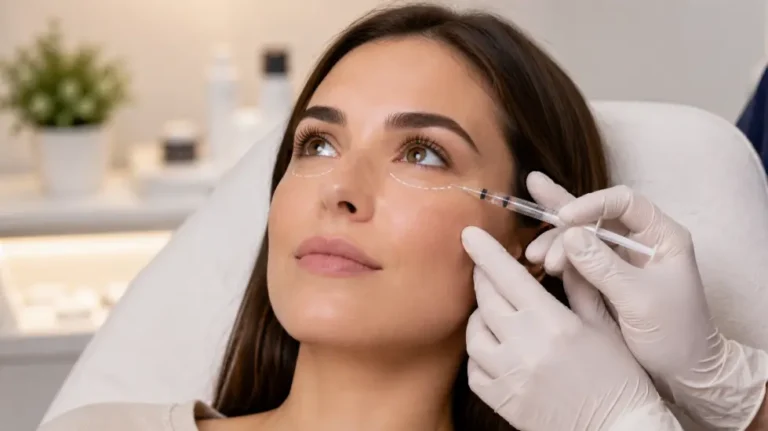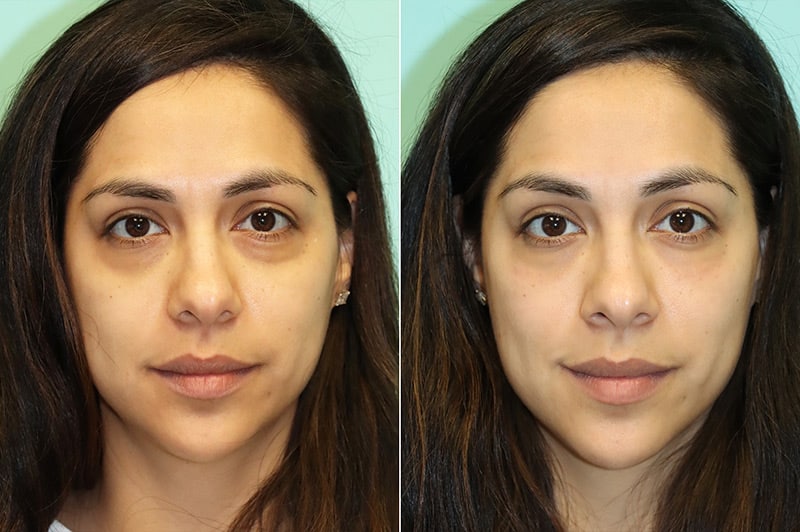
You can improve the appearance of under eye hollows without filler using targeted makeup techniques, collagen-boosting aesthetic treatments, or medical-grade skincare. The best approach depends on what is causing the hollow and how deep the volume loss has become. For mild to moderate hollowing, in-office regenerative treatments like platelet-rich plasma (PRP) and radiofrequency microneedling stimulate your body’s own collagen production to thicken and strengthen the under-eye tissue from within. A 2025 systematic review published in the Journal of Cosmetic Dermatology confirmed that both PRP and platelet-rich fibrin (PRF) produce measurable improvements in infraorbital hollowing, fine wrinkles, and skin quality without adding any synthetic volume.
Makeup and optical illusions: A light-reflecting eye brightener applied to the shadowed hollow, blended with warmth using your ring finger, and set with finely milled translucent powder can instantly reduce the visible depth of the hollow by changing how light interacts with the area.
In-office professional treatments: PRP and PRF use your own blood components to naturally stimulate collagen and thicken thinning skin. Radiofrequency microneedling and targeted laser therapy help remodel collagen, tighten loose skin, and smooth textural shadows in the periorbital area.
Skincare and lifestyle: Eye creams containing caffeine reduce puffiness and constrict dilated blood vessels. Retinol and peptides slowly build collagen firmness over months of consistent use. Adequate hydration and consistent sleep minimize the fluid imbalances that make hollows look deeper than they are.
Below, we cover each of these approaches in detail so you can choose the right combination for your specific type of under-eye hollowing.
What Causes Under Eye Hollows?
Under eye hollows are caused by the loss of fat, collagen, and bone density in the tear trough and midface region. The tear trough is the groove that runs from the inner corner of the eye downward toward the cheek. When the fat pads and structural support beneath this groove diminish, the overlying skin sinks inward and creates a visible shadow. That shadow is what most people recognize as a hollow or dark circle.
Collagen production in the skin declines approximately 1% per year after age 20, according to dermatology research. Under-eye skin, which measures only about 0.5mm thick, shows the effects of this decline earlier than thicker skin elsewhere on the face. As collagen decreases, the skin becomes more translucent and less resilient, making the underlying bone and blood vessels more visible. The combination of volume loss beneath the skin and thinning of the skin itself produces the sunken, shadowed appearance that defines under-eye hollowing.
Genetics play a significant role. Some patients develop noticeable hollowing in their 20s because their bone structure and fat pad distribution create a naturally deep tear trough. Others do not see hollowing until their 40s or 50s, when age-related volume loss crosses the threshold of visibility. Rapid weight loss, chronic dehydration, poor sleep, and high stress levels can all accelerate the process by depleting subcutaneous fat and increasing cortisol-driven collagen breakdown.
How Do Makeup and Optical Illusions Reduce the Appearance of Under Eye Hollows?
Makeup and optical illusions reduce the appearance of under eye hollows by manipulating how light reflects off the skin surface, filling the shadow with brightness rather than volume. This approach does not change the structure beneath the skin. It changes how the eye perceives the hollow by eliminating the dark shadow that makes it visible.
- Use a light-reflecting eye brightener or a color corrector that is slightly lighter than your skin tone. Dab the product directly into the shadowed divot of the hollow, extending all the way up to the lash line. The lighter tone fills the shadow optically and makes the area appear flush with the surrounding skin.
- Blend with warmth using your ring finger. The ring finger applies the least pressure of any finger, which prevents creasing. Tap the product gently into the skin so it catches the light and creates the illusion of a flat, even surface.
- Set lightly with a finely milled translucent powder and a small brush. A thin layer of powder prevents creasing without weighing down the delicate skin or settling into fine lines.
Makeup works best for patients with mild hollowing or for those who want an immediate improvement while waiting for in-office treatments to build collagen over time. It does not address the structural cause of the hollow, but it is a practical, zero-downtime solution that complements every other approach on this list.
What In-Office Professional Treatments Fix Under Eye Hollows Without Filler?
In-office professional treatments that fix under eye hollows without filler include PRP and PRF injections, radiofrequency microneedling, targeted laser therapy, and chemical peels. Each of these treatments stimulates the body’s own regenerative processes to rebuild collagen, thicken thinning skin, and improve the structural quality of the periorbital tissue. None of them add synthetic volume. Instead, they encourage the tissue to repair and strengthen itself from within.
Does PRP Help Under Eye Hollows?
Yes, PRP helps under eye hollows by delivering concentrated growth factors from your own blood directly into the tear trough tissue, stimulating collagen production and improving skin thickness. PRP (platelet-rich plasma) is prepared by drawing a small amount of blood, spinning it in a centrifuge to separate the platelets from the red blood cells, and injecting the concentrated platelet layer into the under-eye area. The platelets contain growth factors, including platelet-derived growth factor (PDGF) and transforming growth factor-beta (TGF-beta), that signal fibroblasts to produce new collagen and elastin.
A 2025 randomized split-face clinical trial found that both PRP and PRF produce meaningful and sustained improvements in infraorbital hollowing, dark circles, and fine wrinkles, with patient improvement scores showing significant gains between months 3 and 4. A separate 2019 trial published in a peer-reviewed journal compared PRP to hyaluronic acid fillers for tear trough treatment and found similar improvements after three monthly sessions, confirming that PRP achieves comparable volumizing effects through collagen stimulation rather than synthetic gel.
PRF (platelet-rich fibrin) is a newer variation of PRP that is spun at a slower speed without additives, preserving a higher concentration of white blood cells and stem cells within a natural fibrin matrix. PRF releases growth factors gradually over a longer period than PRP, which may produce more sustained collagen stimulation. We offer both PRP and PRF at our practice, and our regenerative aesthetics menu includes additional options like Airessence PDGF and EZ Gel for patients seeking filler-free under-eye rejuvenation.
Can Microneedling Fix Under Eye Hollows?
Microneedling can improve mild under eye hollows by stimulating collagen and elastin production in the dermis through controlled micro-injuries. A microneedling device creates thousands of tiny punctures in the skin, triggering the body’s wound-healing cascade. Fibroblasts migrate to the injury sites and produce new collagen fibers over the following weeks to months. The result is thicker, firmer skin that appears less sunken and translucent.
Radiofrequency (RF) microneedling adds thermal energy to the micro-injury process, amplifying the collagen response. A 2021 comprehensive review in Dermatologic Surgery confirmed that RF microneedling remodels and strengthens skin structure more effectively than standard microneedling alone. For under-eye hollows, RF microneedling addresses the skin quality component of the problem, making the overlying tissue thicker and more resilient so the hollow appears shallower even without adding volume beneath it.
Combining microneedling with PRP or PRF delivers both the collagen stimulation from the micro-injuries and the growth factor stimulation from the platelet concentrate simultaneously. This combination protocol, sometimes called a “vampire facial” when applied to the full face, produces faster and more pronounced improvement than either treatment alone. Our guide on combining RF microneedling with PRP covers the protocol in detail.
How Do Laser Treatments Improve Under Eye Hollows?
Laser treatments improve under eye hollows by resurfacing the damaged outer skin layer, stimulating deep collagen production, and reducing pigmentation that makes hollows look darker. Laser therapy directed at the periorbital area triggers a controlled healing response that produces new collagen fibers in the dermis over the following months. The new collagen thickens and firms the skin, reducing the translucency that makes the underlying hollow more visible.
Ablative fractional lasers remove microscopic columns of damaged skin and trigger intense collagen remodeling. Non-ablative lasers penetrate without removing tissue, creating thermal injury in the dermis that stimulates collagen with less downtime. Both approaches improve skin texture, reduce fine lines, and brighten the under-eye area. For patients whose hollows are accompanied by hyperpigmentation or crepey texture, laser treatment addresses all three concerns in a way that filler alone cannot.
How Do Non-Filler Under Eye Treatments Compare?
Each non-filler treatment targets a different aspect of under-eye hollowing. The right choice depends on whether the primary issue is volume loss, skin thinning, pigmentation, or a combination of all three.
| Treatment | What It Targets | Sessions Needed | Results Timeline | Best For |
|---|---|---|---|---|
| PRP / PRF Injections | Collagen production, skin thickness, microcirculation | 2 to 4 sessions, 4-6 weeks apart | 3 to 6 months | Mild to moderate hollowing, thin skin, dark circles |
| RF Microneedling | Collagen remodeling, skin firmness, texture | 3 to 4 sessions, 4-6 weeks apart | 2 to 4 months | Crepey skin, fine lines, mild hollows |
| Laser Resurfacing | Surface texture, pigmentation, collagen stimulation | 1 to 3 sessions | 2 to 6 months | Pigmentation, texture, fine lines |
| Chemical Peels | Surface pigmentation, cell turnover, texture | 3 to 6 sessions, 2-4 weeks apart | 1 to 3 months | Mild discoloration, rough texture |
| Medical-Grade Skincare | Gradual collagen support, hydration, pigmentation | Daily use, ongoing | 3 to 12 months | Maintenance, mild concerns, complementary to in-office treatments |
Combination protocols produce the strongest results. A typical non-filler under-eye rejuvenation plan might begin with 2 to 3 PRP sessions to build a collagen foundation, followed by radiofrequency treatments to tighten and firm the skin, supported by a daily retinol and peptide regimen to maintain the improvement between in-office visits.
What Skincare Ingredients Help Under Eye Hollows?
Skincare ingredients that help under eye hollows include retinol, vitamin C, peptides, caffeine, and hyaluronic acid. Topical products cannot replace lost fat or rebuild bone structure. Skincare works by gradually improving the quality, thickness, and resilience of the skin itself so the underlying hollow appears less pronounced. The improvement is subtle but cumulative, and consistent daily use is what produces visible change.
- Retinol (vitamin A): Retinoids increase collagen production by 30% to 80% depending on concentration and duration of use, according to published dermatology research. Applied nightly, retinol thickens the dermis over months, making the skin less translucent and more supportive. Start with a low concentration (0.025% to 0.05%) around the eyes and build tolerance gradually.
- Vitamin C (L-ascorbic acid): At 10% to 20% concentration, vitamin C stimulates collagen synthesis and inhibits melanin production. Applied in the morning before sunscreen, it brightens the under-eye area and provides antioxidant protection against UV-driven collagen breakdown.
- Peptides: Signal peptides like palmitoyl pentapeptide-4 communicate with fibroblasts to produce collagen and elastin. Peptide-based eye creams provide a gentler collagen stimulus than retinol, making them suitable for patients with sensitive periorbital skin.
- Caffeine: Topical caffeine constricts blood vessels and reduces fluid retention. Applied in the morning, caffeine-containing eye creams temporarily reduce puffiness and minimize the bluish vascular show-through that makes hollows look deeper.
- Hyaluronic acid serum: Low-molecular-weight hyaluronic acid penetrates the upper dermis and draws moisture into the tissue, creating a mild plumping effect that softens the appearance of fine lines and shallow hollowing.
Skincare alone is most effective for patients in their early 30s with very mild hollowing, or as a maintenance strategy after completing a series of in-office treatments. For moderate to deep hollows, skincare supports but does not replace professional collagen-stimulating treatments.
How Long Do Non-Filler Under Eye Treatments Take to Work?
Non-filler under eye treatments take 2 to 6 months to produce visible results because they rely on the body’s natural collagen production cycle rather than instant volume replacement. Collagen remodeling is a slow, progressive biological process. New collagen fibers begin forming within days of treatment, but those fibers take weeks to mature into organized, structurally sound tissue that produces visible skin improvement.
PRP and PRF patients typically notice initial skin quality improvement (smoother texture, brighter tone) within 4 to 6 weeks after the first session. The most significant changes in hollow depth and skin thickness develop between months 3 and 6, after the cumulative effect of multiple sessions compounds the collagen production. A 2020 review in the Journal of Cosmetic Dermatology confirmed that PRP produces moderate improvements in under-eye skin quality over this timeline with few adverse effects. Patient satisfaction ratings for PRP under-eye treatment typically range from 3.5 to 4 out of 5, with the highest satisfaction reported at the 3-to-6-month follow-up point.
RF microneedling results follow a similar trajectory. Initial tightening from collagen contraction occurs within the first week. Deeper structural improvement from new collagen formation builds over 2 to 4 months after each session. Patients who complete a full series of 3 to 4 sessions see the most dramatic cumulative improvement, with clinical data suggesting 50% to 70% improvement in skin texture after a full course.
Can You Rebuild Collagen Under the Eyes Without Filler?
Yes, you can rebuild collagen under the eyes without filler by using treatments that activate the body’s own fibroblasts to produce new collagen and elastin. Fibroblasts are the cells in the dermis responsible for manufacturing collagen. They respond to three types of stimuli: growth factors (delivered by PRP, PRF, and PDGF treatments), controlled injury (delivered by microneedling and laser treatments), and chemical signaling (delivered by retinoids and peptides in topical skincare).
The collagen produced by these stimuli is your own tissue. It integrates naturally into the existing dermal structure, thickening the skin and providing internal support that reduces the visible depth of the hollow. The advantage of building your own collagen rather than injecting synthetic filler is that the improvement comes from genuine tissue strengthening, not from a foreign substance placed beneath the skin. The trade-off is time. Synthetic filler produces instant volume; collagen rebuilding takes months of consistent treatment to reach its full effect.
For patients who prefer to avoid synthetic fillers entirely, our practice offers biostimulatory options like EZ Gel and Sculptra that sit between traditional filler and pure regenerative treatments. EZ Gel is created from the patient’s own blood and produces both immediate mild volume and long-term collagen stimulation. Sculptra uses poly-L-lactic acid to trigger gradual collagen production over 2 to 6 months without the water-attracting properties of hyaluronic acid.
When Is Filler Actually the Right Choice for Under Eye Hollows?
Filler is the right choice for under eye hollows when the volume loss is deep enough that collagen-stimulating treatments alone cannot restore the structural depth the hollow requires. Non-filler approaches work best for mild to moderate hollowing and for patients whose primary concern is skin quality (thinning, crepiness, discoloration). When the tear trough depression is anatomically deep, with significant fat pad atrophy and visible bone contour beneath the skin, the structural deficit is too large for collagen stimulation to fill. These patients need direct volume replacement.
The best dermal filler for under eye hollows is a soft, low-viscosity hyaluronic acid product like Restylane, Restylane Eyelight, or RHA Redensity. These fillers sit smoothly beneath extremely thin periorbital skin without creating visible lumps or excessive swelling. A 2023 meta-analysis across 2,556 patients found a 91% satisfaction rate with tear trough HA filler, confirming the treatment’s effectiveness when used on the right candidates.
Cheek filler for under eye hollows is another important consideration. In many patients, the under-eye hollow is not an isolated problem. Volume loss in the cheekbone and midface removes the structural support that holds the lower eyelid tissue in place. Restoring cheek volume first, using a firmer filler like Juvederm Voluma or Radiesse, creates a scaffold that lifts the under-eye area and reduces the amount of tear trough filler needed. We evaluate midface support during every under-eye consultation at our Bingham Farms office because addressing the foundation before the surface produces better, longer-lasting results.
The best outcomes often come from combining regenerative treatments with minimal filler. By improving skin quality with PRP or microneedling first, far less filler is needed in the tear trough, and the result looks softer and more natural. This combined approach gives patients the structural correction of filler with the skin tightening and quality improvement of regenerative treatments.
Frequently Asked Questions
How Do I Plump My Under Eyes Naturally?
You plump your under eyes naturally by stimulating collagen production with PRP or PRF injections, supporting skin thickness with retinol and peptide-based eye creams, staying consistently hydrated, getting 7 to 9 hours of sleep per night, and protecting the under-eye area from UV damage with daily sunscreen. These approaches build collagen from within rather than adding external volume.
What Can I Do Instead of Fillers Under My Eyes?
Instead of fillers under your eyes, you can pursue PRP or PRF injections for collagen stimulation, RF microneedling for skin tightening and texture improvement, laser treatments for pigmentation and collagen remodeling, or biostimulatory treatments like Sculptra and EZ Gel that trigger your body’s own collagen production. A medical-grade skincare routine with retinol and vitamin C supports these treatments between sessions.
What Tightens Skin Under the Eyes?
Radiofrequency microneedling, non-ablative laser treatments, and topical retinoids tighten skin under the eyes. RF microneedling delivers thermal energy into the dermis to contract existing collagen and stimulate new collagen production. Laser treatments improve skin firmness through controlled thermal injury. Retinol applied nightly increases collagen synthesis by 30% to 80% over time, gradually thickening and firming the periorbital skin.
Is There a Natural Alternative to Fillers?
Yes, PRP and PRF are the most established natural alternatives to fillers for under-eye rejuvenation. Both use your own blood components to deliver concentrated growth factors that stimulate collagen production and improve skin quality. A 2019 clinical trial found PRP produced comparable improvements to hyaluronic acid filler in the tear trough after three monthly sessions.
How Can I Regain Fat Under My Eyes?
You cannot regain lost fat under the eyes through topical products or non-surgical treatments. Fat pad atrophy is a structural change that only surgical fat transfer (autologous fat grafting) can reverse. Non-filler treatments like PRP and microneedling improve the quality and thickness of the overlying skin, which reduces the visible appearance of the hollow without replacing the lost fat. For significant fat loss, dermal filler or surgical fat grafting are the only options that restore true volume.
What Is Better Than Fillers?
What is “better” depends on the individual patient. For mild hollowing with thin, crepey skin, regenerative treatments like PRP combined with RF microneedling often produce more natural-looking results than filler because they improve the skin itself rather than adding volume beneath it. For deep structural hollowing, filler remains the most effective non-surgical option because no amount of collagen stimulation replaces the volume of a significantly atrophied fat pad. Many patients across Oakland County find that combining regenerative treatments with a small amount of filler produces the best overall result.
Putting It All Together
Under eye hollows do not require filler to improve. Makeup techniques can reduce the visible shadow immediately. PRP, PRF, and PDGF treatments rebuild collagen from within using your body’s own growth factors. RF microneedling and laser therapy tighten, firm, and resurface the delicate periorbital skin. Medical-grade skincare with retinol, vitamin C, and peptides supports and extends the results of professional treatments. Each of these approaches works, and combining two or three of them produces the strongest cumulative improvement.
The key is matching the treatment to the cause. Mild hollowing with thin skin responds well to PRP and skincare alone. Moderate hollowing with crepey texture benefits from microneedling combined with PRP. Deep structural hollowing may still require a small amount of filler or biostimulatory product to restore the volume that collagen stimulation cannot fully replace. A thorough consultation identifies which combination is right for your anatomy and your goals.
If you are ready to explore filler-free options for your under-eye area, we are here to guide you. At FACE Skincare ~ Medical ~ Wellness, our regenerative and collagen-stimulating treatments are designed to work with your body’s own biology, so the improvement you see is genuinely yours.