Yes, a prescription eye drop called Upneeq can lift a low upper eyelid for about 8 hours after one daily drop. Skin tightening can firm loose lid skin, and a Botox brow lift can raise a low brow. The right choice depends on the cause: a weak lid muscle, extra skin, or a sagging brow. An eye exam confirms which cause applies and which option fits you.
Key Takeaways
- Upneeq (oxymetazoline 0.1%) is the FDA-approved eye drop for acquired ptosis in adults, dosed as one drop once daily.
- A weak lid muscle, loose lid skin, and a low brow each need a different option.
- The Upneeq lift peaks about 2 hours after the drop and continues through 8 hours.
- Tixel 2 is FDA cleared for periorbital wrinkles, and we found no published trial results for hooded upper lids.
- A 22-patient study measured a 4.83 mm lateral brow lift after Botox, which is an off-label use.
- Sudden drooping needs a medical exam before any cosmetic treatment.
Is There a Way to Lift My Upper Eyelid Without Surgery?
Yes, a prescription eye drop, skin tightening, or a brow treatment can lift an upper eyelid without surgery. The cause decides which one fits. The FDA approved Upneeq (oxymetazoline hydrochloride ophthalmic solution 0.1%) for acquired blepharoptosis in adults. Acquired blepharoptosis, also called ptosis, means the upper eyelid sits lower than normal.
Adults who ask is there a way to lift my upper eyelid without surgery can start with the drop. We offer the Upneeq treatment for adults with acquired ptosis. The drop works for hours, so daily use keeps the effect.
The American Academy of Ophthalmology (AAO) states that an ophthalmologist will likely recommend surgery for adult ptosis. Non-surgical options act on a temporary basis instead. Each option below fits a specific cause, so the cause comes first.
What Makes an Upper Eyelid Look Droopy?
An upper eyelid looks droopy because of a weak lid muscle, extra skin, or a low brow. Ptosis happens when the levator muscle stretches or separates from the lid, according to the AAO. Aging or an eye injury causes this change in adults.
Dermatochalasis means loose, extra skin on the upper lid. Healthline notes that a doctor must tell ptosis apart from dermatochalasis. A brow that sits low can also make the lid area look heavier.
Blepharoptosis affects 4.7 to 13.5% of adults, and the share rises with age, according to EyeWiki. These three causes explain why one droopy-eyelid treatment does not fit everyone.
What Is the Best Thing to Use for Droopy Eyelids?
The right product for droopy eyelids is the one that matches the cause. A drop suits a weak lid muscle, skin tightening suits loose skin, and a brow treatment suits a low brow. The table below sorts each cause by option.
The ptosis crutch row covers glasses fitted with an attachment that holds the lid in place. The graphic below shows the three main causes beside their matching options.
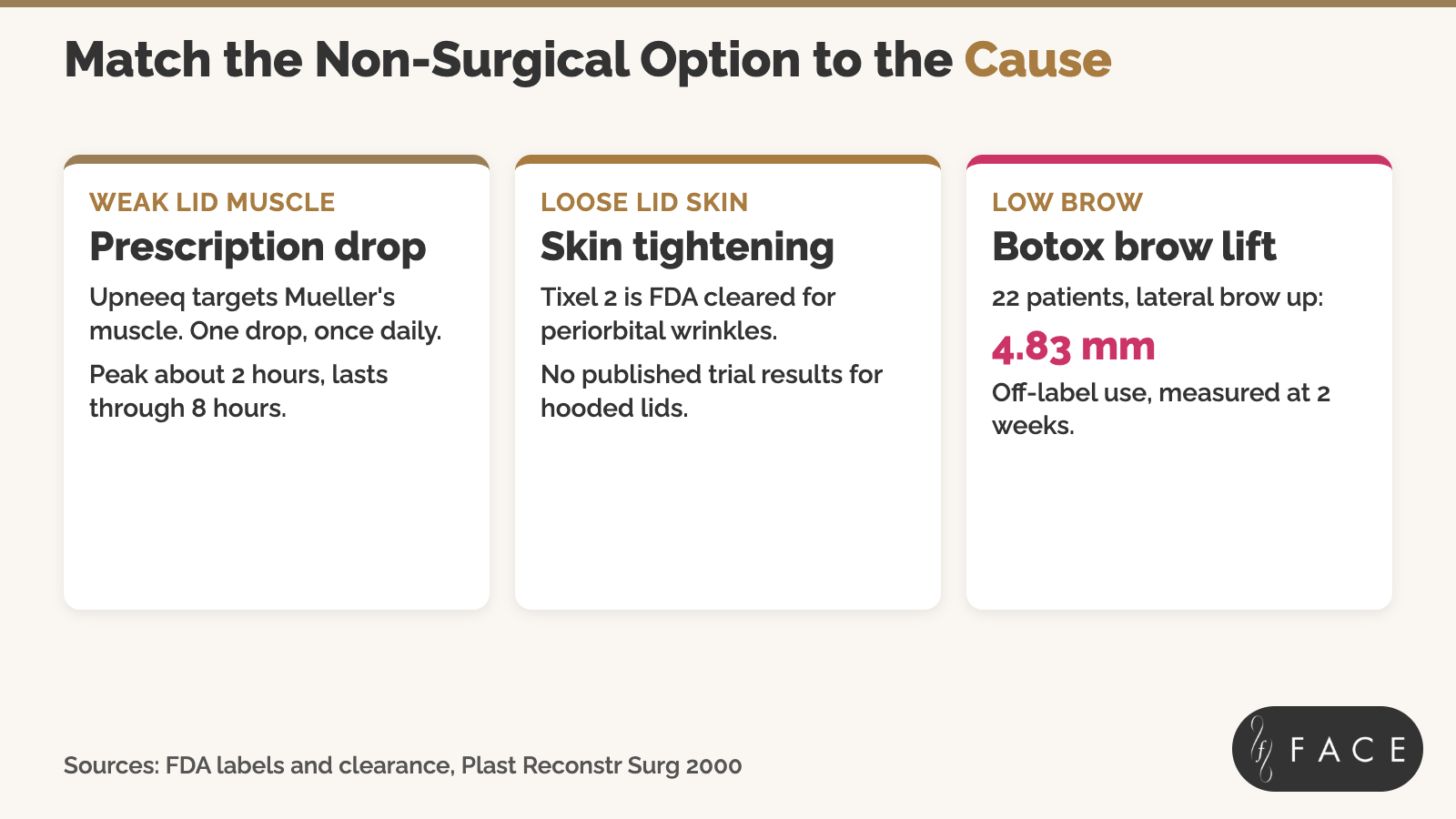
The FDA label lists stroke, cerebral aneurysm, Horner syndrome, and myasthenia gravis as conditions that ptosis can signal. Sudden drooping, pain, or vision changes call for an eye exam first. Upneeq is the only drop in the table, so Upneeq gets a closer look next.
How Does Upneeq Lift a Droopy Upper Eyelid?
Upneeq lifts a droopy upper eyelid by activating Mueller’s muscle, the small muscle that raises the lid. The FDA label describes oxymetazoline as an alpha adrenoceptor agonist that targets a subset of adrenoreceptors in that muscle. One drop goes into one or both affected eyes once daily.
The AAO says the drop needs daily use to keep working. The AAO also notes that oxymetazoline does not work for droopy lids caused by injury or nerve problems. Our guide explains how Upneeq works in more detail.
How Do You Use Upneeq Eye Drops Each Day?
Use Upneeq by following the single-dose steps from the FDA label and instructions for use. Each container holds 0.3 mL, and a carton holds 30 containers. The steps run in this order:
- Wash your hands before opening the foil pouch.
- Remove contact lenses, if you wear them.
- Place one drop in the affected eye without touching the tip to the eye.
- Discard the container right after dosing.
- Wait 15 minutes before reinserting lenses or using other eye drops.
Daily timing then raises the question of how long each dose lasts.
How Long Does Upneeq Last?
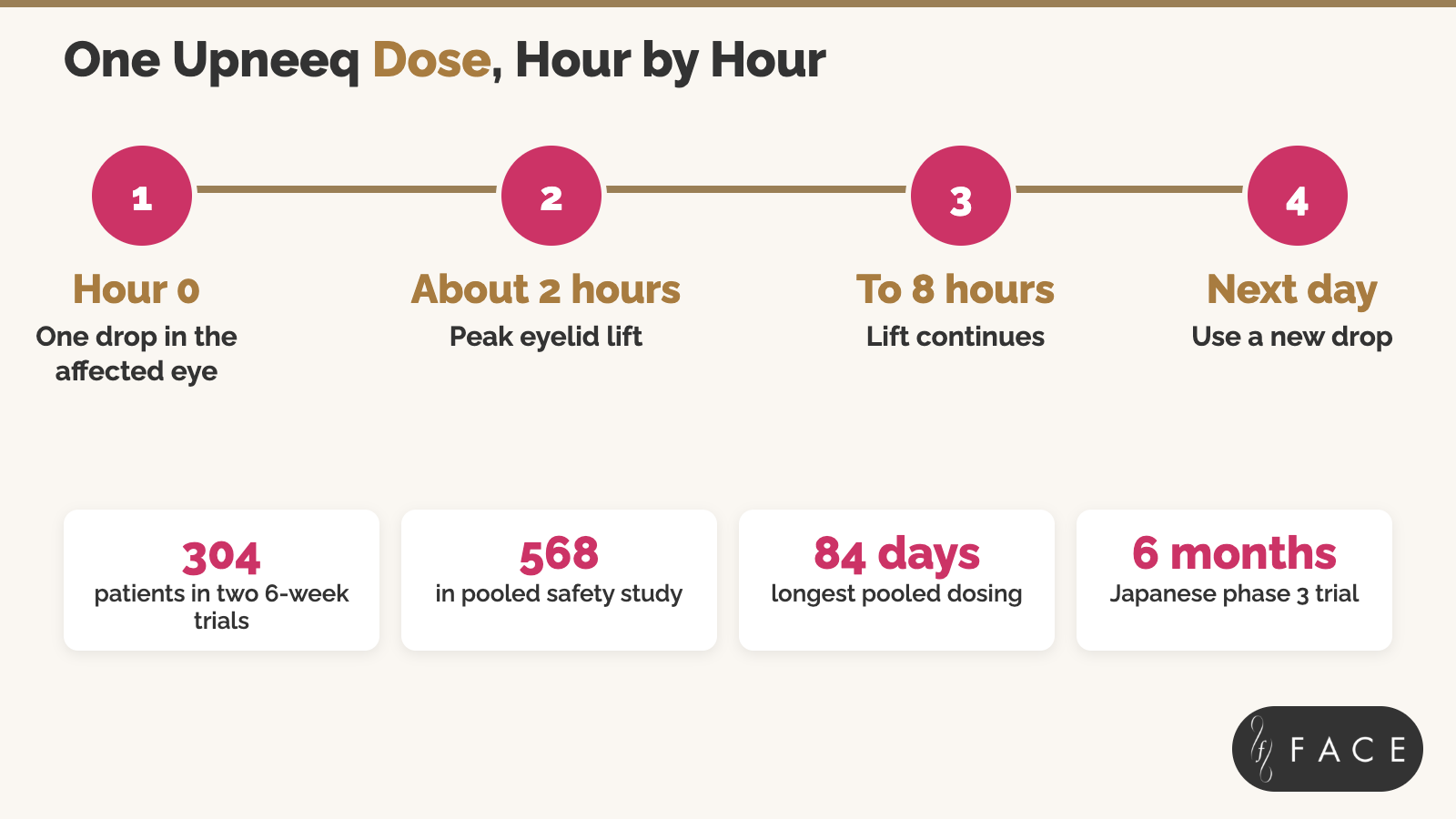
Upneeq lasts about 8 hours after one drop. The FDA label reports the largest lid lift about 2 hours after dosing. The lift continued through 8 hours in the label studies.
EyeWiki describes the effect as a temporary and reversible improvement. The graphic below shows one dose from the drop to the next day, with the study numbers behind the label.
The dose timing also sets what before-and-after results look like.
What Can You Expect From Upneeq Eye Drops Before and After Treatment?
Upneeq eye drops before and after a dose show a higher upper lid margin, measured as marginal reflex distance 1 (MRD1). MRD1 is the distance from the pupil’s light reflex to the edge of the upper lid. The label reports greater MRD1 gains for Upneeq than for vehicle drops.
Two randomized trials enrolled 140 and 164 adults, 304 in total, with average ages of 64 and 63. The Leicester Peripheral Field Test (LPFT) counted points seen in the upper visual field. Upneeq gained 3.7 and 4.2 more points than vehicle at hour 6 on day 1, per EyeWiki.
Gains grew to 4.2 and 5.3 more points at hour 2 on day 14. Each person responds differently, so a photo comparison at your visit sets expectations. Visual field results also lead into the question of duration.
How Long Can I Use Upneeq?
Upneeq has been studied for up to 84 days in a pooled US safety analysis. A Japanese phase 3 trial extended dosing to 6 months. The pooled analysis by Wirta and colleagues combined four randomized trials with 568 adults. Median age was 66, and the authors judged once-daily dosing well tolerated.
The Japanese trial reported that eyelid height gains persisted through 6 months with no loss of effect. The FDA label directs one drop once daily. Your provider sets how long you continue.
Who Is a Good Candidate for Upneeq?
Adults with acquired blepharoptosis are the good candidates for Upneeq. The label lists safety and effectiveness as not established under age 13. A provider first confirms that lid muscle weakness explains the droop.
The label advises people with heart disease or uncontrolled blood pressure to talk with their provider. Alpha-adrenergic agonists can affect blood pressure. Candidates tell the provider about other eye drops and contact lens use. Interested adults can request eyelid lift drops after an exam.
What Are Some Alternatives to Upneeq?
Alternatives to Upneeq include skin tightening, a Botox brow lift, ptosis crutch glasses, and surgery. Each one targets a different cause than the drop. The sections below cover the Botox brow lift, Tixel, glasses, and surgery.
Can Botox Lift a Low Brow Without Surgery?
Botox can lift the outer brow by relaxing the muscle that pulls the brow down. A 2000 case series by Ahn, Catten, and Maas in Plastic and Reconstructive Surgery treated 22 patients. Injections of 7 to 10 units went into the lateral orbicularis oculi muscle.
Brow height rose 4.83 mm at the lateral canthus and 1.02 mm at the midpupil two weeks later. A 2013 study by Uygur and colleagues in 10 women used 6 units per side and also measured lateral brow lift. Both studies were small, and brow lifting is not a labeled use.
The FDA label for Botox Cosmetic lists glabellar lines, lateral canthal lines, forehead lines, and platysma bands. A brow lift sits outside those labeled uses. Injectors plan placement carefully, as our guide to natural-looking Botox explains for each facial area.
Cosmetic brow shaping changes how open the eyes look without any injection. These brow shaping tips cover the basics of a cleaner frame around the eyes. A consultation can address brow position.
Botox effects fade over months. The Botox longevity guide gives timing for repeat visits.
Is Tixel Good for Hooded Eyes?
Tixel is FDA cleared for periorbital wrinkles, and we found no published trial results for hooded upper lids. The FDA cleared the Tixel 2 System on June 21, 2023, for skin ablation and resurfacing and for periorbital wrinkles. The device transfers heat to the skin through a tip of tiny titanium pyramids.
Tixel suits fine skin changes around the eyes that a provider confirms in person. A heavy hooded fold needs a separate assessment of the lid and brow. Our Tixel treatment page lists what a session involves and who qualifies.
Radiofrequency devices tighten skin by a different method. Our energy-based tightening page compares energy-based devices for different areas of the face and neck.
What Do Ptosis Crutch Glasses and Surgery Offer?
Ptosis crutch glasses offer a non-surgical way to hold the lid up with an attachment on the frame. Healthline says crutches work best on metal frames. An ophthalmologist or plastic surgeon fits them.
Surgery is an outpatient procedure under local anesthesia, according to the AAO. The surgeon adjusts or shortens the lifting muscle and reattaches it to the lid. An eye specialist decides when surgery is the better fit.
Does Ptosis Ever Go Away?
Ptosis goes away when treatment resolves its cause, and age-related ptosis from a stretched lid muscle needs ongoing management. Healthline says a doctor treats an underlying condition first, which should typically stop the lid from sagging. The AAO says adult ptosis comes from a levator muscle that stretches or separates from the lid.
Healthline adds that ptosis from age or birth may need no treatment unless it blocks vision. A blocked field of view calls for medical treatment, which may include surgery. A new droop that appears suddenly needs prompt medical attention.
What Else Should You Know About Non-Surgical Eyelid Lifts?
Does Upneeq Replace Eyelid Surgery?
Upneeq does not replace eyelid surgery, because the drop gives a temporary lift. EyeWiki calls the improvement temporary and reversible. Surgery changes the lid muscle itself, according to the AAO.
Does Upneeq Work for Adults Over 65?
Upneeq works for adults over 65, and no overall differences in effectiveness appeared between older and younger trial participants. The label reports 315 participants aged 65 and older in the trials. The trial groups had average ages of 64 and 63.
How Should You Prepare for an Eyelid Consultation?
Prepare for an eyelid consultation by listing your medicines and eye drops before the visit. The AAO asks patients to name all prescription and over-the-counter medicines, vitamins, and supplements. Bring a note on when the droop started and whether one or both lids are affected.
- List current eye drops and contact lens use.
- Note any blood pressure or heart conditions.
- Bring recent photos that show your lids in normal light.
Patients who also notice puffiness or dark circles below the eyes can read about under-eye bags before the visit.
How Can FACE Medspa Help You Lift a Droopy Upper Eyelid?
FACE Medspa helps adults lift a droopy upper eyelid by matching the cause to the right non-surgical option. Patients who ask, “is there a way to lift my upper eyelid without surgery,” get an exam-based answer from our team. We cover Upneeq, Tixel, and neurotoxin options.
Our Bingham Farms medspa serves Bloomfield Hills and nearby communities. Every plan starts with a provider review of your lids and brows. Try our selector to find your treatment options, then book a visit. A provider can answer questions about timing and candidacy.
Visit the FACE Medspa clinic to learn who will guide your plan, from the first exam through follow-up visits.