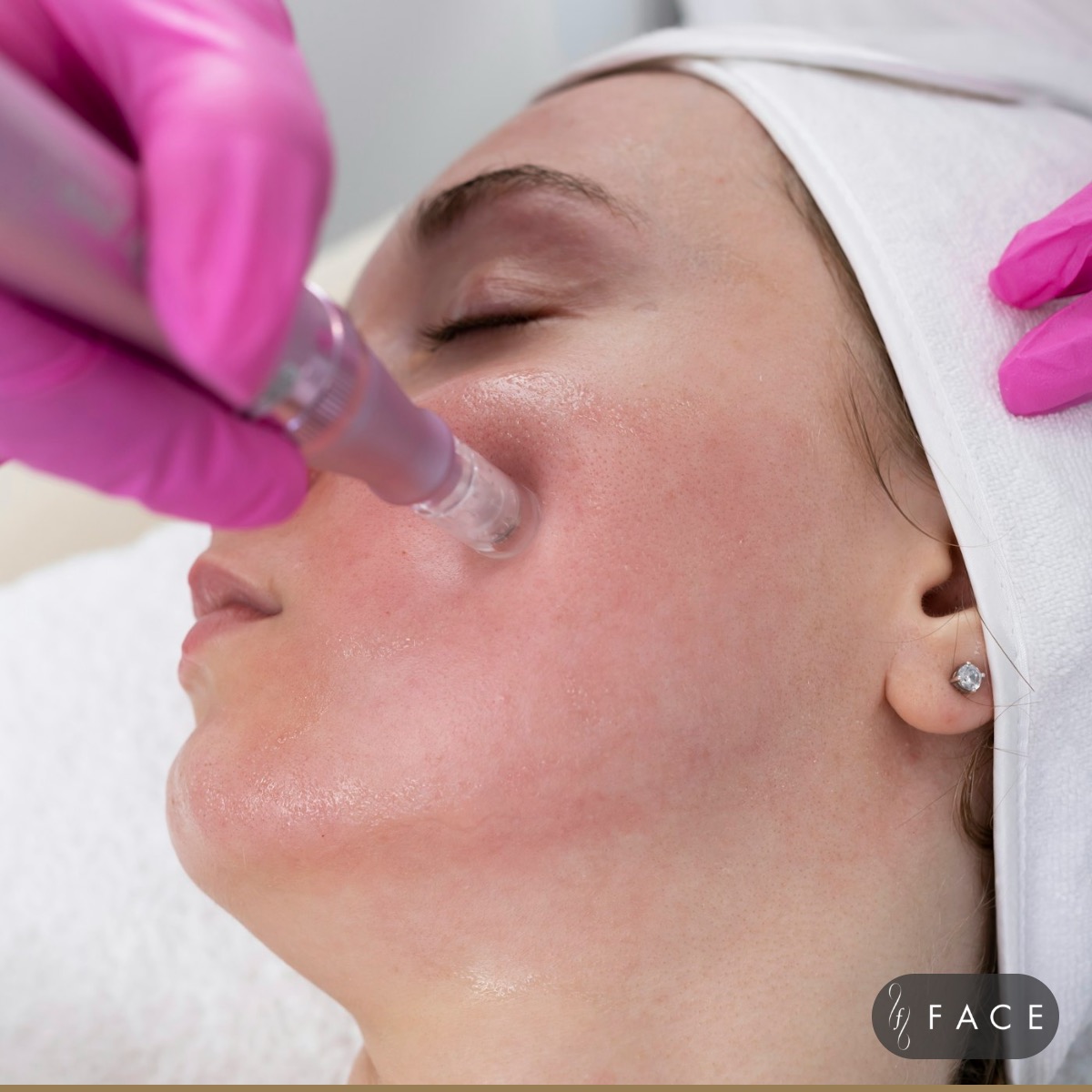
The short answer to “is Opus Plasma better than microneedling” is no, not for every concern. The FDA cleared Opus Plasma tips for skin ablation and resurfacing in 2021. Microneedling devices hold FDA authorization for facial acne scars and wrinkles. Opus Plasma uses plasma energy and radiofrequency (RF), and microneedling uses fine needles. No published trial compares the two directly.
Key Takeaways
- Opus Plasma and microneedling work differently, so neither wins on every concern.
- The FDA cleared Opus Plasma tips for ablation and resurfacing of the skin under K201520.
- Microneedling devices hold FDA authorization for facial acne scars, facial wrinkles and abdominal scars in adults aged 22 or older.
- Handheld plasma pens differ from Opus Plasma, and the FDA has not cleared pens for aesthetic skin improvement.
- Providers plan up to three Opus Plasma visits, with collagen-driven firming building over about three months.
Is Opus Plasma Better Than Microneedling for Skin Rejuvenation?
Opus Plasma is not better than microneedling in every case, because no published head-to-head trial ranks the two. Each treatment has its own energy source, depth and evidence base. The right choice depends on the concern, the skin type and the goal.
Our Opus Plasma treatment uses fractional plasma and RF energy to resurface the surface layers of skin. The RF energy also warms deeper layers, which signals collagen production. Microneedling takes a mechanical route instead. The FDA describes microneedling devices as instruments that repeatedly insert and remove many small needles. The needles create small puncture holes in the skin.
The answer to is Opus Plasma better than microneedling for skin rejuvenation depends on the goal, as the sections below show. Both treatments rely on controlled, small injuries that start the skin’s repair response. That shared goal explains why providers compare them. The next question is what each one is actually good for, starting with Opus Plasma.
What Is Opus Plasma Good For?
Opus Plasma is good for fine lines, wrinkles, uneven tone and mild laxity, based on our clinical experience with the device. The FDA cleared the Opus Plasma tips for dermatological procedures requiring ablation and resurfacing of the skin. Clearance covers that surface-resurfacing use, not every concern listed below.
Our team uses Opus Plasma for these concerns:
- Lines and wrinkles, including fine lines around the eyes and mouth
- Skin laxity that needs gentle firming
- Uneven skin tone and hyperpigmentation
- Acne scarring and rough texture
The FDA summary for the device explains the mechanism. The system delivers RF energy through micro-ablative tips, and the Colibri tip uses a single-point delivery electrode. A deeper look at Opus Plasma benefits covers each concern in more detail. Evidence for the device itself comes next.
Does Opus Plasma Really Work?
Opus Plasma works as an FDA-cleared skin resurfacing system, although peer-reviewed trials on the device itself are limited. A 510(k) clearance means the FDA found the device substantially equivalent to an earlier legally marketed device. A clearance does not measure how much improvement a patient will see.
The FDA letter for K201520 lists predicate device K121150 and states that the technological principles are the same. A search of the medical literature for this article found no published trial that tests Opus Plasma on wrinkles or laxity. Clinic pages report improvement, but those reports are not independent studies.
Related RF research gives context without proving the device. A nonrandomized trial of RF microneedling around the eyes enrolled 24 adults aged 34 to 54. Participants had four sessions and a three-month follow-up. The wrinkle score fell by an average of 49 percent. The trial used a different RF microneedling device, so the figure does not describe Opus Plasma. Evidence limits matter most when comparing treatments, which brings up the plasma pen.
Does a Plasma Pen Really Tighten Skin?
A plasma pen may tighten skin by creating small controlled wounds. The FDA has not cleared plasma pens for aesthetic skin improvement, according to Medical News Today. The pen delivers a small electrical arc to the skin. Providers place the arc in a dot or grid pattern after numbing.
Medical News Today reports that early research looks promising and that the tightening effect comes from the skin’s repair response. The same article notes that the FDA warns about the lack of clearance for aesthetic use. Evidence for pens is therefore thinner than the evidence for cleared devices.
Opus Plasma is a separate system with its own FDA clearance record. The two share the word plasma, but they are different devices. Our plasma guide explains the main plasma categories. The difference between pens and microneedling sets up the next comparison.
Which Is Better Plasma Pen or Microneedling?
Microneedling has the stronger record, because the FDA has authorized microneedling devices for facial acne scars, facial wrinkles and abdominal scars. Authorization applies to patients aged 22 or older. Plasma pens carry no matching FDA authorization for aesthetic skin improvement.
Research supports the microneedling side. A 2021 systematic review of nine randomized controlled trials in the International Wound Journal found microneedling effective for atrophic acne scars. The authors asked for larger, longer trials. A 2022 neck study followed 32 adults through four monthly sessions and found significant wrinkle improvement at 90 days.
Our team prefers FDA-reviewed options when a patient wants a pen-style result. A provider can explain the evidence for each device. Our office offers collagen induction therapy for patients who prefer a needle-based option. Placing the options side by side makes the differences clear.
How Do Opus Plasma and Microneedling Compare Side by Side?
Opus Plasma and microneedling differ most in the energy they use: plasma and RF versus mechanical needles. The table below compares the two on energy source, FDA record and typical plan.
The table shows that each treatment has a clear lane. Opus Plasma suits surface resurfacing with a firming effect. Microneedling suits scars and texture, with the research to match. Comfort during treatment is the next factor.
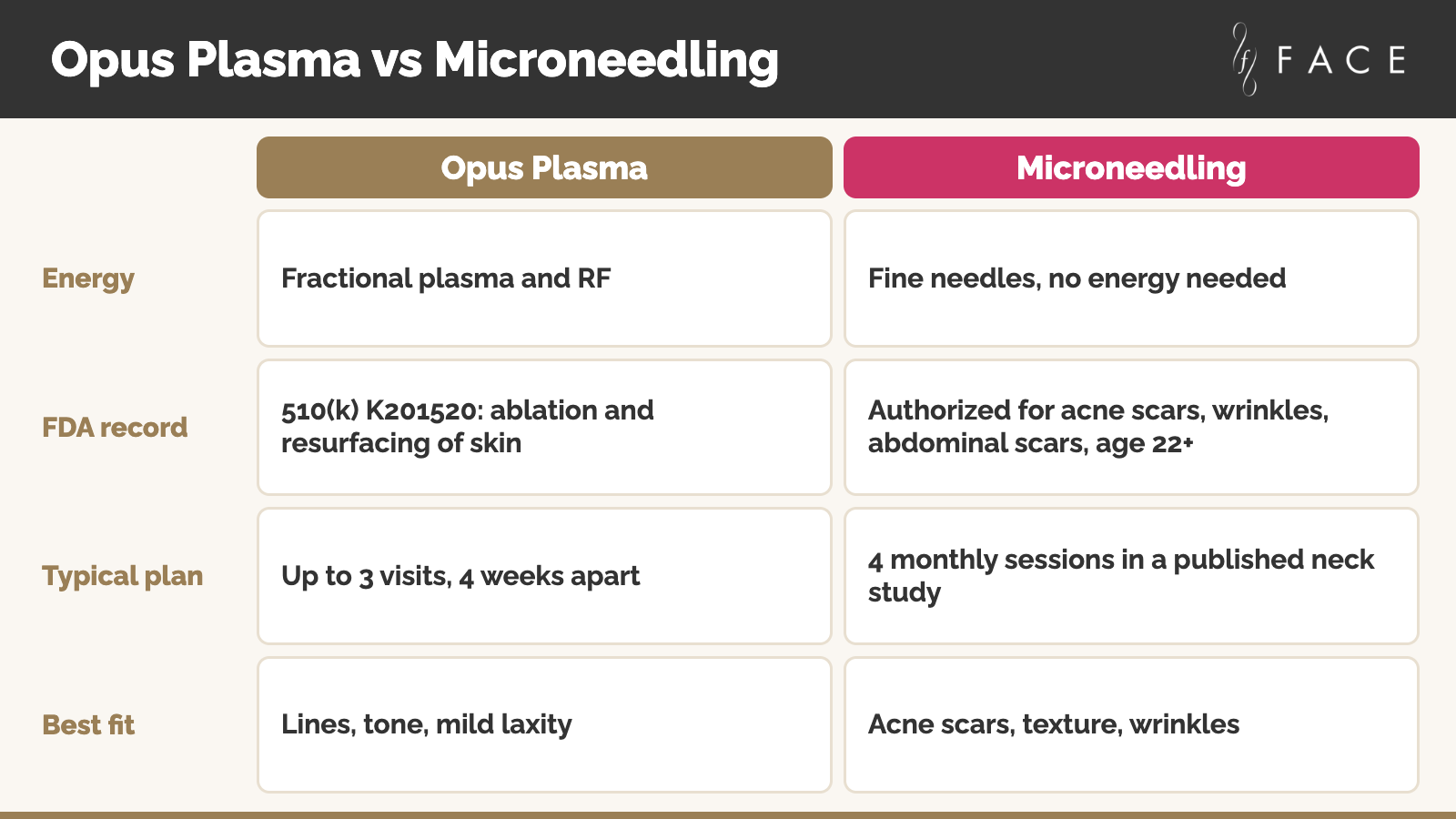
The graphic above summarizes the comparison in four panels. Each panel repeats a fact from the table.
How Painful Is Opus Plasma?
Opus Plasma is made comfortable with a topical numbing cream applied before treatment, and our visits take about 20 to 30 minutes. No published pain-scale study on Opus Plasma turned up in our search.
Numbing is standard across needle and plasma procedures. Medical News Today describes numbing before plasma pen sessions. The RF microneedling eye trial reported good tolerance without anesthetics, which shows tolerance varies by device and area. Your provider adjusts the settings to your comfort.
Microneedling uses the same approach, with numbing cream and adjustable needle depth. Neck study protocols used depths of up to 2.5 millimeters. Comfort also shapes recovery, and recovery timing leads to the results question.
How Long Does It Take to See Results From Opus Plasma?
Results from Opus Plasma begin within days as the skin smooths, and firming builds over about three months as collagen develops. Our plan uses up to three treatments, spaced four weeks apart. Maintenance visits once or twice a year keep results fresh.
A typical Opus Plasma series follows these steps:
- Consultation: the provider reviews your skin type, goals and medical history.
- First treatment: numbing cream goes on, then the provider treats the area in 20 to 30 minutes.
- Healing: mild swelling and soreness like a sunburn last a day or two.
- Follow-up treatments: up to two more visits follow at four-week intervals.
- Maintenance: the provider schedules a refresh once or twice a year.
Microneedling follows its own clock. In the neck study, 73.3 percent of participants reported improvement at 30 days, and 68.8 percent reported improvement at 90 days. Your skin may respond faster or slower. Our Opus Plasma results page shows what patients can expect. Timelines for both treatments appear in the graphic below.
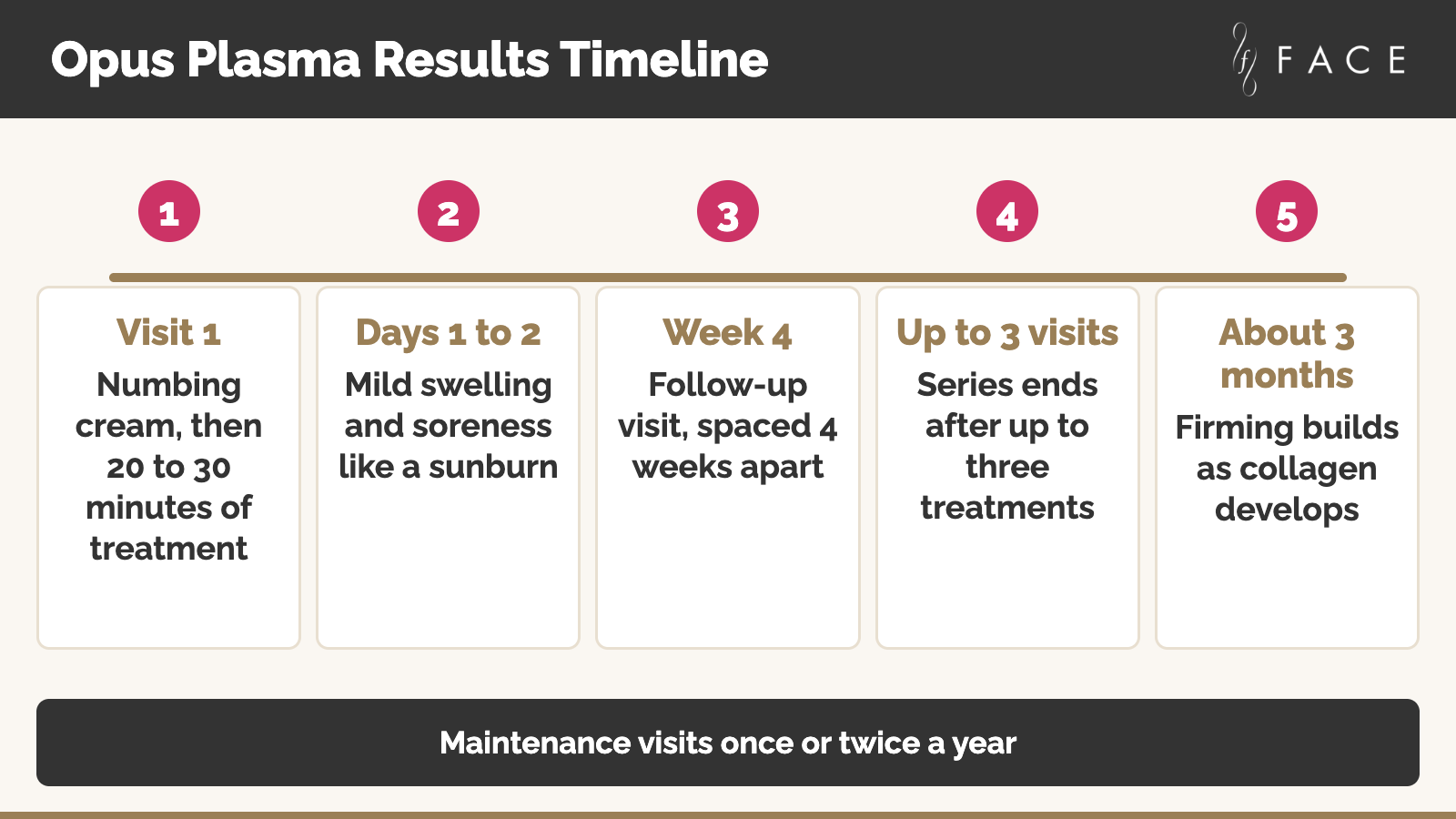
The timeline graphic shows the Opus Plasma series from consultation through maintenance. The same pacing lets providers plan around events. Several side questions come up before booking, so the next section covers them.
What Else Should You Know About Opus Plasma and Microneedling?
Who Is a Good Candidate for Opus Plasma?
A good Opus Plasma candidate has lines, tone changes or mild laxity and no active breakout in the treatment area. Opus Plasma works on all skin types and tones in our experience. A provider confirms candidacy at the consultation. Candidates for needle treatments follow similar rules, and the FDA lists age 22 or older for microneedling devices.
How Should You Prepare for Either Treatment?
Prepare by arriving with clean skin, avoiding tanning for two weeks and telling your provider about any skin conditions. The FDA page for microneedling lists recent tanning or planned sun exposure as points to raise with your provider. Our sun safe treatments article covers timing by season. Your provider gives written prep steps.
How Do You Care for Skin After Treatment?
Care for skin after either treatment with gentle cleansing, moisturizer and daily sunscreen. Redness and warmth like a mild sunburn fade within a day or two. Product choices matter during healing, and our microneedling aftercare guide lists what to apply. Avoid picking at flaking skin.
What Does RF Microneedling Add?
RF microneedling adds heat to the dermis through the needles. The eye-area trial describes tissue heating above 65 degrees Celsius around the needle. Our radiofrequency needling service combines mechanical and thermal effects. Providers choose between RF microneedling, plasma and standard microneedling after a skin assessment.
Are There Other Plasma Devices?
Other medical plasma devices exist, and each works differently. Direct-current plasma differs from the RF-driven plasma in Opus. Our team offers Jett Plasma alongside Opus for patients with different goals. The right device depends on the concern and the area. Providers compare options at the consultation.
Is Standard Microneedling Still Worth Choosing?
Standard microneedling is worth choosing for acne scars, texture and fine wrinkles, because the evidence record is strongest there. A 2026 meta-analysis of 11 studies and 713 participants found microneedling and chemical peels gave similar clinically significant scar improvement. Our microneedling guide explains the full process. A separate article lists the full range of microneedling benefits.
How Does FACE Medspa Help You Choose Between Opus Plasma and Microneedling?
FACE Medspa helps you choose by matching your concern to the device with the strongest evidence. Our providers in Bloomfield Hills assess your skin, explain FDA status for each option and set a realistic plan. The visit covers goals, timeline and aftercare.
Patients who want a clear answer can contact our team to set up a visit. Patients who ask is Opus Plasma better than microneedling hear one answer: the choice depends on the concern. We explain what Opus Plasma, microneedling and RF microneedling can and cannot do. Results vary from person to person.
Patients can also meet our medspa team members and bring questions about plasma, needles and recovery.