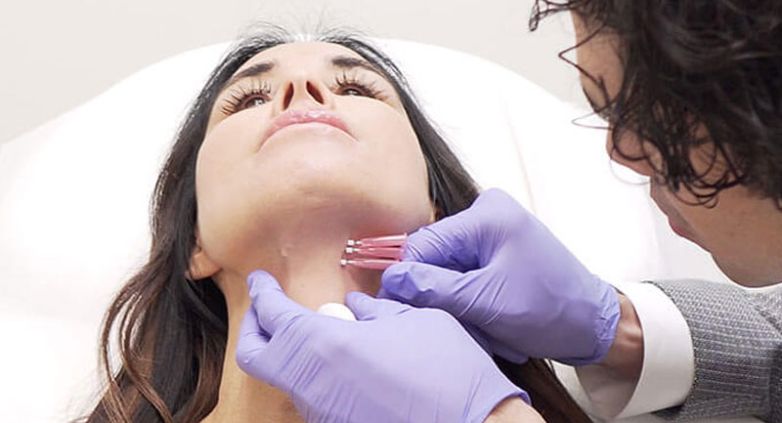
Combining RF microneedling with regenerative aesthetic treatments like PRP, PRF, and exosomes amplifies the body’s natural collagen production, accelerates healing, and produces stronger skin rejuvenation results than either approach used alone. A randomized clinical trial comparing PRP alone, microneedling with PRP, and RF combined with PRP found that the RF plus PRP group showed statistically significant improvements in skin elasticity and collagen that surpassed the other two groups at both 1-month and 6-month follow-ups, according to research published in a peer-reviewed dermatology journal in 2025. This article breaks down how these combination protocols work, which regenerative treatments pair best with RF microneedling, what results to expect, and who benefits the most.
Why Combining RF Microneedling With Regenerative Treatments Works Better
Combining RF microneedling with regenerative treatments works better because each technology targets a different part of the skin’s healing and rebuilding process. RF microneedling creates controlled micro-injuries and delivers radiofrequency heat deep into the dermis. This triggers the body’s wound-healing response and stimulates structural collagen remodeling. Regenerative treatments like PRP, PRF, and exosomes supply the raw materials, growth factors, peptides, and signaling molecules the body needs to carry out that repair faster and more completely.
Think of it this way. RF microneedling sends the signal to rebuild. Regenerative treatments provide the construction crew and the building supplies. When both are used together, the body produces more collagen, heals faster, and creates longer-lasting results. A prospective, randomized, controlled clinical trial published in the Journal of Cosmetic Dermatology in 2025 found that applying Platelet-Derived Growth Factor (PDGF) after RF microneedling improved skin quality and healing at 30 days with no adverse effects.
The paradigm in modern aesthetic medicine has shifted from single treatments to intelligent, synergistic protocols, according to a 2025 report from the World Academy of Cosmetic Surgery. The most comprehensive outcomes are no longer achieved by one modality alone but by strategically combining technologies that amplify each other’s effects. We see this every day in our practice, where combination protocols consistently outperform standalone treatments.
Can I Do RF and Microneedling at the Same Time?
Yes, you can do RF and microneedling at the same time because RF microneedling is a single treatment that combines both technologies in one device. The needles create micro-injuries while simultaneously delivering radiofrequency energy through those same needles into the dermis. This is not two separate procedures done back to back. It is one unified treatment that uses both mechanisms at once for stronger results.
According to a review published in Plastic and Reconstructive Surgery in 2024, the addition of radiofrequency to microneedling was developed specifically to enhance the dermal wound-healing cascade by inducing thermal injury alongside the mechanical micro-injuries. This combined approach leads to fibrotic remodeling that produces significantly more tightening than needle punctures alone. Devices like Morpheus8 and Sylfirm X are designed from the ground up to deliver both modalities in a single pass.
When patients ask about doing RF and microneedling at the same time, they sometimes mean combining an RF microneedling session with a separate regenerative treatment like PRP or PRF applied right after. That combination is very common and highly effective. The microchannels created during the RF microneedling session allow the regenerative products to penetrate much deeper than they would on intact skin, which enhances the overall result significantly.
How PRP Enhances RF Microneedling Results
PRP enhances RF microneedling results by flooding the treated skin with concentrated growth factors drawn from your own blood. PRP stands for platelet-rich plasma. It is made by taking a small blood draw, spinning it in a centrifuge to separate the platelets, and then applying or injecting the concentrated platelet layer into the skin immediately after the RF microneedling treatment. The growth factors in PRP include Platelet-Derived Growth Factor (PDGF), Transforming Growth Factor (TGF), and Vascular Endothelial Growth Factor (VEGF), all of which accelerate collagen production and tissue repair.
A 2026 split-face randomized trial published in the Journal of Cosmetic Dermatology found that combining microneedle fractional radiofrequency with PRP produced targeted advantages for specific skin concerns compared to RF microneedling alone, according to reporting from the International Association for Physicians in Aesthetic Medicine (IAPAM). The study specifically showed improved outcomes for red and brown spots in melasma patients when PRP was added to the protocol.
The combination works so well because the microchannels created during microneedling act as delivery pathways. When PRP is applied immediately after the needling, the growth factors penetrate deep into the dermis where they can directly support the collagen-building process that the RF energy has already set in motion.
Clinical studies confirm that patients with neck laxity who received RF microneedling with PRP showed more favorable results than those who had RF microneedling alone. The added growth factors give the body more of the raw materials it needs to produce high-quality collagen in the treated zones.
What Is PRF and How Does It Differ From PRP?
PRF stands for platelet-rich fibrin. It is the next evolution of PRP, made from the same blood draw but processed differently to create a fibrin matrix that releases growth factors more slowly and over a longer period. While PRP delivers a quick burst of concentrated growth factors, PRF provides a sustained, extended release that may produce more prolonged stimulation of the skin’s healing and rebuilding processes.
The key difference is in the processing. PRP uses anticoagulants to prevent the blood from clotting, which gives you a liquid concentrate of platelets. PRF is spun at a lower speed without anticoagulants, which allows a natural fibrin scaffold to form. This scaffold traps the platelets and growth factors, releasing them gradually over days rather than hours. According to RenewalMD, providers often combine PRP or PRF with microneedling to enhance results in skin texture, pore size, and overall skin quality.
For patients wondering which one is better, the answer depends on the treatment goal. PRP delivers faster initial results and works well for same-day combination protocols. PRF may produce more sustained collagen stimulation over a longer window. We use both in our Bloomfield Hills practice and select the best option based on each patient’s skin condition and goals. For a deeper dive into the science, we cover the advantages of platelet-rich fibrin in our post about PRF benefits.
How Exosomes Are Changing Regenerative Skin Treatments
Exosomes are changing regenerative skin treatments by delivering powerful signaling molecules directly into skin cells to orchestrate repair and regeneration at the cellular level. Exosomes are tiny vesicles released by stem cells that carry growth factors, proteins, lipids, and genetic material. When applied to the skin after microneedling, they instruct damaged cells to activate repair pathways, produce more collagen and elastin, and reduce inflammation.
A split-face observational study published in 2025 found that when microneedling was combined with exosomes, the treated side of the face showed greater improvements in skin texture, hydration, elasticity, and pigmentation compared to the side treated with microneedling alone, according to West Coast Aesthetics. A separate study published in the Journal of Cosmetic Dermatology in 2024 evaluated exosome application after microneedling and found that the treatment improved skin elasticity, hydration, and overall appearance with a high safety profile.
The global market for skin rejuvenation products is projected to reach $93 billion by 2027, according to data from Statista cited in a peer-reviewed letter in the Journal of Cosmetic Dermatology. Exosome therapy is one of the fastest-growing segments within that market. When combined with RF microneedling technology, exosomes enhance absorption by up to 67 percent through the open microchannels, according to West Coast Aesthetics. This dramatically accelerates healing, reduces downtime, and amplifies collagen production beyond what either treatment achieves on its own.
Does Microneedling Actually Boost Collagen?
Yes, microneedling actually boosts collagen. This is the foundational mechanism behind the treatment and it is well-documented in clinical research. When tiny needles create controlled micro-injuries, the body sends fibroblasts to the area to repair the damage. Those fibroblasts produce new Type I and Type III collagen, which are the primary structural proteins that give skin its firmness and smoothness.
RF microneedling boosts collagen even more effectively. The radiofrequency energy heats the dermis to the optimal temperature of approximately 67 degrees Celsius, which enhances the wound-healing cascade well beyond what needle punctures alone can achieve, according to research published in the Journal of Cutaneous and Aesthetic Surgery. Biopsy studies show that RF microneedling increases dermal thickness by an average of 15 to 20 percent at three months post-treatment, according to data from La Belle Vie Medical Spa.
When you add regenerative treatments on top of that, the collagen boost becomes even more significant. Peer-reviewed studies from 2024 and 2025 report that exosome-enhanced microneedling treatments outperform traditional microneedling by 300 to 500 percent in collagen and elastin production, according to Healthcare Readers. That is why combining regenerative aesthetics with RF microneedling represents the strongest non-surgical approach to rebuilding the skin’s collagen infrastructure available today.
Will Microneedling Help Sagging Jowls?
Yes, microneedling will help sagging jowls, especially when RF energy and regenerative treatments are combined. The jawline softens and jowls form as collagen in the lower face breaks down with age. RF microneedling addresses this by stimulating deep collagen remodeling in the dermis and subdermis along the jawline. A clinical trial at the University of Texas Southwestern Medical Center specifically evaluated bipolar radiofrequency microneedling for submental tissue tightening and found measurable contour improvements.
Adding PRP or PRF to an RF microneedling session for the jowl area further amplifies the collagen response. The growth factors from the platelet concentrate accelerate the production of new structural collagen in the areas where it is needed most. For patients with mild to moderate jowling, this combination can produce visible skin tightening along the jawline without any surgical intervention.
Standard microneedling without RF energy can improve skin texture and surface quality in the jowl area but will not produce the same degree of structural tightening. For patients whose primary concern is actual sagging rather than just texture, RF microneedling combined with a regenerative treatment is the stronger choice. According to the ISAPS 2024 Global Survey, non-surgical skin tightening was one of the top five non-surgical procedures worldwide, with over 20.5 million non-surgical procedures recorded that year.
Does Microneedling Work for a 70 Year Old Woman?
Yes, microneedling works for a 70 year old woman. Age is not a disqualifier for microneedling or RF microneedling. In fact, older patients often see meaningful results because they have more collagen loss to address. A study by Sibilla et al. found that collagen content drops by approximately 25 percent between the ages of 25 and 65. By 70, that loss is even more significant, which means the treatment has more room to rebuild.
Before-and-after data from MI Skin Dermatology Center shows successful RF microneedling results on patients up to age 79. The U.S. Food and Drug Administration has cleared microneedling devices for patients aged 22 and older, according to the FDA’s consumer safety page. There is no upper age limit. What matters most is the patient’s overall health, any medical conditions that could affect healing, and realistic expectations about what the treatment can achieve.
For older patients, combining RF microneedling with biostimulation treatments can enhance results even further. Growth factor therapies and biostimulatory products give the body extra resources to produce collagen in skin that may have a slower healing response. The American Academy of Facial Plastic and Reconstructive Surgery noted in its 2024 trends survey that one in four surgeons anticipate growing demand for regenerative treatments that target the cellular level to rejuvenate and repair skin.
Regenerative Treatments That Pair With RF Microneedling
| Treatment | Source | Key Benefit When Combined | Growth Factor Release | Sessions Typically Added |
|---|---|---|---|---|
| PRP (Platelet-Rich Plasma) | Patient’s own blood | Concentrated growth factors, faster healing | Immediate burst | Applied same session |
| PRF (Platelet-Rich Fibrin) | Patient’s own blood | Sustained growth factor release, extended stimulation | Gradual over days | Applied same session |
| Exosome Therapy | Stem cell-derived vesicles | Cellular repair signaling, amplified collagen production | Immediate + sustained | Applied same session |
| PDGF (Platelet-Derived Growth Factor) | Recombinant (lab-produced) | Targeted tissue regeneration, improved skin quality | Controlled release | Applied same session |
| Biostimulatory Injectables | Biocompatible compounds | Gradual volume restoration, long-term collagen building | Sustained over months | Separate sessions, 4-6 weeks apart |
Sources: Journal of Cosmetic Dermatology (2025), IAPAM (2026), World Academy of Cosmetic Surgery (2025), La Belle Vie Medical Spa (2025), West Coast Aesthetics (2025).
How Long Should You Wait Between RF Microneedling and Other Treatments?
You do not need to wait between RF microneedling and regenerative treatments like PRP, PRF, or exosomes because they are typically applied during the same session, immediately after the needling is complete. The open microchannels created by the microneedles are the reason for this timing. Those channels allow the regenerative products to penetrate deeper into the skin, which is how the combination achieves enhanced results.
However, if you are combining RF microneedling with other aesthetic treatments like dermal fillers, neurotoxins, or laser treatments, spacing is important. Most providers recommend waiting at least 2 to 4 weeks between RF microneedling and injectable treatments. For laser procedures, a gap of 4 to 6 weeks is standard. This gives the skin time to complete its initial healing and prevents overstimulation of the dermal tissue.
Your provider should always coordinate the timing of multiple treatments to avoid complications. According to Dr. Movassaghi’s RF microneedling guide, patients who have recently been treated with cosmetic injections should let their provider know so the treatments can be scheduled with an appropriate buffer. This is one of the key reasons it helps to have all your regenerative aesthetic treatments managed by the same practice. We walk patients through their full treatment timeline during the initial consultation to keep everything properly spaced.
What Results Can You Expect From Combination Protocols?
The results from combination protocols are measurably stronger and longer-lasting than results from standalone treatments. Clinical trial data consistently shows that adding regenerative treatments to RF microneedling improves outcomes across multiple metrics, including skin elasticity, collagen density, texture smoothness, hydration, and pore size.
According to La Belle Vie Medical Spa, approximately 85 percent of patients rate their RF microneedling results as “very much improved” or “much improved.” Objective measurements show 20 to 30 percent improvement in skin elasticity and 25 to 35 percent reduction in pore size. When regenerative treatments are layered on top, those numbers improve further. A 2025 study on exosome-augmented microneedling reported Global Aesthetic Improvement Scale scores of 4 to 5, indicating “very much improved” outcomes for texture and pore refinement, with results sustained through 22 weeks of follow-up, according to research published in Plastic and Reconstructive Surgery, Global Open.
Results develop gradually because collagen production is a cumulative process. Initial improvements appear within 1 to 2 weeks. More substantial changes become visible at 6 to 8 weeks. Peak results typically show up at 3 to 6 months after the final session, according to clinical timelines from La Belle Vie Medical Spa. The regenerative component helps speed up each phase of this timeline while also producing a richer, higher-quality collagen response. The shift toward regenerative approaches in skincare reflects this growing body of evidence.
Frequently Asked Questions
Can You Combine RF Microneedling With Dermal Fillers?
Yes, you can combine RF microneedling with dermal fillers, but they should not be done on the same day. Most providers recommend waiting at least 2 to 4 weeks between the two treatments. Fillers restore volume and define contours, while RF microneedling tightens and improves skin quality. Together, they address different layers of facial aging for a more complete result.
Is PRP or PRF Better With RF Microneedling?
Both PRP and PRF work well with RF microneedling. PRP delivers a concentrated burst of growth factors that is ideal for immediate application. PRF releases growth factors more slowly over a longer period, which may provide more sustained stimulation. The best choice depends on your specific skin condition and treatment goals. Your provider can help determine which option fits your plan.
How Many Combination Sessions Do You Need?
Most patients need 3 to 4 combination sessions of RF microneedling with a regenerative treatment, spaced 4 to 6 weeks apart. Collagen production builds with each session. According to the comprehensive dermatology review compiled in 2024, the recommended protocol includes 3 to 6 sessions with annual maintenance. Adding PRP, PRF, or exosomes to each session enhances every round of collagen production.
Are Regenerative Aesthetic Treatments Safe?
Yes, regenerative aesthetic treatments are safe when administered by a trained provider. PRP and PRF are made from your own blood, which virtually eliminates the risk of allergic reactions. Exosome therapy has a strong safety profile with no serious adverse events reported in published clinical studies. The FDA has cleared multiple RF microneedling devices for skin rejuvenation, and the addition of regenerative components does not introduce significant new risks.
How Long Do Results Last From Combination Treatments?
Results from RF microneedling combined with regenerative treatments typically last 12 to 24 months, depending on the patient’s age, skin condition, and aftercare habits. The regenerative component helps build a higher-quality collagen response that may hold up longer than collagen produced from RF microneedling alone. Maintenance sessions every 12 to 18 months keep results looking their best.
Can RF Microneedling With PRP Help Acne Scars?
Yes, RF microneedling with PRP helps acne scars. A systematic review published in Clinical, Cosmetic and Investigational Dermatology in 2025 confirmed that fractional radiofrequency microneedling is effective for acne scar treatment. Adding PRP enhances the collagen induction response, helping to fill in depressed scars from the inside out. A network meta-analysis cited in Aesthetic Medicine in 2025 concluded that microneedling combined with other therapies produces superior scar improvement compared to microneedling alone.
What Is the Downtime for RF Microneedling With PRP?
The downtime for RF microneedling with PRP is minimal. Most patients experience redness and mild swelling for 24 to 72 hours, similar to a moderate sunburn. The PRP may give the skin a slightly yellow or golden tint initially, which fades within a day. Most patients return to normal activities within 24 to 48 hours. According to the ASPS 2024 report, low recovery time is a major factor driving patients toward minimally invasive treatments over surgical options.
The Bottom Line
Combining RF microneedling with regenerative aesthetic treatments like PRP, PRF, and exosomes produces stronger, faster, and longer-lasting skin rejuvenation results than either approach used alone. Clinical evidence consistently shows that regenerative protocols amplify collagen production, accelerate healing, and improve outcomes across skin texture, firmness, pore size, and overall quality. Whether the goal is reducing fine lines, tightening the jawline, improving acne scars, or simply restoring a healthier glow, these combination protocols represent the strongest non-surgical option available today.
If you want to learn how a combination protocol can work for your skin, the team at FACE Skincare~Medical~Wellness is here to help. Call us at (248) 663-0161 to schedule a consultation.